Radiopharma manufacturing infrastructure can’t keep up with demand: GlobalData
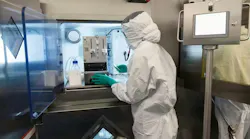
Driven by rapid market growth, the radiopharmaceuticals industry is facing a shortage of available manufacturing capacity when it comes to the infrastructure and supply necessary to meet the specialized requirements of production. That’s according to a new report by data and analytics firm GlobalData.
The firm estimates the global radiopharmaceutical market will nearly double by the end of the decade, growing from approximately $11 billion in 2026 to more than $20 billion by 2030. However, manufacturing capacity is becoming a major constraint for the booming radiopharma sector, which requires specialized facilities including radiation shielding and controlled areas. Adding to the challenges is the short half-life of many isotopes.
“Products must often move rapidly through manufacturing, testing and distribution, leaving little flexibility when manufacturing or logistics disruptions occur,” according to GlobalData, which noted that “Novartis’s experience with Pluvicto highlights these challenges, as manufacturing disruptions led to temporary treatment delays while the company worked to restore supply.”
Specialized facilities, lengthy construction timelines, and workforce constraints all serve to complicate the radiopharmaceutical industry’s path to commercial scale. Another challenge to manufacturing capacity is ensuring that available production suites meet the regulatory and technical requirements, such as 21 CFR 211 compliance.
“Our internal estimates say that only about 30% or so of the total U.S. manufacturing suites that have lead-shielded cells can actually be Part 211 capable,” Thijs Spoor, CEO of Perspective Therapeutics, told Pharma Manufacturing. “Probably only 30% of those are actually suitable for phase three of commercial use. So, it’s a very tight bottleneck or capacity constraint that may exist for someone trying to look at a phase three program.”
Moving from late-stage development to commercial scale intensifies the pressure on companies. Edita Hamzic, healthcare analyst at GlobalData, said in a statement that radiopharma manufacturing “cannot be scaled in the same way as conventional pharmaceutical production” and that specialized infrastructure, limited isotope supply, and the short half-life of many isotopes requires companies to plan manufacturing and supply capacity “well ahead” of commercial launch.
“The industry will need to build capacity across the radiopharmaceutical value chain, from isotope production through to finished-dose manufacturing and distribution,” Hamzic said. “Companies that secure reliable access to critical isotopes and multiple manufacturing locations will be better positioned to support the growing clinical pipeline.”
GlobalData pointed to several companies strengthening their supply chains and investing in domestic isotope production. Large drugmakers such as Bristol Myers Squibb and Novartis are expanding specialized manufacturing capacity, while medical radioisotope producers Niowave and TerraPower Isotopes are investing in actinium-225 (Ac-225) production.
Ac-225 supply chain initiatives gain traction
Although Ac-225 is one of the most promising and sought-after radioisotopes in oncology, the global supply is limited and has become a key challenge as demand grows.
Niowave broke ground earlier this year on a new $75 million production facility in Lansing, Michigan that will expand domestic supply of Ac-225 used in targeted alpha therapy for cancer treatment. The facility, Niowave’s second dedicated manufacturing site in Lansing, will feature multiple proprietary superconducting linear accelerators along with processing and quality systems for Ac-225 production.
NorthStar Medical Radioisotopes and QSA Global earlier this year announced a multi-year agreement to establish a closed-loop system for processing and recycling Radium-226 — the material from which Ac-225 is produced — to improve supply reliability for targeted alpha therapy manufacturers. Following irradiation and processing by NorthStar to produce Ac-225, the recovered radium will be returned to QSA Global for recycling into new targets, establishing a closed-loop supply chain meant to reduce dependence on external radium sources.
Ratio Therapeutics, a radiopharma developer based in Boston, has expanded its manufacturing collaboration with PharmaLogic, a contract development and manufacturing organization (CDMO), to support continued clinical development and commercial readiness planning for an Ac-225-based therapy candidate. Reliable, redundant, and scalable manufacturing infrastructure is critical to the potential commercialization of Ac-225-based therapies, according to the companies.
Growing CDMO capacity in radiopharma
CDMOs with capabilities in handling radiopharmaceuticals are seeing strong demand, reflecting strength in these therapeutic modalities. In May, Boca Raton, Florida-headquartered PharmaLogic opened a new positron emission tomography (PET) radiopharma manufacturing facility in Atlanta, Georgia.
PharmaLogic’s site is designed to expand domestic production capacity for diagnostic and therapeutic radiopharmaceuticals, while supporting research and development of next-generation products. The Atlanta location is intended to enable faster distribution of time-sensitive PET radiopharmaceuticals and adds to the CDMO’s growing network of manufacturing sites, including facility openings in California, New York, Ohio, and Utah.
Indianapolis-headquartered SpectronRx announced in April it secured $85 million in financing from OrbiMed to expand medical isotope production and contract manufacturing capabilities at its Grissom Aeroplex campus near Bunker Hill, Indiana. The financing builds on SpectronRx’s previously announced Grissom Aeroplex expansion in January, which added manufacturing space for therapeutic and diagnostic radiopharma production, isotope labeling, and commercial fill-finish operations.
Last month, Hamilton, Ontario-based radiopharma CDMO AtomVie opened a new $160 million manufacturing facility meant to support production from early development through commercialization. The 72,300-square-foot Canadian facility provides low- to high-throughput production and increases AtomVie’s manufacturing capacity by more than tenfold, according to the company, which claims it is the largest single CDMO site in North America dedicated to radiopharma development and manufacturing.
About the Author
Greg Slabodkin
Editor in Chief
As Editor in Chief, Greg oversees all aspects of planning, managing, and producing the content for Pharma Manufacturing’s website and digital products, as well as the daily operations of its editorial team.
For more than 20 years, Greg has covered the healthcare, life sciences, and medical device industries for several trade publications. He is the recipient of a Post-Newsweek Business Information Editorial Excellence Award for his news reporting and a Gold Award for Best Case Study from the American Society of Healthcare Publication Editors. In addition, Greg is a Healthcare Fellow from the Society for Advancing Business Editing and Writing.
When not covering the pharma manufacturing industry, he is an avid Buffalo Bills football and Buffalo Sabres hockey fan, likes to kayak, and plays guitar.