Radiopharma’s growing pipeline puts capacity to the test
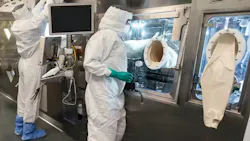
There is a dichotomy in the radiopharmaceutical therapy market: while the field is experiencing significant growth, that momentum is also bringing attention to concerns around manufacturing capacity and availability of specialized infrastructure necessary to produce these therapies.
The global radiopharmaceuticals industry — currently valued at $8.28 billion in 2026 — is expected to grow to $15.21 billion by 2035, according to a market assessment. The way this modality has revolutionized radiation therapy for cancer treatment — by targeting specific cancer cells, rather than using external beam radiation, the most common type of radiation therapy — is a key driver of growth in this space.
“We used to say, treating cancer from the inside out versus trying to do it from the outside in; where you can actually focus all the energy actually at the tumor itself,” says Thijs Spoor, CEO of Perspective Therapeutics, a radiopharmaceutical company dedicated to developing image-guided, targeted alpha-particle therapies (TATs) for the treatment of cancer.
Spoor noted how excitement based on the efficacy and safety of targeted radiopharmaceuticals for patients is driving broader investment into the industry. “Now you’ve got a lot of company creation; you have a lot of money coming into infrastructure on the isotope side and the drug manufacturing side, as well as infrastructure on the distribution side, the discovery side and also into clinical development,” he commented.
Despite this momentum, Spoor emphasized that the industry is facing an extraordinary shortage of available manufacturing capacity, particularly infrastructure equipped to meet the specialized requirements of radiopharmaceutical production. Meanwhile, supply chain constraints and a tight market for talent specializing in radiopharma add another layer of challenge as the industry looks to support a growing pipeline of products.
Growing pipeline tests capacity
Beyond investment flowing into the industry, that momentum in radiopharmaceuticals is also reflected in the burgeoning pipeline of programs.
“There’s only a few commercial products on the market, but there’s about 16 Phase 3 programs, roughly 40 Phase 2 programs, more than 50 Phase 1 programs, and over 140 pre-clinical programs that we’re aware of,” Spoor estimates.
However, supporting these programs as they move toward Phase 3 and commercialization will require manufacturing infrastructure equipped to handle different radionuclides and their associated radiation and containment requirements.
“That’s a lot of different products and each of those products needs its own manufacturing suite for at least the day it gets made,” says Spoor. “Because of the nature of these isotopes, if you’re enrolling patients in study, you need to have access to production multiple days a week for every single one of these programs.”
Manufacturing demands can be pronounced for programs using short-lived isotopes, according to Spoor. He pointed to prostate specific membrane antigen (PSMA)-targeted therapies as an example.
“If you’re trying to run a PSMA program in the U.S., for example, with lead-212 or the short-lived isotopes, you’re going to need to have multiple manufacturing suites locked up every single week in order to provide enough product for when the patients show up. So, there’s a big pull-through on the demand side that requires some pretty careful project planning.”
Meeting specialized requirements
Another challenge to manufacturing capacity is ensuring that available production suites meet the regulatory and technical requirements of the radiopharmaceuticals being produced, such as having production suites that meet 21 CFR 211 and 21 CFR 212 compliance — which are essential regulatory frameworks for quality and production standards in radiopharma manufacturing. Spoor says the industry faces constraints in the availability of manufacturing capacity across these regulatory frameworks.
21 CFR Part 211, also known as the current Good Manufacturing Practice (cGMP) regulations for finished pharmaceuticals, applies broadly to drug manufacturers, including those bringing radiotherapies to market. Meanwhile, 21 CFR Part 212 is a specialized set of regulations explicitly developed for positron emission tomography (PET) drugs.
“But even within the Part 211 compliance suites, there are different degrees that people can actually handle different isotopes in that scale,” Spoor notes, emphasizing that regulatory compliance alone does not necessarily make a manufacturing suite suitable for every therapeutic isotope. “So, there’s an extra capacity constraint. If you’re trying to do certain isotopes, you can get away with thinner shielding than some of the other isotopes.”
When expanding into radiotherapy production, some companies attempt to repurpose or modify 21 CFR 212-based facilities. However, according to Nucleus Radiopharma, a CDMO specializing in radiopharmaceutical development, manufacturing, and supply chain solutions, some of these facilities are unlikely to be viable candidates for such a transition because they lack the aseptic processing capabilities required under 21 CFR Part 211.
“Additionally, their radiation shielding and handling infrastructure — designed for short-lived, low-energy PET isotopes — is inadequate for therapeutic isotopes, which are longer-lived and higher-energy,” the company contends.
Building new manufacturing capacity
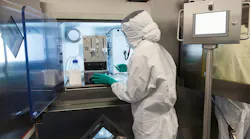
The specialized requirements for radiopharmaceutical manufacturing narrow the pool of suitable infrastructure available to companies as they advance their programs.
“Our internal estimates say that only about 30% or so of the total U.S. manufacturing suites that have lead-shielded cells can actually be Part 211 capable,” according to Spoor. “And of those, probably only 30% of those are actually suitable for phase three of commercial use. So, it’s a very tight bottleneck or capacity constraint that may exist for someone trying to look at a phase three program.”
Against that background, companies committed to radiopharmaceutical production need to decide on whether to invest in new manufacturing infrastructure to support their programs or secure capacity through CDMOs.
“You’re seeing investment into companies that are building CDMOs,” says Spoor. “Those companies are being absolutely backlogged with a pipeline of innovators, like smaller companies without the investment into their own supply chain that need to make the product somewhere.”
However, developers planning to build capacity need to account for construction timelines and determine where they want to invest early in the planning process. Spoor estimates that standing up a radiopharmaceutical manufacturing facility can take roughly four years.
“If you’re a startup company and you're saying, ‘How do I balance my capital? If I have $100 million, do I spend that on sort of a couple of phase one, phase two clinical studies, or just building one manufacturing site but can’t then do any clinical stuff,’” he says. “It’s a vicious circle once you start investing. It’s a vicious circle if you actually don’t have the capacity to escape from it.”
Even when companies commit to building radiopharmaceutical manufacturing infrastructure, the specialized components required for these facilities can create additional bottlenecks if they are not considered early in the planning process.
“The complexity of radiation means that you need physical barriers — you need about four to six inches thick of lead if you’re going to do it properly,” he says. “You need leaded glass, which has a very limited number of suppliers. If you need the glass to be thick enough, for example, it takes six months to cool down that leaded glass when it gets manufactured by Corning. And they only make it once a year. So, you’ve got these really nonlinear delays if you don’t get your project planning correct.”
Workforce and geographic strategy
Scaling radiopharmaceutical manufacturing also requires establishing a specialized workforce, making access to talent — and the location of said talent — another important consideration in facility planning.
“There are local talent pools that you need to be aware of, and then there are national talent pools to be aware of,” says Spoor. “You need to think about the kind of roles you have. Are you looking at more of an operator type role within a radio pharmaceutical facility? Are you looking at quality assurance professionals? Are you looking at quality control professionals? Are you looking at management professionals?”
Spoor said Perspective Therapeutics opted not to operate in Indianapolis — regarded as the “radiopharmaceutical capital” of the world — in part to avoid a highly competitive market, and has opted instead to operate in other regions that still support its product delivery reach.
“Not going into Indianapolis has meant that we didn’t go into this incredible talent pool,” he acknowledges. “You’ve got sort of six players — a lot of them backed by major pharma — fantastic innovation in isotope production or drug labeling and things happening in this very, very small geographic footprint. The war [to secure] talent is incredibly fierce and so it’s really hard to retain people, and trying to find enough people with enough experience. So, we’ve opted to not play in that environment.”
In regions where there is a lack of talent specializing in radiopharmaceuticals, Spoor said companies are turning to adjacent areas of pharmaceutical manufacturing where certain industry specializations offer transferable skills.
“We also want to make sure we actually have products closer to our facility, closer to the patients on the West Coast and the East Coast,” he says. “You do need people that are specialized. I think the number of people that are specialized in isotope production awareness is increasing. Ideally, we find people with good aseptic technique skills, and good cell therapy skills are transferable. Some of these businesses and logistics lend themselves well to a nicer roll through into what we need to do with aseptic radioactive sterile products.”
Outside of workforce availability, the inherent short half-lives of many isotopes also make proximity to patients an important consideration, especially as companies begin planning for larger clinical trials and commercialization.
Like other major radiopharmaceutical companies, Perspective Therapeutics is developing manufacturing capacity across multiple regions. The company uses lead-212, an alpha-emitting isotope with a roughly 10-hour half-life, for imaging and treatment of cancers. Spoor said that a distributed manufacturing model helps position production closer to patients while also providing redundancy across the company’s network.
With a growing number of radiopharmaceutical programs advancing through development, Spoor observes that companies will need to make manufacturing investments well before their products reach commercialization.
“The answer should be build earlier, make sure you have redundancy, making sure you have multiple parts of your supply chain that can handle a robust framework so that if something happens and the site goes down — or you’re a victim of your own success, meaning you’ve got multiple programs racing into commercial readiness or registrational trials — you have the capacity to satisfy the inevitable patient demand that’s out there,” concludes Spoor.
Related listening:
In the below episode of Off Script, we spoke with Thijs Spoor, CEO of Perspective Therapeutics, about the current state of radiopharmaceutical manufacturing and what the industry needs to support the next phase of growth.
About the Author
Andy Lundin
Senior Editor
Andy Lundin has more than 10 years of experience in business-to-business publishing producing digital content for audiences in the medical and automotive industries, among others. He currently works as Senior Editor for Pharma Manufacturing and is responsible for feature writing and production of the podcast.
His prior publications include MEDQOR, a real-time healthcare business intelligence platform, and Bobit Business Media. Andy graduated from California State University-Fullerton in 2014 with a B.A. in journalism. He lives in Long Beach, California.