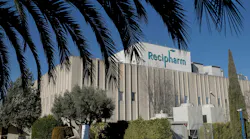
Recipharm charts future course with refinancing, move of headquarters
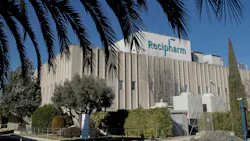
Change continues to be a part of the DNA at Recipharm. The global contract development and manufacturing organization (CDMO) this week announced the relocation of its headquarters from Sweden to Switzerland and the completion of refinancing extending the company’s debt maturity profile by seven years.
Recipharm’s new headquarters in Baar, Switzerland provides a location with “customer and capability centricity,” CEO Greg Behar told Pharma Manufacturing, noting that the Basel and Zurich areas have a “concentration of talent and a lot of our customers.”
Behar said the refinancing gives Recipharm a “stronger financial platform” and greater capacity to invest in its sites, technologies, and people. He also pointed to improved credit ratings from Moody’s and S&P Global — along with an affirmed rating from Fitch.
Moody’s provided a Corporate Family Rating (CFR) of B2 with a stable outlook reflecting Recipharm’s “above-average size, broad product offering and good technical capabilities, with good market shares” in lyophilized, blow-fill-seal, and highly potent drug product, as well as “growing exposure to biologics, the high barriers to entry in the CDMO industry.”
Founded in 1995, Recipharm operates 17 facilities in eight countries and has more than 4,500 employees worldwide. The private company, which manufactures pharmaceuticals in various forms including biologics, oral solid dosage, and sterile fill-finish, claims its global presence and local expertise rival some of the industry’s largest CDMOs.
“We’ve made some pretty significant investments” in infrastructure, Behar said. “Our investment has increased by more than 50% in general, and we’ll see another increase next year.”
Earlier this month, Recipharm announced the extension of its high-potency drug manufacturing capabilities at the company’s Leganés, Spain site to include Good Manufacturing Practice (GMP) pilot-scale production for oral solid-dose products.
In June, Recipharm announced a multi-million-dollar investment in its U.S. sterile fill-finish capabilities to support growing demand for biologics and advanced therapies. The CDMO’s announcement followed the signing of a clinical biologics fill-finish agreement with a “major” global pharmaceutical company.
With growing demand for U.S. sterile capacity and biologics capabilities, Behar said Recipharm’s two Boston-area sites are driving a lot of interest. At the same time, the company is seeing increased interest in its European sites including oral solid dose, he added.
In May, Recipharm invested in expanded oral solid dose manufacturing capabilities at its facility in Spain, adding clinical and pilot-scale production capacity. That same month, the company made a multi-million-dollar investment in a new blow-fill-seal (BFS) manufacturing line to expand sterile drug product capacity for customer programs.
BFS, which Recipharm uses to support ophthalmic and vaccine programs, is a single continuous process within a sterile closed system in which containers are formed, filled, and sealed minimizing the risk of contamination. The company contends it is the only CDMO with BFS capabilities for both biologics and small molecules from early phase development through to commercialization.
Optimizing for the future
Currently, Recipharm operates development and manufacturing facilities in France, Germany, India, Italy, Portugal, Spain, Sweden, United Kingdom, and the U.S.
“Customers that were single site-oriented are moving to two, three, four sites in our network — and that’s a significant change,” Behar said.
In February, Recipharm sold its active pharmaceutical ingredient (API) development and small-scale manufacturing site in Israel to Scinai Immunotherapeutics, while also entering a long-term commercial collaboration with the company.
Although Recipharm generated record-breaking revenue of €827 million in 2024, driven by growth in its biologics business, 2025 was a challenging year for the company due to geopolitical and macroeconomic headwinds. However, this year is looking to be “a little bit in between” 2024 and 2025, according to Behar.
“The good news is that the dip of 2025 is improving into 2026, and we will see momentum in 2027,” he said.
About the Author
Greg Slabodkin
Editor in Chief
As Editor in Chief, Greg oversees all aspects of planning, managing, and producing the content for Pharma Manufacturing’s website and digital products, as well as the daily operations of its editorial team.
For more than 20 years, Greg has covered the healthcare, life sciences, and medical device industries for several trade publications. He is the recipient of a Post-Newsweek Business Information Editorial Excellence Award for his news reporting and a Gold Award for Best Case Study from the American Society of Healthcare Publication Editors. In addition, Greg is a Healthcare Fellow from the Society for Advancing Business Editing and Writing.
When not covering the pharma manufacturing industry, he is an avid Buffalo Bills football and Buffalo Sabres hockey fan, likes to kayak, and plays guitar.