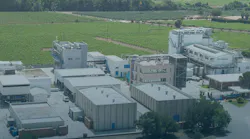
Building capacity across the radiopharmaceutical value chain is proving to be a significant challenge given the need for specialized facilities, according to the firm.
The expanded BARDA deal adds approximately $270 million in procurement through 2031 as the company advances an investigational antibody against another Ebola virus species.
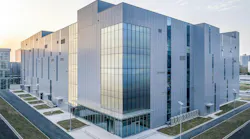
The bioprocessing supplier opened an X-ray irradiation facility, started a second phase of campus construction, and introduced an automated bulk-product aliquoting platform.
AI is already on the life sciences shop floor and on regulators' radar. Pairing FDA and MasterControl perspectives, this brief details how to build a defensible, compliant AI ...
For life sciences manufacturers, regulatory inspections begin when a batch record is created. Discover how an integrated, inspection-ready platform can reduce review times, strengthen...
MasterControl's Regulatory Readiness Playbook helps life sciences teams navigate evolving FDA and ISO regulations, operationalize AI-driven quality systems, and build continuous...
Explore how Consistone™ Yeast Extract UF may support CHO growth and productivity, with study data on batch and fed-batch performance, titer, and consistency.
Lilly broke ground this week on a $6.5 billion active pharmaceutical ingredient facility that will make Foundayo, while Novo is expanding its oral Wegovy capacity.
Branded a “Chinese military” company by the Department of Defense, the CRDMO secured a legal victory last week against the 1260H designation, but the damage is done.
Proponents say using fermentation processes can help reduce America’s reliance on China and India for key starting materials and active pharmaceutical ingredients.
Not likely, argues Kymanox Executive Advisor Roger Lias, despite recent advances in continuous manufacturing for antibodies and other recombinant biologics.
Researchers are using machine learning and real-time process monitoring to improve bioreactor control and help manufacturers automate manual processes.
BMS said the system could not meet requirements to make commercial Breyanzi. Cellares claims it has manufactured GMP drug product in an FDA-regulated clinical program.
What needs to be taken into consideration when scaling up from the laboratory to full-scale production? Matt Smith, Sales Director at Silverson Machines explains which key factors...
The integration of chemical engineering into process development has transformed how companies scale, control, and optimize manufacturing for a new generation of therapies.
The draft guidance allows developers to leverage chemistry, manufacturing and controls data, as well as nonclinical and clinical information from other relevant products.
AI is helping life sciences manufacturers improve uptime, PM effectiveness, calibration planning, and reliability analysis. See where practical AI adds value in GMP asset management...
Software platforms can seamlessly integrate with emerging technologies to unlock efficiencies, strengthen sustainability and enable proactive prevention of disruptions.
Built-in ability to meet data integrity standards should be a central focus when selecting control systems and manufacturing execution systems for pharma manufacturing
The CRL relates to Good Manufacturing Practice observations at third-party manufacturer NerPharMa, and a request for additional commercial-scale consecutive batch data.
In response, Scholar Rock will remove the Bloomington fill-finish facility from its Biologics License Application with the agency and rely on a third-party provider.
As one of seven companies picked for the pilot, the integrated development and manufacturing organization says regulatory engagement cuts commercialization risk.
The agency selected contract manufacturers Cellares and Fujifilm Biotechnologies, as well as Big Pharma drugmakers Eli Lilly and Regeneron, for the pilot’s initial cohort.
Overseas markets take on increased attractiveness for India following President Trump’s threatened tariffs on generic drugs in 2028, finds data and analytics firm.
As injectable and oral GLP-1s evolve, pharma companies face tough choices about capacity, delivery platforms, outsourcing, and supply resilience, says CPHI Milan panel.
The share of newer FDA-approved innovator and biosimilar products whose production mix included a Chinese facility is rising, says data and analytics firm.
The drugmakers pledged to invest $19.6 billion collectively in U.S. manufacturing and provide discounts on select medicines in exchange for tariff exemptions.

 manus_colleagues_inspecting_equipment_at_our_augus