German drug manufacturers face biggest hit from US supply chain bill: GlobalData
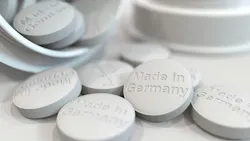
Bipartisan legislation introduced in the U.S. Senate to boost domestic pharmaceutical manufacturing capacities could potentially impact German drug manufacturers disproportionally, according to an analysis by data and analytics firm GlobalData.
If passed into law, the Pharmaceutical Investment Oversight and Accountability Act would require the U.S. Federal Trade Commission (FTC) to submit a report to Congress on the “effect of concentration and reliance on foreign manufacturing” within the pharma industry.
“Bill co-sponsor Senator Elizabeth Warren, who wishes to increase domestic manufacturing capacities through new legislation, claims that securing this investigation is the first step in strengthening U.S. drug supply chains, suggesting the underlying intent to identify and target certain manufacturing markets with tariffs and other policies to incentivize onshoring of pharmaceutical supply chains,” GlobalData said in its analysis, warning that such an outcome “could be detrimental” to Germany and its contract manufacturers.
GlobalData noted that Germany dominates European drug manufacturing, accounting for 35% of the region’s FDA-approved innovator and biosimilar production, while the country currently produces 40% of Europe’s FDA-approved biologics — putting German pharma manufacturers squarely in the crosshairs of an FTC investigation.
“As Europe’s leading manufacturer of FDA-approved innovator and biosimilar drugs, Germany could face the biggest hit from the proposed bipartisan legislation,” Katia Djebbar, pharma analyst at GlobalData, said in a statement.
“The country’s pharmaceutical manufacturing success can be greatly credited to the outsourcing of FDA-approved biologics to specialized, German-based contract development and manufacturing organizations (CDMOs) such as Vetter Pharma-Fertigung (Ravensburg, Germany), which alone holds contracts for 74 FDA-approved drugs, primarily biologic and injectable products,” Djebbar added.
CDMOs such as Vetter are reaping the benefits of new drug approvals by the FDA, according to an analysis by William Blair analysts who earlier this year compiled a report on drugs approved by the agency since 2015.
Over the past decade, Vetter has secured 5% overall finished dose market share and is a “significant player in large molecule finished dose with 12% share since 2015,” the analysts found.
Vetter, a German CDMO focused on injectable drug products, announced plans in early 2026 to build a new €480 million commercial drug manufacturing facility in the Saarland region of southwest Germany. The project has received approval from the European Commission for up to €47 million in state aid. Vetter said the Saarland location is within driving distance of its headquarters in Ravensburg and other European operations.
Europe’s rise to dominance
A separate GlobalData analysis found that biopharmaceutical companies are increasingly moving to outsource the manufacturing of new drugs to Europe, while the gap between the use of European and U.S. facilities continues to grow.
“Outsourced dose manufacturing for innovator drugs and biosimilars approved in the U.S. and Europe (the EU and UK) has traditionally oscillated between the two geographies, but there has been a pronounced shift toward European facilities over the last two years,” the firm contends.
Last year, 50% of new drugs had dose manufacturing contracts with European-based facilities — almost doubling their share since 2023 — while that proportion for U.S.-based facilities has remained static at 18% since 2024, according to GlobalData.
The firm reported earlier this year that contract manufacturing deals for drugs marketed in the U.S. are shifting to Europe, with biopharma companies increasingly choosing to outsource manufacturing to European facilities, while U.S. contract manufacturing deals for FDA-approved drugs in 2025 experienced their biggest decline in five years.
GlobalData’s latest analysis “indicates Germany faces the greatest commercial risk as Washington pursues onshoring policies that may trigger tariff and non-tariff measures, creating fresh investment, manufacturing, and market access challenges for pharmaceutical companies and contract manufacturers.”
Germany’s drug pricing raises risk
Making matters worse, Germany is also facing pressure from the U.S. Trade Representative (USTR), which announced an investigation in June into Germany’s drug pricing. GlobalData said the Trump administration is looking to assess if Germany is persistently and unreasonably underpaying for innovative pharmaceuticals, and its impact on trade.
“Since U.S. drug pricing is notoriously higher than many European countries, USTR ambassador Jamieson Greer and President Trump argue that global pharmaceutical R&D shares should not be disproportionately borne by American patients,” the firm said. “The outcome of the pending investigation will determine if Germany is paying its ‘fair share’ according to Greer and could result in tariff and non-tariff actions.”
Both the Pharmaceutical Investment Oversight and Accountability Act and the USTR investigation “may serve as pathways to implement future policy actions targeting regions and countries like Germany, supplying the U.S. pharmaceutical market,” Djebbar concluded.
About the Author
Greg Slabodkin
Editor in Chief
As Editor in Chief, Greg oversees all aspects of planning, managing, and producing the content for Pharma Manufacturing’s website and digital products, as well as the daily operations of its editorial team.
For more than 20 years, Greg has covered the healthcare, life sciences, and medical device industries for several trade publications. He is the recipient of a Post-Newsweek Business Information Editorial Excellence Award for his news reporting and a Gold Award for Best Case Study from the American Society of Healthcare Publication Editors. In addition, Greg is a Healthcare Fellow from the Society for Advancing Business Editing and Writing.
When not covering the pharma manufacturing industry, he is an avid Buffalo Bills football and Buffalo Sabres hockey fan, likes to kayak, and plays guitar.