Eli Lilly continues to invest in China to strengthen local production of GLP-1 drugs
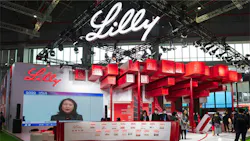
Fueled by growing demand for glucagon-like peptide-1 (GLP-1) receptor agonists and geopolitical uncertainty, Eli Lilly is making major manufacturing investments in China to build a localized and more resilient supply chain for its medicines aimed at creating a geographically diversified production network.
Lilly’s total investment in China has reached nearly $6 billion, including $3 billion over the next decade to build a localized manufacturing and supply network for its GLP-1 drugs. As part of its capital expenditure plans, Lilly is investing in its oral solid dosage production capacity in Beijing and expanding operations at its existing site in Suzhou.
While it is continuing to expand production capacity for incretin injection at the Suzhou plant, Lilly is also adding capacity for oral solid formulations in Beijing to support the localized manufacturing and supply of next-generation GLP-1s.
Lilly’s investment in China is meant to support future production of orforglipron, an investigational oral small-molecule GLP-1 receptor agonist being studied for the treatment of Type 2 diabetes and obesity. Lilly China submitted a marketing application for the therapy to the National Medical Products Administration at the end of 2025.
“Producing medicines closer to patients can reduce import dependence, shorten lead times, and improve compliance with local regulatory and labelling requirements,” Edita Hamzic, healthcare analyst at GlobalData, said in a statement. “For Lilly, orforglipron is especially strategic because it opens the door to an early oral GLP-1 position in China, where competition remains limited.”
As part of its latest investment in China, Lilly also plans to work with contract development and manufacturing organizations (CDMOs) to support development and supply for orforglipron, according to Hamzic.
Supply chain resilience
Recent disruptions in the Middle East are causing pharmaceutical manufacturers to focus on supply chain resilience and strategic stockpiling. Lilly’s China expansion comes as the drugmaker has already stockpiled approximately $1.5 billion in orforglipron inventory.
According to Hamzic, building local manufacturing must be a commercial and operational priority to avoid the GLP-1 shortages that hit Lilly and Novo Nordisk in the past. At the same time, she commented that Lilly’s latest investment in China shows that the GLP-1 market is no longer being shaped by demand alone and reflects an industry trend with pharmaceutical companies trying to insulate themselves from geopolitical shocks.
“Companies are now building geographically segmented manufacturing networks to serve local markets, manage policy pressures, and protect against disruptions that could affect access to critical medicines,” Hamzic said.
Last month, AstraZeneca announced it will create a commercial cell therapy manufacturing and supply base — as well as an innovation center — in Shanghai. The move is part of AstraZeneca’s $15 billion investment in China through 2030 to boost its research and development (R&D) and production presence.
Novartis also last month announced plans to invest nearly $480 million to expand its R&D, manufacturing, and operations footprint in China, with a focus on advancing pharmaceutical innovation and localized radioligand therapy supply.
“In the past two years, Eli Lilly has continuously upgraded its supply chain layout in China, not only to meet current needs, but also to create a response speed and capacity resilience that matches the next generation of drug production, and to fulfill its commitment to ‘rooted in China, benefit China’,” Edgardo Hernandez, Lilly’s president of global manufacturing, said in a statement.
At the same time, Lilly has announced several large-scale manufacturing investments aimed at supporting incretin therapies globally. These include new active pharmaceutical ingredient manufacturing facilities in Huntsville, Alabama and Houston, Texas — estimated at $6 billion and $6.5 billion, respectively — along with a $1.2 billion expansion in Puerto Rico and plans for a $3 billion oral medicine manufacturing facility in the Netherlands.
Lilly announced last week that Foundayo (orforglipron) is now available in the U.S. to treat adults with obesity or overweight with weight-related medical problems, following the Food and Drug Administration’s approval of the GLP-1 pill on April 1.
With the recent launch of its Wegovy pill in the U.S., Novo Nordisk announced last month that it is adding manufacturing capacity to its Athlone, Ireland site to support current and future GLP-1 treatments. The Danish drugmaker is investing more than $500 million in the Irish facility which it said will serve as a “critical hub” for markets outside the U.S.
About the Author
Greg Slabodkin
Editor in Chief
As Editor in Chief, Greg oversees all aspects of planning, managing, and producing the content for Pharma Manufacturing’s website and digital products, as well as the daily operations of its editorial team.
For more than 20 years, Greg has covered the healthcare, life sciences, and medical device industries for several trade publications. He is the recipient of a Post-Newsweek Business Information Editorial Excellence Award for his news reporting and a Gold Award for Best Case Study from the American Society of Healthcare Publication Editors. In addition, Greg is a Healthcare Fellow from the Society for Advancing Business Editing and Writing.
When not covering the pharma manufacturing industry, he is an avid Buffalo Bills football and Buffalo Sabres hockey fan, likes to kayak, and plays guitar.