US-Iran ceasefire provides potential relief for pharma logistics, cost structures
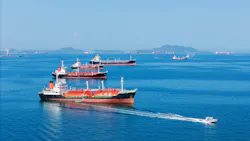
Tuesday’s news about a temporary U.S.-Iran ceasefire has provided relief to markets looking for a de-escalation in the conflict. While the war in Iran and instability around the Strait of Hormuz haven’t disrupted domestic pharmaceutical production in the U.S., the ripple effects of the six-week-old war have been felt across the global pharma ecosystem.
A spike in oil prices, strained logistics networks, and disruptions to sensitive pharma products created pressure in the supply chain, forcing some manufacturers to reassess their resilience in an increasingly turbulent market. The question remains if the fragile U.S.-Iran ceasefire will hold and if prices will remain elevated above pre-war levels even in a scenario where shipping resumes in the Strait of Hormuz.
Energy shock hits beyond the supply chain
Rising oil prices are at the center of the current disruption, and their impact extends well beyond the fuel used to transport pharmaceutical products.
“Energy prices affect the cost of nearly all inputs that go into manufacturing,” said Aaron Lober, manufacturing intelligence lead at AI production platform developer CADDi, noting that this includes not only transportation but also the energy required to power production facilities.
Burgeoning oil costs were beginning to show up in raw material pricing. In late March, BASF Pharma Solutions announced a global price increase for excipients and selected active pharmaceutical ingredients (APIs).
“A price increase of up to 20% will go into immediate effect, or as existing contracts allow,” the company said in a public statement.
APIs, as well as packaging, sterilization processes, and drug delivery systems, are deeply tied to petrochemicals. The result is a broad increase in production costs, even for companies not directly exposed to shipping disruptions in the Middle East.
Lober noted that even though U.S. oil production itself has not been meaningfully disrupted, domestic manufacturers are still feeling the impact of rising prices. “Oil trades on a global market,” he said. “The price everywhere is going up.”
Logistics strain pushes shift to air freight
At the same time, disruptions to global shipping routes are creating delays for critical pharmaceutical products, particularly those that are temperature- or time-sensitive.
In ocean freight, longer transit times — driven in part by rerouting and reduced vessel reliability — are forcing some pharma companies to reconsider how they move shipments.
“When there’s chaos, everything gets impacted, and you have increased transit time,” said Lynn Stacy, managing director for OEC Group’s liquid logistics solutions division, referring to perishable products transported in refrigerated containers. “And, especially with pharmaceuticals, it has to arrive just in time.”
That pressure is driving a shift toward air freight, though this comes with significantly higher costs.
“If I need to get something somewhere faster, it’s going to be through air freight,” Stacy said, noting that air freight is already “extremely high cost” and that layering in temperature-control requirements makes the process even more expensive.
This growing reliance on air cargo is compounding an already strained system, as commercial flights have been rerouted in response to the war.
Complicating matters, the Middle East has become a key hub for pharmaceutical logistics, with significant investment in infrastructure and specialized handling capabilities. Major cargo airports in the region, including Dubai, Abu Dhabi and Doha, have faced temporary closures following strikes tied to the conflict, disrupting key transit points for temperature-sensitive pharmaceutical shipments.
Those hubs have increasingly served as centralized repositories for drug inventories, particularly for ultracold biologics, according to Alex Guillen, global SME life science and pharma director at Tive. With access to specialized infrastructure now constrained, companies are being forced to relocate inventory to alternative locations that can support ultracold requirements, he commented.
With disruptions affecting routing through this region, the result is growing congestion, particularly across European air corridors, and mounting delays, Guillen said.
“Delays are the biggest issue right now,” he added. “And it’s going to have short-term and long-term consequences.”
Related Listening
In the first episode of a two-part series, we spoke with Ronald T. Piervincenzi, Ph.D., CEO of the U.S. Pharmacopeia, about how the global medicine supply chain faces mounting strain from chronic generic drug shortages, geopolitical tensions, and heavy reliance on geographically concentrated manufacturing.
Cold chain, clinical trials facing risk
Not only are ultracold biologics vulnerable to supply chain disruption, but clinical trial shipments are also at risk. Because clinical trial materials have limited stability data and must be delivered within narrow timeframes, often within a three-day window, thousands of trials are being disrupted, according to Guillen.
“Clinical trials are the most vulnerable,” Guillen said, noting that roughly 2,500 trials globally have been stalled or disrupted.
For temperature-sensitive products, the problem is compounded by infrastructure constraints. With key logistics hubs disrupted, particularly in the Middle East, companies are being forced to relocate inventory — though suitable alternatives to meet these needs are limited.
“You need infrastructure, but you also need qualified personnel to manage these cold temperatures,” Guillen added.
Resiliency vs. efficiency: A strategic shift
Moving forward, the more lasting impact for some pharmaceutical companies may be strategic. Pharmaceutical companies today aim to optimize their operations for efficiency, through means such as centralizing production, developing specialized facilities, streamlining supply chains, and expanding R&D capabilities, according to Guillen.
But global disruptions such as the war in Iran may force a shift in priorities for some organizations. Guillen pointed out that could mean moving away from efficiency as the primary goal and toward resilience.
Building resilience, he suggested, will likely involve expanding manufacturing footprints and finding alternative ways to route products and manage inventory across the supply chain. But those changes come at a cost, and not all companies are equally equipped to make them.
The overall impact on large pharmaceutical companies remains manageable in the near term, but it is far more severe in regions with fewer alternatives, where disruptions can translate more directly into supply shortages.
Large pharmaceutical firms may have the resources to adapt. Smaller biotechnology and generic manufacturers, operating on tighter margins, face greater challenges.
However, major structural changes are unlikely to happen quickly. “It’s going to be easier … to sit on our hands,” Lober said, noting that companies are more likely to absorb short-term cost increases than invest heavily in reshaping global supply chains, unless their core operations are at risk.

About the Author
Andy Lundin
Senior Editor
Andy Lundin has more than 10 years of experience in business-to-business publishing producing digital content for audiences in the medical and automotive industries, among others. He currently works as Senior Editor for Pharma Manufacturing and is responsible for feature writing and production of the podcast.
His prior publications include MEDQOR, a real-time healthcare business intelligence platform, and Bobit Business Media. Andy graduated from California State University-Fullerton in 2014 with a B.A. in journalism. He lives in Long Beach, California.