Thermo Fisher capitalizes on biopharma’s adoption of single-use technology
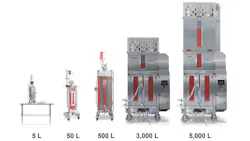
Life sciences company Thermo Fisher Scientific is targeting the growing bioproduction market, which spans the full cycle from cell culture media and single-use technologies — including its DynaDrive single-use bioreactor platform — to filtration, purification, and production chemicals.
CEO Marc Casper told analysts during last week’s second-quarter 2026 earnings call that bioproduction remains a “great space” for Thermo Fisher, while acknowledging “there are a number of fine players” serving the market. Bioproduction is a “key enabling technology” especially as the sector moves “towards single use” for the pharmaceutical and biotechnology industry, Casper said.
“We play a key role — we’ve launched a number of innovative technologies,” according to Casper, who called out Thermo Fisher’s DynaDrive single-use bioreactors which he contends are “getting more and more standardized” across the contract development and manufacturing organization (CDMO) landscape.
“That’s a super important indicator because it basically says that it drives efficient production of medicines,” Casper added. “It’s also being adopted in innovative pharmaceutical companies. CDMOs, they make all their money, including our own, on how well you run your operations. DynaDrive is quickly becoming the favored technology, and that bodes well for the follow-on consumable stream that comes from that as well.”
Single-use systems are used across cell line development, seed-train expansion, process optimization, clinical production, and commercial manufacturing. While batch and fed-batch processes dominate, demand is rising for perfusion-ready systems, high-cell-density processing, continuous manufacturing, and digitally connected operations, according to a report released last week by MarketsandMarkets.
The single-use bioreactors market is being shaped by changing biomanufacturing priorities, process intensification, and demand for flexible production capacity, the report said. The market is increasingly shifting toward integrated, higher-capacity, and application-specific platforms.
Biopharma manufacturing is changing as biologics pipelines become more diverse and manufacturers place greater emphasis on flexibility, speed, and operational agility, with single-use technologies emerging as key capabilities for supporting those priorities.
“Improvements in mixing, oxygen transfer, film performance, bag integrity, and automated control are strengthening process consistency and scalability,” MarketsandMarkets noted in its report. “Suppliers are developing scalable product families that support technology transfer from laboratory to commercial scale while maintaining consistent process performance.”
From lab to commercial scale
Thermo Fisher claims its DynaDrive single-use bioreactor platform — available from 5L to 5,000L — can decrease the cost of production by up to 25% through a reduction in equipment, materials, consumables, and labor “going far beyond the limits of legacy single-use bioreactor systems with greater performance and scalability.”
Last year, Thermo Fisher introduced what the company describes as the first-of-its-kind, bench-scale 5L DynaDrive single-use bioreactor. Compared to traditional glass bioreactors, the benchtop-sized 5L DynaDrive bioreactor provides a 27% increase in workflow efficiency to accelerate the development process, reduce time-to-market, and boost the overall productivity of lab operations, according to Thermo Fisher.
At the other end of the scale, CDMOs are also leveraging the platform. In 2025, AGC Biologics announced it selected two 5,000L DynaDrive single-use bioreactors for its new manufacturing facility in Yokohama, Japan, which the CDMO says will offer one of the most advanced large-scale mammalian biomanufacturing capabilities in that country.
Last year, WuXi Biologics successfully completed the first commercial project Process Performance Qualification (PPQ) campaign for its three 5,000L DynaDrive single-use bioreactors in the second drug substance line of it MFG20 facility at the Hangzhou, China site. The CDMO said the PPQ campaign achieved significant process efficiencies, including a 70% reduction in protein production costs and a 20% increase in yield per batch.
Single-use market poised for growth
The single-use bioreactors market is expected to grow steadily over the next five years as biopharma companies increase investments in biologics, biosimilars, vaccines, recombinant proteins, viral vectors, and cell and gene therapies.
According to the MarketsandMarkets report, the single-use bioreactors market is projected to grow from $5.43 billion in 2026 to $9.58 billion by 2031 with an estimated compound annual growth rate of 12% during the forecast period.
The report notes that reduced cleaning requirements, faster changeovers, lower contamination risk, and suitability for multiproduct facilities are supporting adoption among biopharma companies and CDMOs.
“Key trends include increased outsourcing to CDMOs, wider adoption of perfusion and continuous processing, expansion of high-capacity and modular single-use platforms, and growing use in cell & gene therapy and viral vector manufacturing,” the report said. “Increasing outsourcing of process development and biologics manufacturing is further encouraging CDMOs to invest in flexible single-use facilities capable of handling multiple products and production scales.”
About the Author
Greg Slabodkin
Editor in Chief
As Editor in Chief, Greg oversees all aspects of planning, managing, and producing the content for Pharma Manufacturing’s website and digital products, as well as the daily operations of its editorial team.
For more than 20 years, Greg has covered the healthcare, life sciences, and medical device industries for several trade publications. He is the recipient of a Post-Newsweek Business Information Editorial Excellence Award for his news reporting and a Gold Award for Best Case Study from the American Society of Healthcare Publication Editors. In addition, Greg is a Healthcare Fellow from the Society for Advancing Business Editing and Writing.
When not covering the pharma manufacturing industry, he is an avid Buffalo Bills football and Buffalo Sabres hockey fan, likes to kayak, and plays guitar.