Single-use tech: From convenience to core biopharma strategy
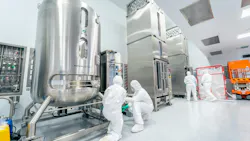
Biopharmaceutical manufacturing is changing as biologics pipelines become more diverse and manufacturers place greater emphasis on flexibility, speed, and operational agility. Single-use technologies (SUTs) have emerged as key tools for supporting those priorities.
Much of the conversation surrounding SUTs has shifted beyond their traditional benefits to the role they play in enabling the next generation of manufacturing. Increasingly, discussions around SUTs focus more on the manufacturing strategies it enables, including process intensification, continuous manufacturing, hybrid facilities, and digital bioprocessing.
The global single-use bioreactor market is projected to jump from $3.61 billion in 2025 to $15.11 billion by 2034, reflecting a compound annual growth rate of 17.27% between 2026 and 2034, according to an estimate by ResearchAndMarkets.
“Single-use systems offer flexible and sterile manufacturing solutions, significantly cutting capital and operational costs by eliminating the need for cleaning and sterilization,” the report states. “This makes them particularly attractive to emerging biotech firms and CDMOs. Innovations like enhanced scalability, automation, and advanced sensor integration further bolster the efficiency and appeal of these bioreactors for both R&D and commercial production.”
Biologics pipelines reshape manufacturing priorities
The shift toward diverse biologics pipelines has changed how manufacturers think about facility design and manufacturing strategies. Rather than building facilities around large volume blockbuster drugs, biomanufacturers are increasingly producing targeted therapies and specialized medicines that require greater manufacturing flexibility and the ability to efficiently make multiple products at the same facility.
“Around 10 years ago, we were starting to see quite a big change in the pipeline in a lot of the large pharma companies, from big blockbusters to more targeted, smaller patient cohort products and rare diseases,” said Charlie Heise, associate director of bioprocess strategy and development at Fujifilm Biotechnologies. “That really meant people were starting to think differently about the facilities that they had.”
Manufacturers are adapting facilities to support multiple manufacturing campaigns as product portfolios have become more diverse. Heise observed how some companies had to reconfigure facilities when they suddenly found themselves needing to manufacture more than one drug within the same plant.
SUTs, such as disposable bioreactors, mixing systems, transfer assemblies and fluid handling components, have helped enable that transition by allowing manufacturers to add, remove or reconfigure manufacturing capacity much more quickly than traditional fixed infrastructure.
“Instead of committing early to large, capital-intensive stainless steel assets, companies can add, reduce, or reconfigure capacity much faster because single-use systems are pre-sterilized, quicker to install, and less dependent on fixed infrastructure,” said Misha Kozlov, vice president of research, discovery and engineering, upstream and fluid management at Cytiva.
Capacity planning and hybrid manufacturing
As manufacturers have embraced more diverse product portfolios, SUTs have played a critical role in how they approach capacity planning.
According to Kozlov, capacity decisions are increasingly based on portfolio and risk analysis. Companies evaluate expected production volumes, the number of products to support, and the need for rapid changeovers or technology transfers when determining how best to deploy manufacturing assets.
“If a facility is required to support multiple products or uncertain scale-up paths, flexibility usually takes priority,” Kozlov said. “For a smaller number of high-volume, stable products with predictable demand, maximizing throughput with stainless steel remains the most efficient approach.”
Those capacity-planning decisions have led manufacturers toward hybrid facility designs, where SUTs provide flexibility and established stainless steel infrastructure commits to high-volume commercial production. Rather than replacing stainless steel, manufacturers are selecting the combination of technologies that best aligns with each product’s manufacturing requirements.
“There are reasons to use stainless in different places,” said Roger Lias, executive advisor at Kymanox. “Where hybrid comes into play is where ultimately you’re going to need huge volumetric requirements. These products are manufactured batch after batch at 20,000-liter scale. That’s a lot of liquid that you can’t do in single-use technologies.”
Lias noted that even facilities built around large stainless steel bioreactors increasingly incorporate single-use transfer assemblies, tubing, filters, chromatography components and other disposable process systems throughout production.
The next phase of single-use manufacturing
Though single-use technologies are well established across the biopharmaceutical manufacturing ecosystem, the conversation is shifting away from their traditional advantages, such as reduced cleaning requirements, faster changeovers, and lower infrastructure costs, and toward how they enable the next generation of manufacturing.
“I think we’ve really matured in terms of what we can do,” said Heise. “The next piece forward is all around how we're going to use the technologies that are now established.”
Heise observed that one of the biggest opportunities for SUTs lies in process intensification, as manufacturers look to maximize the use of resources required to manufacture biologics.
“I think that’s probably the piece where we’re going to see the most exciting stuff in the single-use space,” said Heise. “Which is around how can we really drive intensification of the use of the raw materials that we’re putting into the processes and how we are driving intensification around the energy consumption as well to be able to make sure that we’re getting the best and the most out of all of the resources that go into manufacturing medicines.”
Kozlov echoed the significance of process intensification.
“Cytiva has focused on enabling process intensification by providing tools for intensified seed trains, perfusion, optimized media, and high-performance single-use bioreactors,” he said. Perfusion-based processes are significant to this space because they maintain high-density cell cultures over extended periods, while continuously harvesting product and allowing manufacturers to generate higher output from smaller reactor volumes.
As biopharma companies pursue more intensified, high-titer monoclonal antibody processes, and novel modalities such as gene therapies, these approaches help to decouple production output from vessel size while making efficient use of materials, facility space, and manufacturing resources.
Heise also pointed to growing interest in continuous manufacturing, where processes operate at a steady state rather than through discrete batches, requiring more sophisticated automation and process control.
Lias said single-use technologies and continuous bioprocessing have evolved together, emphasizing how SUTs aid the growth of continuous systems. While early efforts at continuous biologics manufacturing often fell short of fully integrated production, advances in single-use bioreactors, tubing assemblies, and continuous chromatography have made the approach increasingly practical.
These manufacturing strategies also require greater process visibility, automation, and real-time process control. According to Kozlov, advances in process analytical technologies (PAT), digital twins, AI-enabled process monitoring, and predictive modeling are helping manufacturers improve process understanding, accelerate scale-up, and support more autonomous manufacturing operations.
Acknowledging the current challenges
As single-use technologies continue expanding across biopharmaceutical manufacturing, the need remains to strengthen supply chain resilience and reduce the environmental impact.
“Even minor material or process changes from suppliers can have outsized consequences in a regulated environment,” said Kozlov. “A seemingly small change — a film formulation tweak or resin update — can trigger extensive requalification, comparability work, and potentially regulatory review.”
The COVID-19 pandemic exposed vulnerabilities in the availability of critical single-use components, highlighting the importance of stronger supplier relationships, standardized materials, and greater supply chain transparency.
Sustainability also remains an important area of ongoing innovation. Life cycle assessment studies show that single-use systems reduce energy demand and global warming potential compared to stainless steel but generate more solid plastic waste per production campaign. While SUTs often reduce water consumption, cleaning requirements, and facility infrastructure versus traditional stainless steel systems, manufacturers continue exploring recyclable materials, improved polymer formulations, and new product designs that reduce waste without sacrificing performance or reliability.
Heise noted that sustainability extends beyond reducing plastic waste to improving the overall efficiency of biopharma manufacturing. “Water is probably going to become one of the challenges around the world in terms of availability,” he said. “Single-use technologies may be something that can help out in that space.”
Related listening
In the below episode of Off Script, we spoke with Jim Masso, president and CEO of Honeywell Process Automation, about the operational challenges shaping the next generation of biopharma manufacturing. The conversation explores where manufacturers continue to encounter bottlenecks when scaling production, why workforce constraints and human error remain significant contributors to quality issues, and how AI-enabled process control and integrated digital quality systems can help improve reliability and accelerate facility startup.
About the Author
Andy Lundin
Senior Editor
Andy Lundin has more than 10 years of experience in business-to-business publishing producing digital content for audiences in the medical and automotive industries, among others. He currently works as Senior Editor for Pharma Manufacturing and is responsible for feature writing and production of the podcast.
His prior publications include MEDQOR, a real-time healthcare business intelligence platform, and Bobit Business Media. Andy graduated from California State University-Fullerton in 2014 with a B.A. in journalism. He lives in Long Beach, California.