Cellares to downsize following Bristol Myers Squibb decision to end partnership
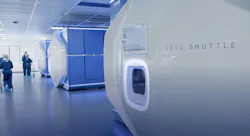
South San Francisco-based integrated development and manufacturing organization (IDMO) Cellares announced it is resizing the company following the termination of a partnership with a large pharmaceutical customer.
In an emailed statement to Pharma Manufacturing, a Bristol Myers Squibb spokesperson confirmed that it ended its partnership with Cellares.
“Cell therapy manufacturing is highly complex and individualized. Following a comprehensive evaluation, Bristol Myers Squibb determined that the Cellares-partnered Cell Shuttle system could not meet the necessary requirements to make commercial Breyanzi,” the spokesperson said. “This determination is specific to Breyanzi and its established, regulatory-approved manufacturing process.”
Fabian Gerlinghaus, co-founder and CEO of Cellares, announced in a LinkedIn post over the weekend that there would be a reduction in the company’s workforce, saying the dissolution of the partnership leading to the restructuring “was a decision specific to that customer.”
“The loss of this partnership requires us to resize the company,” he said in the post. “That means saying goodbye to talented colleagues who helped build Cellares and advance our mission. I am deeply grateful for everything they have contributed to our company, our customers, and ultimately to patients.”
Cellares subsequently issued a statement to Pharma Manufacturing strongly disagreeing with Bristol Myers Squibb’s characterization that the Cell Shuttle system could not meet the necessary requirements to make commercial Breyanzi.
“The Cell Shuttle has already manufactured GMP drug product in an FDA-regulated clinical program, with doses meeting all release specifications, delivered on time and administered to patients,” a spokesperson said, adding the company protects the confidentiality of its customers and does not discuss confidential program details publicly. “Cellares is supporting a growing portfolio of clinical- and commercial-stage programs, with its customer base more than doubling since the beginning of the year.”
Customer loss amid broader growth
Cellares has made headway over the last few years securing partnerships with pharma companies for the production of cell therapies, most notably with significant investment from Bristol Myers Squibb (BMS) back in 2024 for the manufacture of CAR T-cell therapies, which was valued up to $380 million in upfront and milestone payments.
Cellares also entered into collaboration agreements with biotechnology companies Sonoma Biotherapeutics and Cabaletta Bio to automate the manufacturing of their respective cell therapy programs by way of Cellares’ Cell Shuttle manufacturing platform. Cell Shuttle is the IDMO’s flagship platform, which automates end-to-end cell therapy manufacturing, and is designed to support commercial-scale cell therapy production.
The company’s ultimate goal is to industrialize global cell therapy manufacturing with automation. Cellares contends that while conventional CDMOs would need to build 10 facilities to reach commercial-scale manufacturing capacity, the IDMO only needs to build one facility.
Cellares’ commercial-scale manufacturing facility in Bridgewater, New Jersey, is operational. Outside the U.S., Cellares has been expanding its footprint in Japan and Europe, which Gerlinghaus previously attributed to the company’s partnership with BMS.
“We’re seeing really strong operational progress and delivering on all the milestones for our $380 million partnership with Bristol Myers Squibb for commercial-scale manufacturing in the United States, Europe, and Japan,” he said in January. “That’s why we’re building out these facilities.”
The workforce reduction also comes on the heels of several other major company developments, including Cellares in June adding a $50 million investment from private equity firm Prime Radiant Partners to the company’s Series D financing, bringing the total raised to $327 million.
Meanwhile, Cellares was also recently named as one of the initial cohort of participants in the FDA PreCheck pilot program, which is designed to streamline regulatory reviews and more quickly build domestic manufacturing facilities.
“We’ve got our first commercial launch coming up next year, and from that perspective, our participation in PreCheck is very timely,” Gerlinghaus said following the initial announcement of Cellares’ participation in the program.
The commercial launch of the first CAR T-cell therapy manufactured at scale on Cellares’ automated platform is seen by Gerlinghaus as a major milestone on the company’s path toward an initial public offering (IPO), planned for the end of 2027.
Reaffirming customer commitment
Currently, Cellares operates automated “smart” factories in South San Francisco and Bridgewater, New Jersey. Cellares’ U.S. facilities are expected to support commercial Good Manufacturing Practice (GMP) operations beginning in 2027.
A Cellares spokesperson said that the company’s platform has been proven in the clinic, emphasizing in an emailed statement that in “Q1, cell therapies manufactured on the Cell Shuttle in an FDA-regulated environment were administered to patients for a paying customer.”
“Over the last two weeks, I have spoken directly with our customers,” Gerlinghaus wrote on LinkedIn. “Their response has been genuinely encouraging across the board. They have reiterated their commitment to working with Cellares, and several are already discussing additional programs, accelerating existing collaborations, and advancing with us toward commercial manufacturing.”
About the Author
Andy Lundin
Senior Editor
Andy Lundin has more than 10 years of experience in business-to-business publishing producing digital content for audiences in the medical and automotive industries, among others. He currently works as Senior Editor for Pharma Manufacturing and is responsible for feature writing and production of the podcast.
His prior publications include MEDQOR, a real-time healthcare business intelligence platform, and Bobit Business Media. Andy graduated from California State University-Fullerton in 2014 with a B.A. in journalism. He lives in Long Beach, California.