FDA picks seven companies for PreCheck pilot program including two CDMOs
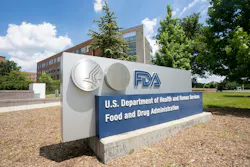
The U.S. Food and Drug Administration has announced the selection of seven companies to participate in its PreCheck pilot program as an initial cohort of new pharmaceutical manufacturing facilities.
Chosen from more than 80 applicants, the list of participants includes Big Pharma companies Eli Lilly and Regeneron Pharmaceuticals, as well as contract development and manufacturing organizations (CDMOs) Cellares and Fujifilm Biotechnologies. Other companies selected for the pilot program are Amneal Pharmaceuticals, Kriya Therapeutics, and Kyowa Kirin.
“The pilot program is intended to support the development of new U.S. pharmaceutical manufacturing facilities by encouraging earlier FDA engagement and providing a more predictable regulatory pathway for companies that plan to manufacture drugs for the U.S. market, helping support greater access to critical medicines for Americans,” according to the agency’s announcement.
Three of the pilot facilities are in North Carolina: Fujifilm’s site in Holly Springs will support commercial-scale cell culture biomanufacturing, Kriya’s facility in Durham will manufacture AAV-based gene therapy products for chronic disease conditions, and Kyowa Kirin’s site in Sanford will make biotechnology drug substances for rare diseases.
Two facilities were selected in New York: Amneal’s site in Long Island will manufacture small molecule sterile liquid products for pain management, respiratory, and ophthalmic diseases, while Regeneron’s facility in Saratoga Springs will produce biotechnology drug substance, sterile injectables, and novel protein therapeutics for multiple diseases.
Eli Lilly’s site in Lebanon, Indiana will manufacture active pharmaceutical ingredients in support of the drugmaker’s existing and future medicines. Cellares’ facility in Bridgewater, New Jersey will make cell-based gene therapy products for oncology and hematology diseases.
The selection of Cellares and Fujifilm is significant as questions remain about how applicable the current PreCheck framework will ultimately be for pure-play CDMOs. Several aspects of the program appear geared toward manufacturers developing products internally, while challenges unique to outsourced manufacturing remain unresolved.
Cellares in a press release touted the fact that it is the only cell therapy platform among the seven companies selected for the pilot program.
“Manufacturing and facility risks are usually the ones no one considers until a pre-approval inspection or a complete response letter, long after a sponsor has filed,” Eric Fulmer, senior vice president of global quality at Cellares, said in a statement. “PreCheck moves that conversation up by several years, to a time before a facility is even in operation, which is taking it off the critical path. For the sponsors building and commercializing on Cellares’ platform, it means manufacturing is the one thing that won’t stand between their therapy and regulatory approval.”
More questions than answers
Launched in August 2025, PreCheck is part of the FDA’s response to President Donald Trump’s Executive Order 14293 which calls for regulatory relief to promote domestic production of critical medicines. The agency’s program takes a two-phase approach to help facilitate new U.S. drug manufacturing facilities and streamline aspects of facility assessments in advance of a specific product application.
To be eligible for the pilot program, companies “proposed a new domestic manufacturing facility that will be capable of manufacturing drug products to address a market supply need or improve patient access to therapies for unmet medical needs,” according to the FDA. Eligible companies also committed to submitting a New Drug Application (NDA), Biologics License Application (BLA), Abbreviated New Drug Application (ANDA), or a supplement to one of those applications that relies on the new manufacturing facility.
In the facility readiness phase, companies will receive early technical guidance from the FDA before their facility becomes operational, including reviews of facility information submitted through a facility-specific Drug Master File, allowing the agency to assess and increase facility readiness before the submission of a drug or biologics application.
In the application submission phase, companies will have opportunities for “enhanced engagement” with the FDA through facility-focused pre-submission meetings, which are intended to support “expedited facility evaluation” and enable inspections earlier in the review cycle, according to the agency’s announcement.
While industry stakeholders are generally supportive of the FDA’s effort to engage manufacturers earlier in facility development, uncertainty remains on how the program will be implemented with questions remaining around how consistently the model can function at scale.
Given that the pilot is intended to support a broad range of manufacturing environments, maintaining consistent expectations across that diversity will be critical to preserving the predictability the program is designed to provide.
As the FDA works to implement the pilot, another lingering question is whether the agency has the staffing and operational capacity needed to meet the expectations of the program, following broader workforce reductions over the past year.
About the Author
Greg Slabodkin
Editor in Chief
As Editor in Chief, Greg oversees all aspects of planning, managing, and producing the content for Pharma Manufacturing’s website and digital products, as well as the daily operations of its editorial team.
For more than 20 years, Greg has covered the healthcare, life sciences, and medical device industries for several trade publications. He is the recipient of a Post-Newsweek Business Information Editorial Excellence Award for his news reporting and a Gold Award for Best Case Study from the American Society of Healthcare Publication Editors. In addition, Greg is a Healthcare Fellow from the Society for Advancing Business Editing and Writing.
When not covering the pharma manufacturing industry, he is an avid Buffalo Bills football and Buffalo Sabres hockey fan, likes to kayak, and plays guitar.