Indian pharma companies look for options beyond US amid tariff threat: GlobalData
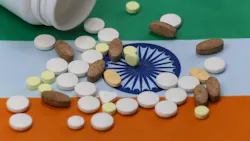
With many of India’s pharmaceutical companies dependent on a large part of their business from generic medicines, drugmakers are facing potential tariffs starting in 2028 under the Trump administration’s planned duties on imported generics. The threat of U.S. tariffs on the backbone of the Indian pharma industry is pushing it to target major overseas markets, according to a new report from data and analytics firm GlobalData.
“Indian generic manufacturers face important decisions following U.S. President Donald Trump’s July 2026 announcement of significant tariffs on generic medicines, with measures due to take effect from 2028,” GlobalData said. “Higher labor and production costs could make building large-scale manufacturing capacity in the U.S. unattractive for many Indian manufacturers.”
The stakes are high as nearly half of all generic prescriptions in the U.S. are filled by Indian manufacturers, according to the Indian Pharmaceutical Alliance. For now, however, all generic drugs imported to the U.S. will be tariff-free until 2028 — after which Trump said a 100% duty will be imposed, and a 200% tariff will kick in one year later.
While India’s pharmaceutical manufacturing sector is entering a “delicate” phase as the U.S. accounted for more than 30% of its pharma exports last year, GlobalData contends the good news for the country is it remains the most dominant global generics manufacturer based on large-scale, low-cost production.
As uncertainty grows over its long-term foothold in the U.S. market, India is gaining improved access to other major overseas markets, according to the firm. Indian pharma companies are diversifying into Europe, emerging markets, and specialty segments to offset U.S. generics pressures.
“The UK-India Comprehensive Economic and Trade Agreement came into force in July 2026, providing duty-free or reduced-tariff access to the UK market for Indian pharmaceuticals,” states the report. “Similarly, India’s trade agreement with New Zealand will remove duties on pharmaceuticals, while the EU-India Free Trade Agreement is expected to provide broader access to the European market once implemented.”
Edita Hamzic, healthcare analyst at GlobalData, said in a statement that “this is less about India pivoting away from the U.S. and more about its pharmaceutical companies giving themselves more options.” Hamzic makes the case that “as trade tariffs come down in markets such as the UK, Europe and New Zealand, Indian manufacturers have an opportunity to capture a greater share of global pharmaceutical demand.”
No let-up in generics growth
The free trade deal with the EU will drive additional growth if, and when, it is ratified, according to ING’s Senior Healthcare Economist Diederik Stadig, who forecasts a 9% compound annual growth rate (CAGR) for India’s pharmaceutical sales and the same CAGR for the Indian contract development and manufacturing organization (CDMO) sector until the end of the decade.
India has become an increasingly important player in the global CDMO space, providing a wide range of services including active pharmaceutical ingredient (API) development, peptide synthesis, biologics production, and sterile injectable manufacturing.
As the world’s pharmacy, Stadig says India supplies approximately 20% of global generic medicines and manufactures around 60,000 generic brands across 60 therapeutic categories, reaching at least 150 countries.
“Internationally, more than 90% of all prescriptions are generics, and fiscal pressure on healthcare budgets of ageing societies means that generic drugs remain in demand,” Stadig wrote in a recent analysis. “Given its economies of scale, India will remain the pharmacy of the world, despite efforts by the Trump administration to increase U.S. generic manufacturing.”
At the same time, filings seeking Food and Drug Administration approvals to launch generic drugs in the U.S. have grown by double digits in the nine months to June 2026, with Indian drugmakers estimated to account for approximately half of all Abbreviated New Drug Application (ANDA) submissions at the agency during that period. Stadig commented that India “clearly remains the top ANDA submitter.”
Still, Sun Pharma’s U.S. business remains under pressure, with recent quarterly revenue declining 9.7% year-over-year, as India’s largest pharma company and global specialty generic drug manufacturer is adding new generic products while continuing to invest in its 100-plus ANDA pipeline.
Last month, Sun Pharma joined eight other pharma companies at a White House ceremony to announce agreements with the Trump administration extending Most Favored Nation (MFN) pricing to state Medicaid programs in exchange for delaying Section 232 tariffs over two years. Rick Ascroft, North America CEO, emphasized that the U.S. is a “key area of investment and expansion for Sun Pharma” including API and finished products manufacturing.
Nonetheless, the Association for Accessible Medicines (AAM), a Washington, D.C.-based trade group representing manufacturers and distributors of generic drugs, released a report last month detailing how the overall share of the prescription drug market globally has increased for generics and biosimilars. The problem, according to AAM, is the amount of spending on those same products within certain regions has tended to decrease, while other areas of the world did not show such dramatic price deflation as the U.S.
“This information is consistent with other analyses comparing U.S. spending to other countries,” AAM’s report said. “A recent analysis by RAND found that generic prices in the U.S. average 16% less than other countries, and between 30% to 50% less than nations such as the UK, Mexico, France and Japan. This difference is the result of a U.S. generic drug market in which prices can rapidly fall by as much as 95% upon generic entry.”
China vs. India in GLP-1 generics race
Generic GLP-1s in China and India are poised for a major access expansion, as the countries are home to approximately 40% of the world’s population and a third of global obesity cases. The semaglutide patent cliff presents a “substantial opportunity” for companies in the Chinese generics market, according to a separate report from GlobalData.
The firm noted that China’s semaglutide patent expired in March 2026 and pharmaceutical companies in that country are “aggressively preparing their manufacturing capabilities and regulatory approvals to capitalize on this multi-billion-dollar market opportunity.” In India, pharma companies are similarly advancing their own plans to launch injectable and oral semaglutide products for both domestic and export markets.
Meanwhile, ING’s Stadig pointed out that after Novo Nordisk’s semaglutide active ingredient patent expired in India, companies including Dr. Reddy’s, Glenmark, Natco, Sun Pharma, and Zydus launched generic versions.
“In the coming years, India’s pharmaceutical sector growth will be shaped by the global patent cliff,” Stadig wrote. “There are major upcoming expirations in cardiovascular, metabolic, oncology and autoimmune drugs between 2026 and 2028, including Eliquis, Januvia/Janumet, Xtandi, Imbruvica, Mavenclad, Opsumit and Pomalyst. When those come off patent, India’s pharmaceutical sales will increase steeply [from $35 billion in 2026 to $49 billion in 2030].”
The Indian sector is expanding into complex generics, biosimilars, and specialty products. Fueled by a China+1 strategy adopted by pharmaceutical companies, India’s CDMOs are at an inflection point and positioned to take advantage of a “firehose” of opportunities, according to a report last year from Jefferies analysts.
Still, Hamzic contends that India is unlikely to simply replace China, particularly in complex biologics, where Chinese companies retain significant scale.
“However, India’s combination of manufacturing experience and competitive costs could help its companies win a larger share of global pharmaceutical manufacturing and outsourcing,” she concluded. “The next challenge will be turning improved market access and growing technical expertise into long-term international contracts.”
About the Author
Greg Slabodkin
Editor in Chief
As Editor in Chief, Greg oversees all aspects of planning, managing, and producing the content for Pharma Manufacturing’s website and digital products, as well as the daily operations of its editorial team.
For more than 20 years, Greg has covered the healthcare, life sciences, and medical device industries for several trade publications. He is the recipient of a Post-Newsweek Business Information Editorial Excellence Award for his news reporting and a Gold Award for Best Case Study from the American Society of Healthcare Publication Editors. In addition, Greg is a Healthcare Fellow from the Society for Advancing Business Editing and Writing.
When not covering the pharma manufacturing industry, he is an avid Buffalo Bills football and Buffalo Sabres hockey fan, likes to kayak, and plays guitar.