Trump strikes drug pricing, tariff deals with nine mid-sized biopharma companies
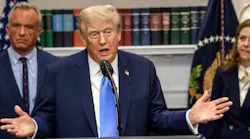
President Donald Trump continues to advance his Most Favored Nation (MFN) pricing program intended to lower U.S. prescription drug prices. The White House on Monday announced voluntary agreements with nine biopharmaceutical companies including Alcon, Astellas Pharma, BeOne Medicines, BridgeBio, CSL, Kyowa Kirin, Sun Pharma, Teva Pharmaceuticals, and UCB.
“The agreements bring the total number of pharmaceutical manufacturers with MFN deals to 26, covering 89% of the branded drug market,” according to the Trump administration’s announcement. “These nine pharmaceutical manufacturers committed to invest at least $19.6 billion collectively in U.S. manufacturing in the near term.”
The terms of the latest agreements include a grace period under which the companies’ respective products will not be subject to Section 232 investigation tariffs, provided the drugmakers continue to invest in U.S. manufacturing.
Sun Pharma in a press release said its agreement with the Trump administration “recognizes” the company’s “investment in the U.S. market by delaying Section 232 tariffs on innovative pharmaceutical products for over two years.”
BeOne Medicines in a press release said its onshoring agreement with the Trump administration secures an exemption from Section 232 pharmaceutical tariffs that “recognizes the company’s significant and ongoing investments in U.S. manufacturing.”
In July, BeOne announced it will invest $300 million to expand its clinical and commercial manufacturing and research campus in Hopewell, New Jersey, increasing domestic production capacity for its oncology portfolio and bringing the company’s total U.S. manufacturing investment to more than $1 billion. The drugmaker expects the capital project will create approximately 120 full-time jobs and be fully operational by 2029.
In March, CSL broke ground on a $1.5 billion expansion of its plasma-derived therapy manufacturing facility in Kankakee, Illinois, part of the company’s strategy to expand biologics production capacity in the U.S. The expansion is expected to create 300 new pharmaceutical manufacturing jobs and be operational by 2031.
Kyowa Kirin is building a new $530 biomanufacturing facility in Sanford, North Carolina, which is designed to be scalable to the company’s plant in Takasaki, Japan to ease tech transfer between the two sites. The Sanford site, recently selected for the FDA’s PreCheck Pilot Program, will develop and produce biologic therapies — including next-generation antibodies — and is expected to be operational in 2027.
UCB is expanding its footprint in the U.S. with plans to build a $2 billion biologics manufacturing facility in Gwinnett County, Georgia. The campus in the Atlanta metropolitan area is intended to serve as a hub for the company’s domestic manufacturing operations and create approximately 330 permanent highly skilled jobs.
During a Monday press conference at the White House, Health and Human Services Secretary Robert F. Kennedy Jr. said altogether pharmaceutical companies have agreed to invest more than $600 billion in U.S. manufacturing to reshore production over the next few years.
Commerce Secretary Howard Lutnick added that “reshoring produces national security — we need our drugs made in America.”
Strategic reserve for APIs
As part of Monday’s announced agreements, several companies are donating active pharmaceutical ingredients (APIs) to the Strategic Active Pharmaceutical Ingredients Reserve (SAPIR) meant to reduce America’s reliance on foreign nations and ensure an adequate supply of key products in the event of a national emergency.
Astellas will contribute 25 kg of tacrolimus, an immunosuppressant used to prevent organ rejection in people who have had organ transplants. Sun Pharma will provide 71.4 tons of clindamycin and 6.75 tons of doxycycline — both antibiotics to treat bacterial infections.
Teva Pharmaceuticals will donate 45 metric tons of metronidazole, an antibiotic and antiprotozoal used to treat certain bacterial and parasitic infections, and 4.8 tons of amlodipine, an antihypertensive drug. UCB will contribute 163 tons of levetiracetam, an anticonvulsant used to control and prevent certain types of seizures.
In August 2025, Trump signed an executive order directing the Office of the Assistant Secretary for Preparedness and Response (ASPR) to identify approximately 26 drugs critical to U.S. health and security, secure a six-month supply of APIs for the drugs, and prioritize domestic sourcing where possible.
“Only about 10% of the APIs by volume for the finished drug products used in the United States are made here,” Trump wrote in his executive order, which noted at the time that the SAPIR created during his first administration is nearly empty.
About the Author
Greg Slabodkin
Editor in Chief
As Editor in Chief, Greg oversees all aspects of planning, managing, and producing the content for Pharma Manufacturing’s website and digital products, as well as the daily operations of its editorial team.
For more than 20 years, Greg has covered the healthcare, life sciences, and medical device industries for several trade publications. He is the recipient of a Post-Newsweek Business Information Editorial Excellence Award for his news reporting and a Gold Award for Best Case Study from the American Society of Healthcare Publication Editors. In addition, Greg is a Healthcare Fellow from the Society for Advancing Business Editing and Writing.
When not covering the pharma manufacturing industry, he is an avid Buffalo Bills football and Buffalo Sabres hockey fan, likes to kayak, and plays guitar.