GLP-1 demand puts strain on production capacity, supply chains
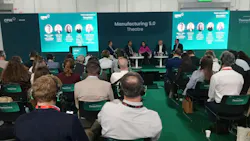
Pharmaceutical manufacturers are trying to scale their production capabilities to keep up with the surging global demand for injectable and oral glucagon-like peptide-1 (GLP-1) receptor agonists. However, panelists at this week’s CPHI conference in Milan, Italy warned that due to the explosive growth of GLP-1s some materials will continue to be in short supply.
“With just a handful of brands, we’ve already seen an exponential growth,” said Hoori Kaskanian, global therapeutic area head for GLP-1s at Sandoz. “The estimate is somewhere between one and a half and two billion people globally who are eligible” for the medications, she noted, adding that the incretin-based market is forecasted to reach between $100 billion to $150 billion by 2030.
When it comes to the potential impact on supply, Kaskanian observed that shortages experienced a couple of years ago with active pharmaceutical ingredients (APIs) “by and large seem to be less thematic today” while fill and finish “has some pressure on it” and the supply chain for devices “definitely has pressure.”
Demand for injectable medicines continues to dominate the fill-finish sector, with GLP-1 and incretin therapies for obesity and diabetes emerging as major contributors to market growth. GLP-1s are administered using autoinjector pens, which is another supply chain concern, while the emerging shift toward oral delivery formats presents its own unique manufacturing challenges.
Kaskanian said the pharmaceutical industry is “seeing the first set of orals that have come to the market” including Novo Nordisk’s Wegovy pill and Eli Lilly’s Foundayo oral GLP‑1 medication. “There’s certainly going to be some segments globally, certain geographies who would prefer not to inject,” she argued. “There are parts of Asia that prefer not to inject.”
Riccardo Marcon, senior vice president of sales and marketing at Stevanato Group, told the panel that needle phobia “is not really an issue” as the demand for injectable GLP-1s remains strong and will continue to grow side-by-side with the emergence of oral delivery formats but without market cannibalization.
“For sure, oral is expanding the market,” he added. “Oral is in my opinion accelerating the innovation in drug delivery” due to the convenience of taking a pill instead of an injectable medication.
However, Marcon contends injectables are “still the mainstream” as oral GLP-1s “have more side effects” and must be taken more frequently. Ultimately, he believes there will be “more pressure on the injectable side to deliver even better value for the patient.”
GLP-1 pills fuel manufacturing race
The hotly contested GLP-1 pill market has fueled a manufacturing race between rivals Eli Lilly and Novo Nordisk. Last month, Lilly broke ground on a $6.5 billion active pharmaceutical ingredient facility in Houston, Texas that will make Foundayo, while Novo is scaling oral Wegovy capacity to be able to serve 10 times more patients with obesity.
Trishul Shah, founder and principal at T5 Helix Advisory, told the panel what the industry is “dealing with in the peptide world, especially with these GLP-1 volumes, is a change in thinking of how to produce these peptides.”
Shah pointed to Lilly’s innovation in this space, with the drugmaker bringing in “a lot of small-molecule thinking” to address its capacity challenges. Because Foundayo is a small molecule rather than a peptide, Lilly contends it can be manufactured using “more well-established technologies and therefore can be more readily scalable.”
Not all pharmaceutical companies are going to have in-house capacity and may choose to leverage contract manufacturers. Kasper Bødker Mejlvang, Novo’s executive vice president of global manufacturing and supply, told analysts last month that the company is “exploring and developing further partnerships externally that will give us the flexibility to scale rapidly depending on how demand is evolving over the coming couple of years.”
Shah called out contract manufacturer Bachem, which plans to invest more than 500 million Swiss Francs in a new large-scale production facility at Sisslerfeld in Eiken, Switzerland — driven by demand for peptide APIs, particularly GLP-1 drugs.
He also pointed to CordenPharma, which recently completed its acquisition of AmbioPharm, adding peptide manufacturing facilities in North Augusta, South Carolina, and Shanghai, China. The acquisition expanded its peptide API network and added capabilities spanning peptide development, clinical supply, and commercial production.
China, India ramp up
In the end, manufacturing efficiencies can help reduce costs and expand access to GLP-1 medications for patient populations, according to the CPHI Milan panel.
“There’s a huge opportunity for the worldwide manufacture of peptides,” Shah said. “I think it’s moving more to locality, depending on the different geographical areas that are needed.”
Generic GLP-1s in China and India are poised for a major access expansion, as the countries are home to approximately 40% of the world’s population and a third of global obesity cases. The semaglutide patent cliff presents a “substantial opportunity” for companies in the Chinese generics market, according to GlobalData.
The firm noted that China’s semaglutide patent expired in March 2026 and pharmaceutical companies in that country are “aggressively preparing their manufacturing capabilities and regulatory approvals to capitalize on this multi-billion-dollar market opportunity.” In India, pharmaceutical companies are similarly advancing their own plans to launch injectable and oral semaglutide products for both domestic and export markets.
About the Author
Greg Slabodkin
Editor in Chief
As Editor in Chief, Greg oversees all aspects of planning, managing, and producing the content for Pharma Manufacturing’s website and digital products, as well as the daily operations of its editorial team.
For more than 20 years, Greg has covered the healthcare, life sciences, and medical device industries for several trade publications. He is the recipient of a Post-Newsweek Business Information Editorial Excellence Award for his news reporting and a Gold Award for Best Case Study from the American Society of Healthcare Publication Editors. In addition, Greg is a Healthcare Fellow from the Society for Advancing Business Editing and Writing.
When not covering the pharma manufacturing industry, he is an avid Buffalo Bills football and Buffalo Sabres hockey fan, likes to kayak, and plays guitar.