Novo aims for 10-fold increase in oral GLP-1 manufacturing capacity
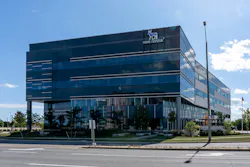
On the heels of a rebranding last week, Novo Nordisk (now just Novo) has unveiled ambitious plans to launch more than five blockbuster drugs by 2030 and to deliver over 150 billion Danish crowns ($23 billion) in pipeline sales in 2035.
The company on Monday provided an updated strategy to drive “sustainable growth” during Novo’s Capital Markets Day held in London, making the case that the expansion of the drugmaker’s global production footprint will provide the high-volume manufacturing platforms with the necessary capacity to meet future demand.
CEO Mike Doustdar said Novo aims to reach more than 60 million patients globally by 2030 and scale up manufacturing tenfold to supply 15 million patients with oral obesity therapies by the end of the decade, as the company faces looming patent expirations for semaglutide — the active ingredient in Ozempic and Wegovy — in the early 2030s.
“We will scale our oral manufacturing to 10 times more than the patients we serve today, so you don’t have to worry anymore about can they actually drive this through,” Doustdar told investors, and that means building capacity.
Kasper Bødker Mejlvang, executive vice president of global manufacturing and supply, said as Novo accelerates and diversifies its pipeline over the next few years the company will have the capacity, scale, and efficiency to support those goals — thanks to large capital expenditure (CAPEX) investments it has made at its sites globally.
Novo is building a new $9 billion active pharmaceutical ingredient (API) manufacturing facility at its Kalundborg, Denmark site, as part of a major expansion of its existing production sites. The facility will manufacture APIs for Novo’s products, including GLP‑1 therapies and other treatments for chronic diseases such as diabetes and obesity.
“Earlier this year, we had the first line validated [in Kalundborg] and it has now been approved by the authorities, adding significant capacity to our network,” Mejlvang said.
Novo has invested $4.1 billion to expand its U.S. capacity by building a second fill and finishing manufacturing facility in Clayton, North Carolina to produce current and future injectable treatments for obesity and other chronic diseases.
“In Clayton, we are progressing according to our plans with our fill-finish expansions, and right next door we also have our API manufacturing facility which has been ramped up over the last couple of years,” Mejlvang noted. “Last year, that facility alone delivered five times the design capacity of the original plans, and we are on track this year to actually get to more than six times design capacity.”
Novo claims the average capacity across its API sites globally has jumped more than 3x versus the original design.
Scaling oral capacity to meet demand
Clayton is among five Novo manufacturing sites across the U.S., with a production footprint of more than 400,000 square meters, intended to provide an end-to-end domestic supply chain for the Wegovy pill. The company has spent more than $10 billion on CAPEX expansion in the U.S. over the last decade — including API, fill-finish, and tablet capabilities — with another $2 billion planned through 2028.
“We’re confident that we can sustain the growth trajectory that we saw in the strategy without adding too much extra CAPEX,” Mejlvang said, noting that 2025 was the peak year for CAPEX. “We will see a continued reduction getting closer to industry level CAPEX-to-sales [ratio] by 2030.”
While Novo has significantly expanded its manufacturing capacity to support future demand in key growth areas such as oral products, the drugmaker is now shifting its focus from CAPEX investments toward margins, enhancing productivity, and optimizing the network. Novo’s strategy focuses on flexible, scalable, and cost competitive production, with new oral formulations meant to improve bioavailability, according to Mejlvang.
He said new pipeline assets require different modalities, devices, and dose forms, with Novo investing in synthetic manufacturing through both internal capabilities and external partnerships “in a way that doesn’t expose us cost wise.” Mejlvang also noted Novo’s 2025 acquisition of a 600,000-square-foot API manufacturing facility in Petersburg, Virginia, which specializes in producing small molecule APIs.
Artificial intelligence (AI) is helping to accelerate the drugmaker’s in-house engineering, process development, and continuous yield optimization, while leveraging the company’s decades of expertise in large-scale manufacturing, according to Mejlvang. Novo is “doubling down” on its yeast-based production network, which he called a competitive advantage in the areas of yeast fermentation, recovery, and purification.
Eli Lilly proves formidable competitor
All of this comes at a time when Novo faces increasing competition from rival Eli Lilly, which is leveraging AI to scale production and optimize operational efficiency to meet the high demand for its medications including GLP-1s. The company is investing billions of dollars in manufacturing capabilities for its wildly popular diabetes and obesity medications.
On Monday, Lilly broke ground on a new $6.5 billion API manufacturing facility in Houston, Texas, one of 10 U.S. production sites — and the fifth location to produce domestic APIs — announced since 2020. The Houston site will manufacture Foundayo, Lilly’s first synthetic oral GLP-1 medicine, along with other small molecule medications.
However, Mejlvang told investors on Monday that when it comes to market share, Novo is “still, by volume, the largest manufacturer of both insulins and GLP-1s in the industry” with 41% and 51%, respectively.
About the Author
Greg Slabodkin
Editor in Chief
As Editor in Chief, Greg oversees all aspects of planning, managing, and producing the content for Pharma Manufacturing’s website and digital products, as well as the daily operations of its editorial team.
For more than 20 years, Greg has covered the healthcare, life sciences, and medical device industries for several trade publications. He is the recipient of a Post-Newsweek Business Information Editorial Excellence Award for his news reporting and a Gold Award for Best Case Study from the American Society of Healthcare Publication Editors. In addition, Greg is a Healthcare Fellow from the Society for Advancing Business Editing and Writing.
When not covering the pharma manufacturing industry, he is an avid Buffalo Bills football and Buffalo Sabres hockey fan, likes to kayak, and plays guitar.