Cellares defends its Cell Shuttle platform after Bristol Myers Squibb ends partnership
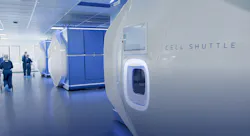
With the loss of a significant partnership with Bristol Myers Squibb, South San Francisco-based startup Cellares is downsizing and delaying plans for an initial public offering, while standing behind its automated cell therapy manufacturing technology.
Fabian Gerlinghaus, Cellares co-founder and CEO, told Pharma Manufacturing that the company has laid off more than 160 employees at its headquarters in South San Francisco and a “smart factory” in Bridgewater, New Jersey due to the loss of the BMS partnership.
Gerlinghaus said the layoff was unavoidable and probably the hardest thing he’s done in his career. At the same time, he emphasized letting staff go that were working on the BMS project was necessary to “align the organization with the profile” of Cellares’ existing customer base.
“We’ve got, I think, a much better financial picture now than before,” Gerlinghaus said. “We’ve got less customer concentration and the fundamentals haven’t changed … what has changed is how quickly we will get to commercial manufacturing. That changes, of course, revenue forecast.”
An initial public offering (IPO) was in the works for 2027. However, those plans have been shelved, according to Gerlinghaus. “The IPO will be delayed, so we’re pushing that out in favor of private financing instead,” he said.
Cellares recently added a $50 million investment from a private equity firm to the company’s Series D financing, bringing the total raised to $327 million. In 2023, BMS participated in Cellares’ Series C financing to launch the “first commercial scale” integrated development and manufacturing organization (IDMO) smart factory. The Bridgewater site integrates “best-in-class automation” across supply chain, inventory, media/reagent filling, fill-finish, and cryostorage, according to Cellares.
“We’ve got a fully built out commercial-scale IDMO smart factory in Bridgewater,” Gerlinghaus said. “That’s the growth path for all of our other customers. And beyond the customers that we publicly disclosed, there are also other pharma companies that are working with us. Ultimately, they all need long-term and mid-term a solution for commercial-scale manufacturing.”
Cellares still plans to take its commercial-scale manufacturing operations global, including Europe and Japan, according to Gerlinghaus.
“We’re reviewing the timing and structure of our international expansion and aligning infrastructure much more closely with customer programs and demand,” he said. “BMS was certainly going to be the first customer that was going to use the infrastructure in Europe and Japan, but they’re not the only one.”
Is Cellares’ Cell Shuttle up to snuff?
Designed for end-to-end cell therapy manufacturing, Cellares contends that its proprietary Cell Shuttle platform has “demonstrated a 100% automation success rate across more than a dozen automated processes” and manufactured GMP drug product in an FDA-regulated clinical program.
“We have already demonstrated that the Cell Shuttle works in the clinic,” Gerlinghaus said. “In April of this year, we announced that the first patients have now been dosed with cell therapies that were made by Cellares on the Cell Shuttle for a paying customer in an FDA-regulated environment, specifically that was Cabaletta with rese-cel.”
Cellares and Cabaletta Bio, a late-stage clinical biotechnology company, signed a 10-year commercial supply agreement to support automated manufacturing of rese-cel, Cabaletta’s investigational autologous CAR-T therapy with the goal of commercialization.
Gerlinghaus said Cellares’ commercial supply agreement with Cabaletta builds on more than three years of collaboration in which the companies have adapted the rese-cel manufacturing process to the Cell Shuttle, secured FDA clearance of an IND amendment for clinical manufacturing using the platform, and dosed the first patients with GMP drug product that met all release specifications.
“It demonstrated our technology works in the GMP context,” he added. “We can sign up paying customers, automate their processes, generate comparability data, file it with the FDA, and proceed into GMP manufacturing and make a drug product for patient infusion.”
However, following a “comprehensive” evaluation, BMS determined that the Cell Shuttle system could not meet the necessary requirements to make commercial Breyanzi — a determination the drugmaker said was “specific to Breyanzi and its established, regulatory-approved manufacturing process” — which led to its ending the partnership with Cellares.
Asked about the decision, Gerlinghaus said Cellares strongly disagrees with the statement BMS made about Cell Shuttle’s inability to meet requirements for commercial manufacturing of Breyanzi.
“We disagree with that characterization,” he said. “BMS ultimately terminated the partnership before we had an opportunity to complete the work, before we had an opportunity to generate data that would have been submitted to the FDA.”
Competition in the automation space heats up
Cellares’ rival Ori Biotech is also looking to automate cell therapy production. Both companies’ respective platforms have received the FDA’s Advanced Manufacturing Technology (AMT) designation.
According to a recent report from data intelligence firm Tracxn, Cellares and Ori Biotech are among the companies in the race to build the cell therapy industry’s first automated factories. “Commercial-stage solutions are emerging, led by Cellares and Ori Biotech,” Tracxn said.
The first fully autonomous commercial GMP batch is a significant milestone to watch for over the next 18-30 months, according to Tracxn, specifically a GMP batch released for patient use with zero manual operator intervention, no human hands at any step, full electronic batch record, and real-time release testing.
“No company has publicly announced this milestone,” the report noted. “Whoever achieves it first defines the benchmark.”
Under a new 10-year, $120 million partnership with an undisclosed biopharma company, Ori Biotech is looking to integrate its IRO platform into the company’s existing commercial cell therapy manufacturing process, with the goal of successfully demonstrating the comparability of IRO to the incumbent process.
“Switching an approved, commercial cell therapy onto a new manufacturing platform is no small feat,” Ori Biotech wrote in a LinkedIn post. “The therapy is already on the market and patients [are] being treated, so every change in process and manufacturing has to [be] carefully considered.”
About the Author
Greg Slabodkin
Editor in Chief
As Editor in Chief, Greg oversees all aspects of planning, managing, and producing the content for Pharma Manufacturing’s website and digital products, as well as the daily operations of its editorial team.
For more than 20 years, Greg has covered the healthcare, life sciences, and medical device industries for several trade publications. He is the recipient of a Post-Newsweek Business Information Editorial Excellence Award for his news reporting and a Gold Award for Best Case Study from the American Society of Healthcare Publication Editors. In addition, Greg is a Healthcare Fellow from the Society for Advancing Business Editing and Writing.
When not covering the pharma manufacturing industry, he is an avid Buffalo Bills football and Buffalo Sabres hockey fan, likes to kayak, and plays guitar.