Eli Lilly breaks ground on $3.5B Pennsylvania site for next-generation obesity medicines

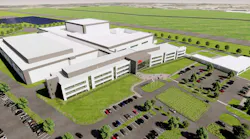
Part of a $27 billion investment to build four new U.S. pharmaceutical manufacturing sites, Eli Lilly on Thursday broke ground on a $3.5 billion facility in Fogelsville, Pennsylvania which will manufacture injectable medicines, including retatrutide — the drugmaker’s investigational GIP, GLP-1, and glucagon triple hormone receptor agonist.
The site in Pennsylvania’s Lehigh Valley, expected to create 850 jobs, is slated to be operational by 2031 and will add capacity for Lilly’s next generation of obesity treatments. The facility is one of four U.S. manufacturing sites announced since 2020 that are dedicated to injectable medicines and devices — the company’s other three facilities are in Kenosha, Wisconsin, and Concord and Research Triangle Park, North Carolina.
“Breakthroughs only become real to patients when we figure out how to make them reliably and at scale — that important work begins here today,” Lilly CEO Dave Ricks said during Thursday’s ground-breaking ceremony, noting the company’s $50 billion investment in expanding U.S. medicine production since 2020.
Ricks said the new Lehigh Valley facility will make Lilly’s next generation of obesity medicines “for people here at home and all around the world — this will be an export site for Lilly.”
Leveraging automation and AI
Lilly’s new Lehigh Valley facility will pair a “highly skilled workforce” of engineers, scientists, operations personnel, and lab technicians with advanced technologies “to drive right-first-time execution, with digital automation embedded throughout the site to streamline operations,” according to Thursday’s announcement.
“It’s not only about making medicines with quality but also having the right technology so that our processes are very representative of the medicine that we’re making,” Roberto Vázquez Sanabria, associate vice president and site head of Lilly Lehigh Valley, said in a statement. “The goal is to have a fully automated process from receiving materials through the warehouse.”
Ricks emphasized in his remarks at the ground-breaking event that quality control is paramount across the company.
“Before any medicine leaves one of our sites, each production run goes through more than 5,000 documented steps and each unit — every single pen — is imaged and inspected more than 70 times to check for defects,” Ricks said. “Lehigh Valley will build on that discipline with machine learning, AI, and digitally integrated systems from day one. This site will be one of the most technically advanced, not just at Lilly but in the industry.”
At the same time, he said the “technology will be working for the people who work here and run it, not the other way around.”
Lilly is leveraging AI to scale manufacturing and optimize operational efficiency to meet the high demand for its medications, including GLP-1s. Scot Lindsey, Lilly’s senior vice president and information officer for manufacturing and quality, told Pharma Manufacturing this summer that the drugmaker’s use of AI and digital twin technology has been effective in scaling production to meet patient demand.
In April, Dan VonDielingen, senior vice president of global parenteral network expansion, told an audience at the INTERPHEX conference that Lilly’s manufacturing infrastructure growth over the last six years is the first such undertaking by any pharmaceutical company. The key, he argued, is learning once and working smarter.
Lilly decided to scale its manufacturing sites with standardization “drawing upon lessons learned from its existing plant sites and from all our contract manufacturing vendors to make sure that we do that in a smart fashion,” VonDielingen said. “We’re really focused on using automation technology and robotics to remove variability.”
About the Author
Greg Slabodkin
Editor in Chief
As Editor in Chief, Greg oversees all aspects of planning, managing, and producing the content for Pharma Manufacturing’s website and digital products, as well as the daily operations of its editorial team.
For more than 20 years, Greg has covered the healthcare, life sciences, and medical device industries for several trade publications. He is the recipient of a Post-Newsweek Business Information Editorial Excellence Award for his news reporting and a Gold Award for Best Case Study from the American Society of Healthcare Publication Editors. In addition, Greg is a Healthcare Fellow from the Society for Advancing Business Editing and Writing.
When not covering the pharma manufacturing industry, he is an avid Buffalo Bills football and Buffalo Sabres hockey fan, likes to kayak, and plays guitar.