Eli Lilly scales global manufacturing with learn once, deploy everywhere approach
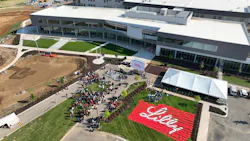
With a commitment of more than $55 billion globally since 2020, Eli Lilly has made a concerted effort to scale its manufacturing operations worldwide using a “learn once, deploy everywhere” approach to ensure the drugmaker is scaling with a focus on standardization.
Over the past six years, Lilly has been building new multibillion-dollar production facilities designed to scale through “disciplined” replication, according to Dan VonDielingen, senior vice president of global parenteral network expansion.
VonDielingen, who is responsible for Lilly’s start-up and ramp of new parenteral sites, told an audience on Tuesday at the INTERPHEX conference in New York City that the company is expanding manufacturing capacity to meet growing global demand for its drugs — including the wildly popular GLP-1 class of medications.
In the U.S., no pharmaceutical company is spending more on its GLP-1 manufacturing infrastructure than Lilly. In 2025, the drugmaker pledged $27 billion to build four new domestic pharmaceutical manufacturing sites — three for active pharmaceutical ingredients (APIs) and one to manufacture parenteral (injectable) products and devices.
VonDielingen credited CEO Dave Ricks and Lilly senior leadership for making “big bets” on where the company wanted to make its medicines. Since 2020, Lilly’s U.S. capital expansion commitments have totaled more than $50 billion, which is meant to enhance production effectiveness and efficiency through automation and digital transformation.
“We believe that platform consistency equals speed,” VonDielingen said. “Speed doesn’t just mean moving faster. The fastest way that you can get things done is to do things right the first time. We’re really focused on using automation technology and robotics to remove variability.”
At the same time, ensuring the quickest production of safe and quality products is not easy, VonDielingen acknowledged. However, he emphasized that “speed can’t come with the cost of being out of control — growth can’t come at the cost of being out of compliance.”
To grow its global network, Lilly decided to scale its manufacturing sites with standardization “drawing upon lessons learned from its existing plant sites and from all our contract manufacturing vendors to make sure that we do that in a smart fashion,” VonDielingen said.
“We scale our plant sites through disciplined replication,” he said. “Every time that we announce a new plant site — we’ve announced 12 of them now since 2020, five of them in the last year — we kick off three different workstreams of activity” including building the facility, procuring the equipment, and hiring the staff to make medicines in the same way.
Getting the ball rolling in North Carolina
VonDielingen, who was previously the site head for Lilly’s Research Triangle Park (RTP) facility in Durham, North Carolina, said the 2020 announcement of plans to build that plant started the company’s journey to scale its manufacturing footprint in the U.S. and globally.
The RTP site, a parenteral manufacturing, device assembly, packaging, and laboratory testing facility, was part of a broader Lilly strategy to expand its production capabilities and address the growing demand for injectable medicines and delivery devices.
“We embarked on building a state-of-the-art factory with the highest levels of automation and technology,” VonDielingen said, noting the then-president of Lilly’s manufacturing directed that RTP be designed as the “factory of the future” including advanced robotics.
“The hardest thing that I’ve ever done in my career was setting up the RTP site,” he added. “It was also the most rewarding.”
In 2022, Lilly announced plans to build a manufacturing site in Concord, North Carolina, which was envisioned as a “twin” to the RTP facility, according to VonDielingen. Equipped with high-speed lines, robotics, and automated systems, the Concord site started commercial production at the end of 2024 after completing construction in only two years.
“We already started building these factories before we had FDA approval [of tirzepatide for type 2 diabetes and obesity] in anticipation of what we knew would be a big market,” VonDielingen said.
When the Concord construction began in 2022, Lilly planned to invest $1 billion to create a new injectable products and devices manufacturing site. The drugmaker subsequently doubled its investment in the Concord facility to $2 billion.
However, VonDielingen insists that replication “doesn’t just mean blindly copying” other sites. He noted that Lilly learned valuable lessons from the RTP facility that helped improve the design of the Concord site.
“We knew we had done some things right, we knew we did some things wrong,” VonDielingen said. “We wanted to make sure that the things we did wrong we were able to correct in the Concord facility.”
Capital investments not without challenges
At the heart of Lilly’s U.S. manufacturing investment strategy are plans to build new facilities that will serve as the backbone of its domestic operations.
In January 2026, Lilly announced plans to invest more than $3.5 billion in a new facility in Lehigh Valley, Pennsylvania that will produce its next-generation obesity therapies. The site, Lilly’s tenth U.S. manufacturing facility announced since 2020, will leverage technologies including artificial intelligence, machine learning, integrated monitoring, and data analytics.
In December 2025, Lilly announced plans to invest $6 billion in a new API manufacturing facility in Huntsville, Alabama that will produce small molecule synthetic and peptide medicines. A $6.5 billion API facility in Houston, Texas, announced in September, will focus on domestic production of small molecule synthetic medicines. Lilly also plans to build a $5 billion API manufacturing facility in Virginia, near Richmond.
While Lilly is making major investments to bolster its manufacturing infrastructure, the drugmaker is struggling to find the talent required for these capital expenditure projects, according to Steve Marr, head of global facilities delivery parenteral.
Speaking last month at the Advancing Life Science Construction conference in Raleigh, North Carolina, Marr called Lilly’s building boom to support GLP-1s “unprecedented” and “transformational” but said the company hasn’t yet figured out how to manage these mega-projects.
“I need six top project directors — how many people out there know six project directors that have delivered on $2 billion projects?” Marr asked the audience. “We can’t build our facilities fast enough,” he added.
At the INTERPHEX conference on Tuesday, VonDielingen said Lilly’s growth and manufacturing expansion over the last six years is the first such undertaking by any pharmaceutical company — the key is learning once and working smarter, he commented.
“We’re not perfect — we do have mistakes,” VonDielingen concluded. “Failure is fine. We want to fail fast.”
About the Author
Greg Slabodkin
Editor in Chief
As Editor in Chief, Greg oversees all aspects of planning, managing, and producing the content for Pharma Manufacturing’s website and digital products, as well as the daily operations of its editorial team.
For more than 20 years, Greg has covered the healthcare, life sciences, and medical device industries for several trade publications. He is the recipient of a Post-Newsweek Business Information Editorial Excellence Award for his news reporting and a Gold Award for Best Case Study from the American Society of Healthcare Publication Editors. In addition, Greg is a Healthcare Fellow from the Society for Advancing Business Editing and Writing.
When not covering the pharma manufacturing industry, he is an avid Buffalo Bills football and Buffalo Sabres hockey fan, likes to kayak, and plays guitar.