Eli Lilly taps AI, digital twin technology to boost manufacturing capacity
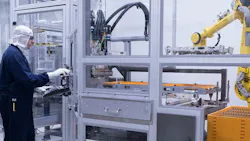
As a 150-year-old medicine company, Eli Lilly has adopted emerging technologies over the past century and a half to accelerate scientific breakthroughs and advance research, development, and manufacturing of pharmaceuticals. The drugmaker is currently leveraging artificial intelligence (AI) to scale production and optimize operational efficiency to meet the high demand for its medications, including GLP-1s.
While Lilly experienced shortages in recent years of its GLP-1 drugs Mounjaro and Zepbound, the company has invested billions of dollars to ramp up manufacturing capabilities to deal with the unprecedented demand. Lilly’s ability to keep the Type 2 diabetes and obesity medications off the FDA’s drug shortage list since late 2024 has been credited to the deployment of AI to help with production tasks.
“We literally made more product last year than we possibly could have without AI,” Diogo Rau, Lilly’s chief information and digital officer, told Forbes in early 2026, adding that the windfall was enough “that it would’ve been material in our earnings reports.”
The drugmaker’s use of AI has been effective in scaling production to meet patient demand, according to Scot Lindsey, Lilly’s senior vice president and information officer for manufacturing and quality, who is responsible for leading the information and digital strategy.
Lindsey told Pharma Manufacturing that the combination of Lilly’s domain expertise and the power of AI is translating into real-world success for the company, including the implementation of digital twins to virtually simulate scale-up processes, pinpoint potential bottlenecks, and fine-tune parameters prior to physical production. Foundational to the approach are three critical principles: human-in-the-loop, explainability, and transparency.
Digital twins, virtual experiments
Lilly creates digital twins of its manufacturing lines to model, test, and optimize processes before making physical changes to the company’s production environment.
In the case of one identified process bottleneck, a digital twin predicted outputs based on different variables which were tested in a pilot and then implemented in manufacturing, resulting in a “tremendous reduction in the time that that bottleneck step took,” according to Lindsey.
Digital twins enable Lilly to make more informed and quicker decision-making to help catch issues earlier while reducing downtime and maintaining quality control, Lindsey contends. AI predicts batch outcomes, enhances process parameters, and detects potential deviations before they cause expensive delays.
“We were able to ingest a lot of real-time information and be able to in near-real-time assess what we should do, and be able to predict when actions should be taken,” he added. “That really was a watershed moment in which we shifted from data science products to a predictive AI engine for our operations, engineering, and manufacturing teams.”
At the same time, Lindsey emphasized that the “explainability” of AI’s recommendations is crucial to predict batch quality, indicate potential anomalies, and adjust conditions — providing transparency on how AI makes decisions.
“We don’t want any black box,” Lindsey said. “We want to fully understand why our AI solution is recommending what it’s recommending.”
Generative AI and agentic AI are helping to automate complex tasks, while real-time information combined with predictive capabilities enable Lilly’s teams to quickly analyze datasets and make actionable assessments that support faster, smarter decision-making.
“A human, a system, or another agent could be the supplier of the inputs,” said Lindsey, who noted that Lilly is “exploiting all three of those” for improving individual and small team productvity and “agentifying how work gets accomplished across manufacturing.”
In October 2025, Lilly partnered with NVIDIA to build what the companies claim is the most powerful supercomputer owned and operated by a pharmaceutical company. In addition to drug discovery, the supercomputer-enabled AI tool is meant to benefit Lilly’s manufacturing processes using digital twins with NVIDIA’s robotic technologies to improve production efficiency and reduce downtime.
“We’ve got a pretty big target space for those potential opportunities and we’ve prioritized the first sets of [AI] agents,” Lindsey emphasized. “We’ve developed and deployed some of those, and we’re continuing to execute a robust strategy around that.”
While AI is well-established in drug discovery, it is increasingly finding a role in pharmaceutical manufacturing with companies looking to make production faster, more reliable, and easier to manage, according to a new report from GlobalData, which noted that digital twins, predictive maintenance, and real-time quality monitoring are being used to cut downtime, reduce waste, and improve batch consistency.
“Rather than replacing established manufacturing practices, AI is being harnessed to strengthen them,” Edita Hamzic, analyst at GlobalData, said in a statement. “Companies that see AI as part of their operational model, not as a standalone technology project, are most likely to benefit.”
Lilly is still working on identifying and understanding where AI agents can be be most beneficial to its manufacturing operations, according to Lindsey.
“Manufacturing is all about continuous improvement, whether it’s with AI or without AI — the whole idea is to get better today than yesterday,” Lindsey said, setting the goal of increasing production output, decreasing costs, and optimizing resource allocation.
“AI, in and of itself, isn’t the solution,” he concluded. “It’s an expert organization that embraces the technology and works with it to make them even better at what they do.”
About the Author
Greg Slabodkin
Editor in Chief
As Editor in Chief, Greg oversees all aspects of planning, managing, and producing the content for Pharma Manufacturing’s website and digital products, as well as the daily operations of its editorial team.
For more than 20 years, Greg has covered the healthcare, life sciences, and medical device industries for several trade publications. He is the recipient of a Post-Newsweek Business Information Editorial Excellence Award for his news reporting and a Gold Award for Best Case Study from the American Society of Healthcare Publication Editors. In addition, Greg is a Healthcare Fellow from the Society for Advancing Business Editing and Writing.
When not covering the pharma manufacturing industry, he is an avid Buffalo Bills football and Buffalo Sabres hockey fan, likes to kayak, and plays guitar.