Cell therapy manufacturing’s next phase depends on automation
Over the last decade, CAR-T therapies have demonstrated improved efficacy, durability, and safety profiles. At the same time, the technologies necessary to support the manufacture of these therapies at commercial scale have not advanced at the same pace.
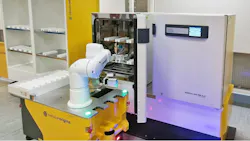
In response, cell therapy technology developers are creating more automated and connected manufacturing solutions to handle challenges that continue to limit the modality’s growth. Some of these technologies are focused on improving data collection or reducing reliance on manual processes but ultimately serve to create more scalable manufacturing operations. Cellular Origins, the developer of Constellation, a robotic cell therapy manufacturing platform, announced a series of partnerships in 2026 — including late-stage biopharma company Immatics — aimed at addressing some key challenges.
Against this backdrop, Cellular Origins CEO Edwin Stone emphasized that one of the industry’s biggest lessons recently is the importance of manufacturing flexibility. He noted how commercialization timelines and launch demand have often proved difficult to predict, making manufacturing flexibility increasingly important as cell therapies move toward commercial scale.
“What has become clear in terms of the rules that we’re working to is that you need that launch flexibility — you need that flexibility in the journey to scale,” he said.
Diminishing returns
Stone contends that the industry’s growing interest in automation is being driven, in part, by the diminishing returns of continually optimizing manual manufacturing processes. While manufacturers have reduced labor requirements and improved efficiency over the past decade, he argues that relying on people as the primary means of scaling production is ultimately unsustainable.
With regards to manufacturers reaching the limits of what can be achieved through incremental improvements to manual processes, Stone said “people are putting more and more money into these facilities and getting less and less doses out for dollars spent, which is why we need to have a change in the industry.”
Automation and data
Cellular Origins’ recent partnerships focus on areas where Stone believes automation can help address persistent manufacturing challenges.
For example, its most recent collaboration with Autolomous is highlighted by an “integrated solution that combines Cellular Origins’ Constellation automated platform … with Autolomous’ autoloMATE digital platform, which enables real-time data exchange across software, artificial intelligence (AI) systems, devices, and robotic platforms throughout the manufacturing process and supply chain.”
The partnership addresses one area that Stone says the industry has historically struggled with: collecting high-quality manufacturing data.
Those challenges stem from both the sensitivity of patient-related manufacturing data as well as the limitations of manual data collection, according to Stone.
“If there’s something humans are bad at, it is data entry. Particularly frequent data entry and accurate data entry,” said Stone. “And, so this work with Autolomous is about creating really solid regulatory approvable electronic batch records and being able to know we’ve got really high-quality data.”
From this, Stone sees AI as a natural next step once high-quality manufacturing data is available. The data generated through robotics can be analyzed by AI to identify opportunities to further optimize manufacturing workflows, he said.
At the same time, he emphasized that automation is not intended to replace people entirely. Human expertise will remain essential during therapy development and early process design, but once manufacturing processes are more determinable, continuing to rely on manual operations can limit scalability.
“So that’s a crucial challenge: to recognize what is phase appropriate in their development and making sure that you’ve got something that can flex to that moment in time,” says Stone. “But that you’re not encumbering your process with a level of specific manual operation that means it is never truly scalable to the potential of the therapy.”
Meanwhile, another recent partnership reflects an ongoing focus on reducing the limitations introduced by manual processes.
Reducing process variability was a key objective behind Cellular Origins’ recent integration of Fresenius Kabi’s Cue cell processing system into the Constellation platform.
Similar to the Autolomous collaboration, this partnership emphasizes “reducing manual touchpoints as an important part of supporting more consistent and scalable manufacturing processes.”
According to the companies, the integration enables robotic-operated cell processing designed to reduce manual intervention while maintaining existing biological workflows. The work follows an agreement signed in October 2024 and included studies using human T cells, which confirmed that the Cue system could reliably execute complex workflows when operated within the robotic platform.
Beyond improving operational efficiency, reducing manual intervention also has regulatory implications by minimizing human error and improving manufacturing consistency.
Although Stone does not expect a kind of industry-wide standardization of automation to emerge, he sees broader adoption of automation as inevitable.
“I think we’ll see automation becoming more ubiquitous because those that automate will be more successful and therefore, we will see companies adopt automation because it becomes a competitive necessity,” according to Stone.
Building a connected ecosystem
What these partnerships ultimately reflect, Stone emphasizes, is Cellular Origins’ broader strategy of building a more connected ecosystem for cell therapies.
Connectivity extends beyond linking software and manufacturing data, he argues, and also means bringing together specialized technology providers whose combined expertise can create more robust manufacturing solutions than one company could deliver alone.
“This industry’s success will come from bringing together all the experts in the various pieces of this to create the very best therapeutic products,” Stone says. “I think we owe it to patients to do that. So that’s to me why partnerships and connectivity in general is so important.”
While interoperability, standardization, and scaling remain ongoing challenges, he believes the industry’s priorities have become much more distinct.
“The rules are now becoming clear,” said Stone. “The needs are becoming really clear. We’ve got enough people that have lived through these journeys to understand what success looks like and what the industry needs next.”

About the Author
Andy Lundin
Senior Editor
Andy Lundin has more than 10 years of experience in business-to-business publishing producing digital content for audiences in the medical and automotive industries, among others. He currently works as Senior Editor for Pharma Manufacturing and is responsible for feature writing and production of the podcast.
His prior publications include MEDQOR, a real-time healthcare business intelligence platform, and Bobit Business Media. Andy graduated from California State University-Fullerton in 2014 with a B.A. in journalism. He lives in Long Beach, California.