Fujifilm’s modular, scalable manufacturing takes shape amid complex global supply chain
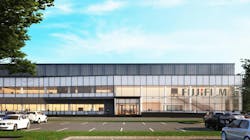
By linking manufacturing facilities in Europe, Japan, and the United States, Fujifilm Biotechnologies intends to provide its customers with flexible global capacity and local supply to meet their evolving needs. It’s a modular and agile approach, based on cloning its bioproduction sites globally, that predates current geopolitical and trade tensions but is seen by the company as a hedge against the world’s supply chain volatility.
The contract development and manufacturing organization (CDMO) has harmonized the design of its facilities, equipment, processes, and quality systems with the goal of providing faster technology transfer and scalability to customers — regardless of location — so that production can be effortlessly expanded across the company’s global network.
Fujifilm Biotechnologies is building a holistic biomanufacturing network called KojoX — the Japanese word for “improvement” and “factory” — with capital investments through 2028, including the expansion of its capabilities and capacity in Billingham, United Kingdom, Hillerød, Denmark, Holly Springs, North Carolina, and Toyama, Japan.
“We are building an ecosystem for the long term,” Fujifilm Biotechnologies CEO Lars Petersen told Pharma Manufacturing last week during the J.P. Morgan Healthcare Conference in San Francisco. “We’re in it for something that we believe is game-changing five, 10, 15 years out.”
Within this emerging ecosystem, Fujifilm contends that customers can move seamlessly between different production scales ranging from 2,000L to 5,000L single-use bioreactors to large-scale 20,000L stainless steel bioreactors.
Next month, the CDMO will officially launch its expanded UK microbial manufacturing site, touted by Fujifilm as Britain’s largest single-use biomanufacturing site and home to the country’s largest process development labs on one campus. The expansion, which more than doubles the site’s existing footprint, will feature 2,000L and 5,000L single-use bioreactors for small-to-mid-scale manufacturing.
Last month, Fujifilm completed construction of one of Japan’s largest bio CDMO facilities at its Toyama Second Factory in Toyama Prefecture, marking the company’s first antibody drug manufacturing plant in Japan. The facility, operated by Fujifilm Toyama Chemical and slated to begin operations in 2027, will serve as its bio CDMO hub in Asia with two 5,000L and two 2,000L single-use mammalian cell culture bioreactors.
In Denmark, Fujifilm’s Hillerød site has been undergoing a major expansion. The first phase, completed in 2024, added six 20,000L mammalian cell bioreactors, bringing total capacity to 12 x 20,000L with plans to add an additional eight 20,000L bioreactors.
In September 2025, Fujifilm Biotechnologies opened a biomanufacturing site in Holly Springs, North Carolina, which is a near-replica of its commercial-scale site in Hillerød, built by leveraging the company’s KojoX modular approach. Fujifilm’s Phase II expansion in Holly Springs will add eight 20,000L mammalian cell culture bioreactors to the site’s existing capacity of eight 20,000L bioreactors.
“Our KojoX system enables customers to be much more flexible than with other systems, because they can move quickly in and out of the U.S.,” Petersen said.
Growing customer partnerships
Customers are already lining up to tap Fujifilm’s new Holly Springs site. Last year, the CDMO announced several customer contracts including a 10-year agreement with Regeneron worth more than $3 billion for the manufacture and supply of bulk drug products at Holly Springs — effectively doubling Regeneron’s U.S. large-scale production capacity.
“You only heard about the public contracts,” Petersen said. “We made three other contracts that altogether are as big as Regeneron.”
Other publicly announced deals in 2025 included Johnson & Johnson’s $2 billion commitment over a decade to establish a dedicated facility at Fujifilm’s Holly Springs site, as well as the expansion of the CDMO’s global partnership with argenx SE to manufacture drug substance for efgartigimod — argenx’s monoclonal antibody fragment.
The deal with argenx was the first global end-to-end program in support of a customer utilizing Fujifilm’s KojoX modular network of facilities, according to the CDMO.
“We are not building facilities just to build facilities,” Petersen emphasized. “We are building an ecosystem. It’s the long-term journey.”
About the Author
Greg Slabodkin
Editor in Chief
As Editor in Chief, Greg oversees all aspects of planning, managing, and producing the content for Pharma Manufacturing’s website and digital products, as well as the daily operations of its editorial team.
For more than 20 years, Greg has covered the healthcare, life sciences, and medical device industries for several trade publications. He is the recipient of a Post-Newsweek Business Information Editorial Excellence Award for his news reporting and a Gold Award for Best Case Study from the American Society of Healthcare Publication Editors. In addition, Greg is a Healthcare Fellow from the Society for Advancing Business Editing and Writing.
When not covering the pharma manufacturing industry, he is an avid Buffalo Bills football and Buffalo Sabres hockey fan, likes to kayak, and plays guitar.