Novartis plans new active pharmaceutical ingredients facility in North Carolina
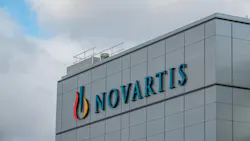
Swiss drugmaker Novartis has announced plans to build a new 56,200-square-foot active pharmaceutical ingredient (API) manufacturing facility in Morrisville, North Carolina, for solid dosage tablets, capsules, and RNA therapeutics.
Morrisville marks the company’s seventh new facility planned as part of its $23 billion investment over five years on 10 U.S. production and R&D sites — including seven new facilities, six of which are manufacturing plants. The company’s North Carolina expansion is part of its goal of fully producing 100% of its key medicines end-to-end in the U.S.
“Last year we committed to adding seven new facilities in the U.S., and today we finalize our plans to expand our U.S. manufacturing and R&D footprint in the U.S.,” Novartis CEO Vas Narasimhan said in a Wednesday statement. “By building a connected, end-to-end footprint, we are strengthening our ability to locally develop, produce, and deliver medicines at scale, enabling timely access to innovation for patients in the U.S.”
According to Novartis, the Morrisville facility marks a critical step towards enabling its end‑to‑end U.S. manufacturing for all advanced technology platforms in the U.S. — including small and large molecules, radioligand, RNA therapeutics, cell and gene therapies — which would be a first for the drugmaker.
The new Morrisville facility will expand the company’s presence in North Carolina to five facilities across three sites. In December 2025, Novartis broke ground on a $771 million, 700,000-square-foot manufacturing hub in North Carolina, including a new facility in Morrisville, two facilities in Durham, and the expansion of an existing Durham operation.
The flagship hub in North Carolina will provide end-to-end manufacturing capabilities — from producing APIs to final packaging — for Novartis’ oncology, immunology, neuroscience, cardiovascular, renal, and metabolic therapeutics.
Cell and gene therapies are currently manufactured in Durham and Morris Plains, New Jersey, while radioligand therapies are produced at Novartis facilities in Carlsbad, California, Indianapolis, Indiana, and Millburn, New Jersey, with two new sites planned in Florida and Texas. Expansions of existing facilities in Indianapolis and Millburn will support current and future demand for cancer treatments, according to the company.
Radioligand therapy manufacturing
The global market for radioligand therapies (RLTs) is anticipated to grow substantially in the coming years, projected to increase from $2.6 billion in 2025 to $4.8 billion by 2030. Much of that momentum is being driven by two leading therapies from Novartis — Lutathera and Pluvicto.
To support that demand, Novartis has rapidly expanded its domestic RLT manufacturing footprint. Central to that strategy is building a distributed network designed around speed and proximity.
Last month, Novartis announced plans to invest more than 3.3 billion yuan (nearly $480 million) to expand its research, production, and operations footprint in China, with a focus on advancing pharmaceutical innovation and RLT.
In February 2026, the company said it was planning to construct a 46,000-square-foot RLT manufacturing facility in Denton, Texas. The site is its first production operation in Texas and expands the drugmaker’s coast-to-coast RLT network to five facilities. Construction is slated to begin this year, with operations expected to start in 2028.
Novartis is also building a 35,000-square-foot RLT manufacturing facility in Winter Park, Florida. The new facility, the company’s first in the Southeastern U.S., is expected to begin operations by 2029.
In California, Novartis in November 2025 opened an RLT manufacturing facility in Carlsbad — the first such site in the region serving the Western U.S., Alaska, and Hawaii — and announced plans for a $1.1 billion biomedical research hub in San Diego.
The company broke ground in February 2026 on the new biomedical research center in San Diego, which will expand its U.S. research presence alongside Cambridge, Massachusetts, supporting discovery across disease areas including neuroscience and oncology.
About the Author
Greg Slabodkin
Editor in Chief
As Editor in Chief, Greg oversees all aspects of planning, managing, and producing the content for Pharma Manufacturing’s website and digital products, as well as the daily operations of its editorial team.
For more than 20 years, Greg has covered the healthcare, life sciences, and medical device industries for several trade publications. He is the recipient of a Post-Newsweek Business Information Editorial Excellence Award for his news reporting and a Gold Award for Best Case Study from the American Society of Healthcare Publication Editors. In addition, Greg is a Healthcare Fellow from the Society for Advancing Business Editing and Writing.
When not covering the pharma manufacturing industry, he is an avid Buffalo Bills football and Buffalo Sabres hockey fan, likes to kayak, and plays guitar.