Agilent’s GLP-1 momentum continues with 40% year-over-year growth for FY26
Santa Clara, California-based Agilent Technologies on Monday reported financial results for the fourth quarter of fiscal 2026 with strong performance from the company’s glucagon-like peptide-1 (GLP-1) and specialty contract development and manufacturing organization (CDMO) business.
Agilent’s GLP-1 momentum continued with approximately 40% year-over-year growth for the full year, CEO Padraig McDonnell told analysts in an earnings call, while noting that the Advanced Therapeutics Division (ATD) — its specialty CDMO business — grew mid-single digit in the quarter “above our expectation for roughly flat performance.” He added that excluding ATD, the pharmaceutical segment delivered low double-digit growth in Q4.
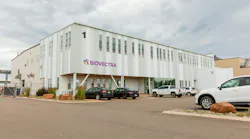
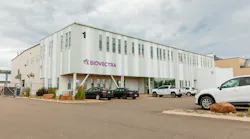
ATD was launched in March 2026 unifying Agilent’s CDMO business — Biovectra operations in Canada with its Nucleic Acid Solutions in Colorado — creating a single, streamlined platform across North America. ATD’s CDMO portfolio includes oligonucleotides, microbial fermentation, complex and synthetic chemistry, bioreagents, highly potent active pharmaceutical ingredients, and cell line development.
Building on Agilent’s capabilities in oligonucleotides and CRISPR therapeutics, Biovectra was acquired in 2024 for $925 million helping to expand the portfolio of services with sterile fill-finish and rapidly growing modalities such as antibody-drug conjugates and GLP-1s.
All the company’s end markets performed well in Q4, according to McDonnell, led by “another excellent quarter” of pharmaceutical demand which grew 9%, ahead of mid- to high-single-digit expectations driven by “strong demand in China from increased multinational investment and domestic innovation.” He emphasized that Agilent’s business in China marked “another exceptional quarter” led by pharma which grew more than 40%. On a geographic basis, the biggest driver of upside in Q4 was China.
“Clinical trial activity in the region has increased meaningfully,” McDonnell noted. “Moreover, China’s Pharma Five-Year Plan underscores the country’s ambition to evolve from a major pharmaceutical manufacturing center to a leading source of innovation with world-class biopharma companies.”
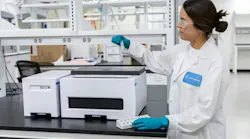
When it comes to the overall direction of the biopharma industry, he observed that “increasingly sophisticated therapeutic modalities are driving more demanding analytical requirements throughout drug development and manufacturing,” while customers are accelerating investments in lab automation.
“Our enterprise services capabilities position us particularly well to work directly with customers to co-create the autonomous lab, bringing together Instrumentation, automation, software, data and services across increasingly connected workflows,” McDonnell said.
In Q4, biotechnology grew low-double digits and small molecule enjoyed high-single-digit growth, while spending from small- and mid-cap biotech customers continued to improve, he added.
Next year’s forecast
Looking ahead to fiscal 2027, CFO Adam Elinoff told analysts that Agilent expects pharma to generate high-single-digit growth with strong momentum in small molecule and biotech set to continue coupled with mid-teens growth in ATD.
Agilent’s ATD business includes Nucleic Acid Solutions (NAS), which has two cGMP facilities in Boulder and Frederick, Colorado. The new NAS capacity (Train C), based on a $100 million capital expenditure investment, is slated to go live in early mid-2027 supporting future growth.
“In ATD, we expect incremental revenue contributions from Train C in the back half of the year that will be partially offset by the anticipated moderation in growth on Trains A and B as we approach optimal capacity utilization,” Elinoff said.
Leerink Partners analysts in a note to investors said Agilent delivered an “impressive beat” in Q4, adding that they “like the setup into FY27 given conservative assumptions (no meaningful reshoring, modest pricing) and Train C revenue building in 2H.”
Simon May, Agilent’s president of the Life Sciences and Diagnostics Markets Group, said he expects Train C to come online in the spring of 2027 with revenue ramping up in the second half of the year.
“We have orders in hand for the great majority of our Train C capacity in FY27,” said May, who foresees “optimal capacity utilization in the Colorado plants” next year. He commented that the clinical pipelines for siRNA modalities in particular “continue to look very promising” with the “mix of commercial to clinical” continuing to “evolve positively” in an attractive market.
About the Author
Greg Slabodkin
Editor in Chief
As Editor in Chief, Greg oversees all aspects of planning, managing, and producing the content for Pharma Manufacturing’s website and digital products, as well as the daily operations of its editorial team.
For more than 20 years, Greg has covered the healthcare, life sciences, and medical device industries for several trade publications. He is the recipient of a Post-Newsweek Business Information Editorial Excellence Award for his news reporting and a Gold Award for Best Case Study from the American Society of Healthcare Publication Editors. In addition, Greg is a Healthcare Fellow from the Society for Advancing Business Editing and Writing.
When not covering the pharma manufacturing industry, he is an avid Buffalo Bills football and Buffalo Sabres hockey fan, likes to kayak, and plays guitar.