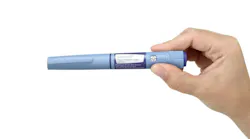
Oligonucleotides, GLP-1s will continue to drive CDMO market in 2027: report

Glucagon-like peptide-1 (GLP-1) receptor agonists and oligonucleotides are two modalities that will continue to drive demand in the contract development and manufacturing organization (CDMO) market, according to staffing and recruiting firm Vector Talent.
Vector’s CDMO Outlook for 2027 lays out the firm’s expectations including where demand is heading and where capacity is moving. Among the report’s predictions for next year: oligonucleotides are “breaking out of rare disease and GLP-1s still drive most new fill-finish demand.” The firm’s advice to CDMOs: “Pick your modality bets” and “commit to oligos and GLP-1 fill-finish now, and keep option value in cell and gene therapy.”
In 2026, GLP-1s and oligonucleotides “pulled ahead while cell and gene therapy struggled, and talent remained the binding constraint,” finds the report. When it comes to oligonucleotide capacity, Vector predicts in 2027 it “sells out before it’s built” and “oligo CMC [Chemistry, Manufacturing, and Controls] talent becomes the scarcest skill set in small-molecule adjacent manufacturing.”
Vector contends oligonucleotide CMC, sterile fill-finish, and peptide Quality Control “will be the hardest roles to fill” next year, while “fill-finish candidates point to device [Quality Assurance] and Annex 1 validation as the sharpest needs.”
Oligo, GLP-1 growth continues
According to Vector, the global oligonucleotide market will grow in the “high teens a year to 2030” while global prefilled syringe market — $9.4 billion in 2026 — is forecast to reach $20.3 billion by 2035. Demand for injectable medicines continues to dominate the fill-finish sector, with GLP-1 and incretin therapies for obesity and diabetes emerging as major contributors to market growth.
At the same time, with the rising demand and complexities of manufacturing oligo-based therapies, Vector says CDMOs are positioned to benefit from the sector’s expansion.
“One leading supplier says 70% of a new manufacturing train is committed six months before it opens,” states Vector’s report. “Uses are spreading from rare disease into cardiovascular disease, where Novartis’s Leqvio is already on the market, as well as inflammation, infectious disease and obesity. Eli Lilly’s $1.2 billion RNAi obesity deal with SanegeneBio shows how seriously Big Pharma takes that last one. Expect more suppliers to announce oligo expansions.”
Janik Kaufmann, technical sales specialist for oligonucleotides at Hongene Biotech, told Pharma Manufacturing the growing demand for oligo-based therapeutics is driven by their unique modularity and versatility.
“Unlike conventional drug modalities, oligonucleotides can be precisely engineered to achieve a desired biological effect,” Kaufmann said. “Development efforts are increasingly expanding beyond rare diseases into highly prevalent indications such as cardiovascular, metabolic, and liver disorders. As these diseases affect millions of patients worldwide, they represent a significant opportunity for market growth and are expected to drive substantial demand for large-scale oligonucleotide manufacturing.”
Complexity of manufacturing
Contract manufacturing represents the largest share of the oligonucleotide CDMO market, driven by increasing demand for large-scale production of high-purity oligonucleotide therapeutics and the growing complexity of requirements. When it comes to oligonucleotide manufacturing, the modality is growing quickly and the barrier to entry is a technically challenging and capital-intensive process.
As the number of clinical programs and regulatory approvals increases, CDMOs will play a critical role on the path to commercialization for these complex modalities, according to Kaufmann, who notes that establishing in-house capabilities requires significant investments in GMP facilities, specialized equipment, and a skilled workforce.
“By leveraging established expertise, scalable manufacturing capacity, and regulatory experience, CDMOs enable developers to advance their programs more efficiently while reducing operational complexity,” Kaufmann said.
He argues that ideally a CDMO should be able to support a program throughout its entire lifecycle, from discovery and early development through clinical phases and ultimately commercial manufacturing.
“Particularly in the early stages, execution speed and support with regulatory documentation are critical to maintaining development timelines,” Kaufmann points out. “Core capabilities include process development for scalable manufacturing processes, in-house analytical method development and validation, and large-scale GMP production.”
As oligonucleotide therapeutics continue to evolve, he makes the case that CDMOs must also be equipped to support increasingly complex modalities through expertise in areas such as conjugation chemistry and advanced manufacturing technologies.
“CRISPR is driving interest in advanced manufacturing technologies, including chemoenzymatic ligation approaches, which have the potential to improve yield, purity, and scalability — especially for challenging RNA sequences,” Kaufmann added. “CRISPR, therefore, not only represents a new therapeutic market but also an opportunity for CDMOs to advance next-generation manufacturing technologies.”
About the Author
Greg Slabodkin
Editor in Chief
As Editor in Chief, Greg oversees all aspects of planning, managing, and producing the content for Pharma Manufacturing’s website and digital products, as well as the daily operations of its editorial team.
For more than 20 years, Greg has covered the healthcare, life sciences, and medical device industries for several trade publications. He is the recipient of a Post-Newsweek Business Information Editorial Excellence Award for his news reporting and a Gold Award for Best Case Study from the American Society of Healthcare Publication Editors. In addition, Greg is a Healthcare Fellow from the Society for Advancing Business Editing and Writing.
When not covering the pharma manufacturing industry, he is an avid Buffalo Bills football and Buffalo Sabres hockey fan, likes to kayak, and plays guitar.