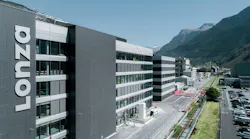
Lonza to acquire five CDMO sites from Merck KGaA, more than doubling US footprint
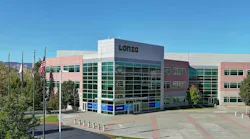
Switzerland-headquartered contract development and manufacturing organization (CDMO) Lonza announced it has signed an agreement to acquire five U.S. manufacturing sites from Merck KGaA at a total enterprise valuation in the low- to mid-triple-digit millions of Swiss francs.
The transaction, which is expected to close in mid-2027, will more than double Lonza’s U.S. footprint to nine CDMO sites and add approximately 1,100 employees to its workforce. The facilities will expand Lonza’s clinical through commercial capabilities in “attractive growth areas” such as antibody-drug conjugates, viral vectors for cell and gene therapies, and drug-delivery technologies, according to the announcement.
William Blair analysts in a Tuesday note to investors said the acquired network provides capabilities with “approximately 60%-70% of sales coming from bioconjugation, including high-potency payload linkers, and the remaining sales split relatively evenly between viral vectors and non-viral delivery technologies.”
The cash deal involves five Merck KGaA CDMO manufacturing sites: St. Louis, Missouri (bioconjugates), Madison and Verona, Wisconsin (high-potency payload-linkers), Carlsbad, California (end-to-end viral vector solutions, including aseptic fill-finish capabilities), and Indianapolis, Indiana (lipid nanoparticle, liposome, and PEGylated protein solutions, including aseptic fill-finish capabilities).
“With high demand for bioconjugates and viral vectors, the acquired sites will strengthen our ability to support customers from innovation to launch and commercial supply,” Lonza CEO Wolfgang Wienand said in a statement.
Wienand told analysts last month at its Capital Markets Day that Lonza is “looking at a broad set of opportunities” where the CDMO “might acquire other businesses, including new modalities, but also underutilized pharma assets.” The company’s Advanced Synthesis business, which includes the manufacturing of ADCs and bioconjugates, is an area “where we would be ready to take on capacity,” he said.
In addition, Wienand noted that Lonza is lacking bioconjugation capabilities in the U.S., which he called a “very attractive” market that is “undersupplied” in his estimation.
The agreement to acquire five CDMO sites from Merck KGaA will “strengthen Lonza’s end-to-end offering in the U.S., adding clinical and commercial development and manufacturing capabilities for bioconjugation, payload-linkers, and viral vectors,” according to Tuesday’s announcement.
Merck KGaA’s separate announcement said the divestment of its CDMO business to Lonza “sharpens” the company’s focus on the life science business sector. Until the transaction closes, the CDMO business will continue to operate as part of Merck KGaA.
Building on Lonza’s Vacaville acquisition
At the center of Lonza’s U.S. footprint is its Vacaville, California facility, which it contends is one of the world’s largest biologics manufacturing sites. The facility, acquired from Roche for $1.2 billion in 2024, is dedicated to late-stage clinical and commercial mammalian manufacturing with 12,000L and 25,000L stainless steel bioreactors contributing to a total bioreactor capacity of 332,000L.
Vacaville is the crown jewel in CDMO’s biologics growth strategy — a facility that Lonza says is well-positioned to capitalize on large-scale mammalian demand. The company anticipates high-single-digit average annual mammalian pharma product sales growth through 2030, and a 25% aggregate increase in mammalian molecules in the preclinical and clinical pipeline, according to William Blair analysts.
Lonza expects Vacaville, its largest Integrated Biologics division site for the commercial manufacture of complex biologics, will reach peak sales of up to 2 billion Swiss francs ($2.4 billion) in the early 2030s at constant exchange rates.
The company has committed approximately $500 million in upgrades to the quality system and IT infrastructure at Vacaville which the company said is ongoing for “CDMO readiness.” Lonza is enhancing the site’s capabilities and throughput and intends to make additional investments to upgrade Vacaville’s automation and multi-purpose capabilities.
“Together with the ongoing investment in CDMO readiness in Vacaville, California, and the recently announced investment in a commercial spray-drying facility in Bend, Oregon, this acquisition [of five Merck KGaA sites] represents another step in building an even more comprehensive, competitive CDMO network in the U.S.,” according to Lonza.
Overall, William Blair analysts said they view the acquisition as “another disciplined deployment of capital that adds complementary capabilities across several structurally attractive modalities, while providing a solid foundation for incremental profitable growth over the coming decade.”
About the Author
Greg Slabodkin
Editor in Chief
As Editor in Chief, Greg oversees all aspects of planning, managing, and producing the content for Pharma Manufacturing’s website and digital products, as well as the daily operations of its editorial team.
For more than 20 years, Greg has covered the healthcare, life sciences, and medical device industries for several trade publications. He is the recipient of a Post-Newsweek Business Information Editorial Excellence Award for his news reporting and a Gold Award for Best Case Study from the American Society of Healthcare Publication Editors. In addition, Greg is a Healthcare Fellow from the Society for Advancing Business Editing and Writing.
When not covering the pharma manufacturing industry, he is an avid Buffalo Bills football and Buffalo Sabres hockey fan, likes to kayak, and plays guitar.