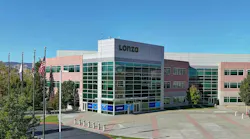
Lonza ups the ante in US with Merck KGaA deal, Samsung Biologics must respond

The competition between Lonza and Samsung Biologics in the contract development and manufacturing organization (CDMO) space is heating up. It’s a rivalry increasingly focused on capacity, scale, and regionalization. However, Lonza’s acquisition of five U.S. CDMO sites from Merck KGaA last week — more than doubling the Swiss company’s footprint in this country — has raised the bar, challenging Samsung’s domestic investment strategy.
The South Korean CDMO recently established its first U.S. manufacturing beachhead with the purchase of a GSK site in Rockville, Maryland. Still, Samsung’s presence in the U.S. pales in comparison to the biologics network that Lonza is putting together based on its Vacaville, California facility — acquired from Roche in 2024 — and the clinical through commercial capabilities in antibody-drug conjugates (ADCs), viral vectors for cell and gene therapies, and drug-delivery technologies that the Merck KGaA sites provide. Lonza is also adding a new large-scale, commercial spray-drying facility in Bend, Oregon.
While Samsung’s Maryland facility “can make conventional monoclonal antibody drug substance, has customers and delivery,” it currently “lacks mature commercial lines for high-potency conjugation/high-potency payloads, and cannot yet perform in the United States the high-potency, high-risk complex molecule processes included in Lonza’s [Merck KGaA] acquisition package,” according to a LinkedIn post by Guidechem.
It bears mentioning that Samsung is acquiring Swiss-headquartered CDMO PolyPeptide Group, which will expand its capabilities beyond antibodies and ADCs to include peptide therapeutics — adding six manufacturing facilities in Europe, India, and the U.S. But with Lonza’s creation of arguably the largest biologics CDMO network in the U.S., including Merck KGaA’s five sites in California, Indiana, Missouri, and Wisconsin, Samsung’s Maryland biopharma production site and two PolyPeptide facilities in California won’t be enough to compete.
At the same time, according to a June 2026 press release from Ohio Governor Mike DeWine, Lonza is considering a potential $1 billion investment to build a new biomanufacturing facility in Williamsburg Township (Clermont County) — a capital project that “remains subject to successful due diligence and internal approvals” by Lonza’s Board of Directors.
However, as Vector Talent’s Business Development Director Isabel Kennedy pointed out in a LinkedIn post, existing GMP sites “with trained teams and room to expand are a faster route into the U.S. than building from scratch, and that matters while demand for U.S.-based capacity keeps growing.”
Manoj Kenkare, senior partner and life sciences industry leader at IBM Consulting, noted in his LinkedIn post that with the Merck KGaA deal, Lonza “improves its standing” versus Samsung Biologics — as well as Thermo Fisher Scientific and the former Catalent network now controlled by Novo Holdings — “while gaining a clearer geographic advantage versus Asia-focused providers.”
Kenkare made the case that “high-potency payload-linker and viral-vector manufacturing remain high-barrier segments” and by adding Merck KGaA’s existing U.S. CDMO sites, Lonza reduces the “need for greenfield investment and strengthens its ability to cross-sell established large-pharma relationships.”
Will Samsung grow its US footprint?
Thanks to the KGaA deal, Lonza is jumping from four to nine U.S. sites and adding about 1,100 highly skilled employees, which puts pressure on Samsung Biologics. The question remains: Will the South Korean CDMO make the sizable investment to compete with Lonza’s network in America?
Last month, Samsung’s earnings announcement said the company is “evaluating opportunities to optimize” its Maryland facility for a broader range of customer requirements. But as Guidechem argued, the Rockville site is “only a ticket to entry” in U.S. manufacturing for Samsung and “not a particularly solid moat.”
At the beginning of 2026, Samsung Biologics CEO John Rim said widening economic and geopolitical uncertainty — along with intensifying competition in biomanufacturing — will make it “a year that demands a higher level of competitiveness in every respect.” It’s a market dynamic that will continue in 2027 as commercial outsourcing in the U.S. and complex therapy development are expanding the opportunities for global CDMOs such as Lonza and Samsung that combine production assets with specialized services.
Lonza has just raised the stakes with its acquisition of the Merck KGaA CDMO sites, boosting its end-to-end offering in the U.S. with clinical and commercial development and manufacturing capabilities for bioconjugation, payload-linkers, and viral vectors. Now, Samsung must respond in kind if it wants to compete.
About the Author
Greg Slabodkin
Editor in Chief
As Editor in Chief, Greg oversees all aspects of planning, managing, and producing the content for Pharma Manufacturing’s website and digital products, as well as the daily operations of its editorial team.
For more than 20 years, Greg has covered the healthcare, life sciences, and medical device industries for several trade publications. He is the recipient of a Post-Newsweek Business Information Editorial Excellence Award for his news reporting and a Gold Award for Best Case Study from the American Society of Healthcare Publication Editors. In addition, Greg is a Healthcare Fellow from the Society for Advancing Business Editing and Writing.
When not covering the pharma manufacturing industry, he is an avid Buffalo Bills football and Buffalo Sabres hockey fan, likes to kayak, and plays guitar.