Samsung Biologics benefits from plant utilization, court restricts potential strike impact
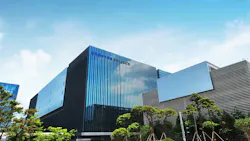
South Korea-based contract development and manufacturing organization (CDMO) Samsung Biologics announced strong financial results for the third quarter of fiscal year 2026, with Plants 1 through 4 operating at full capacity at its Bio Campus I in Songdo, Incheon.
Touted as the world’s largest biomanufacturing facility, with a combined total capacity of 605,000 liters, Samsung’s Bio Campus I includes bioreactors from 1,000 liters to 15,000 liters for both small-batch clinical production and large-scale commercial manufacturing.
In Q3, the company also reported “increasing contributions from Plant 5” as production ramps up. Last year, the fully automated Plant 5 went online — Samsung’s first facility at its Bio Campus II site in Songdo — adding 180,000 liters of capacity and bringing the CDMO’s total antibody production capacity to 784,000 liters. Bio Campus II, which will also include Plants 6, 7, and 8, is slated for completion by 2032 with total capacity of 720,000 liters.
Samsung’s biomanufacturing framework — called ExellenS — will be applied by the CDMO across its Bio Campus I and Bio Campus II. According to the company, the ExellenS framework is “built on standardized facility designs, processes, and digital technologies” supporting “operational consistency and manufacturing readiness across its network.”
In early 2026, Samsung completed the acquisition of a facility in Rockville, Maryland from GSK, establishing its first U.S. production footprint. The Rockville site includes two cGMP manufacturing plants with a combined 60,000 liters of drug substance capacity supporting both clinical and commercial biologics production across multiple scales.
In Q3, Samsung Biologics said it “maintained stable manufacturing operations and workforce capabilities” at the Rockville site, while the CDMO evaluates opportunities to optimize the facility for a broader range of customer requirements.
“Together with operations at Songdo, the facility expands Samsung Biologics’ geographic manufacturing presence and strengthens the company’s ability to accommodate U.S. and global demand,” according to the Q3 financial results announcement.
Samsung also got good news late last week, ahead of a three-week general strike planned for October 26 by Samsung’s labor union at Songdo. On Friday, the First Civil Division of the Seoul High Court's Incheon bench barred the union from striking across all nine biopharmaceutical production processes, according to reporting by BusinessKorea.
The lower court ruled on April 23 to grant an injunction only for the final core three processes. However, now the Seoul High Court says the nine core processes are subject to the blanket strike ban covering the full scope of biopharma manufacturing.
Funding Samsung’s long-term growth strategy
Reflecting confidence in its operational performance and growth trajectory, the CDMO in Wednesday’s announcement raised its 2026 annual revenue guidance to 20%, up from the 15% to 20% range previously announced.
CEO John Rim in a statement said Samsung Biologics is expanding its manufacturing capacity, multi-modality capabilities, and global operations to meet the “evolving needs of its customers.”
In July, Samsung Biologics made an all-cash public tender offer to acquire Switzerland-headquartered CDMO PolyPeptide Group AG. The deal, worth $1.8 billion and to be completed by the end of 2026, is designed to target one of the fastest-growing biopharmaceutical segments — peptides — and boost Samsung’s multi-modality and global manufacturing capabilities.
The acquisition will expand the CDMO’s capabilities beyond antibodies and antibody-drug conjugates (ADCs) to include peptide therapeutics, while advancing innovation across high-growth areas such as oncology and other emerging indications. The deal also grows Samsung’s global network to include PolyPeptide’s six cGMP manufacturing facilities in five countries — Belgium, France, India, Sweden, and the U.S.
To fund investments in its long-term growth strategy, the company recently announced a rights offering to raise an expected aggregate amount of KRW 3 trillion (nearly $2.2 billion). Samsung plans to allocate approximately KRW 2.71 trillion of the offering proceeds toward the planned acquisition of PolyPeptide, with the remaining approximately KRW 290 billion designated for the expansion of Bio Campus II.
About the Author
Greg Slabodkin
Editor in Chief
As Editor in Chief, Greg oversees all aspects of planning, managing, and producing the content for Pharma Manufacturing’s website and digital products, as well as the daily operations of its editorial team.
For more than 20 years, Greg has covered the healthcare, life sciences, and medical device industries for several trade publications. He is the recipient of a Post-Newsweek Business Information Editorial Excellence Award for his news reporting and a Gold Award for Best Case Study from the American Society of Healthcare Publication Editors. In addition, Greg is a Healthcare Fellow from the Society for Advancing Business Editing and Writing.
When not covering the pharma manufacturing industry, he is an avid Buffalo Bills football and Buffalo Sabres hockey fan, likes to kayak, and plays guitar.