Trump signs order imposing 100% tariff on patented pharmaceuticals, ingredients
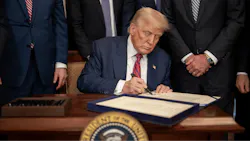
Under Section 232 of the Trade Expansion Act of 1962, President Donald Trump on Thursday signed an executive order imposing a 100% tariff on patented pharmaceutical products and ingredients imported to the United States, which will go into effect in 120 days for certain large companies and 180 days for smaller companies.
“President Trump imposed these tariffs following an extensive investigation conducted by the Secretary of Commerce under Section 232 of the Trade Expansion Act of 1962,” a White House fact sheet states. “The investigation found that patented pharmaceuticals and associated pharmaceutical ingredients are being imported into the United States in such quantities and under such circumstances as to threaten to impair our national security.”
Big Pharma companies with Most Favored Nation (MFN) drug pricing agreements with the Trump administration are exempt from the tariff. Trump has been using the threat of pharma tariffs as leverage for his MFN policy. In July 2025, Trump sent letters to 17 major biopharma companies demanding they get onboard with the drug pricing.
Large companies have promised to invest hundreds of billions of dollars in domestic manufacturing infrastructure in return for exemptions from the tariff under the Section 232 investigation. In April 2025, the Department of Commerce launched its probe into U.S. reliance on pharmaceuticals and pharmaceutical ingredients made in other countries.
For companies that enter into MFN pricing agreements with the Department of Health and Human Services and onshoring agreements with the Department of Commerce, a 0% tariff will apply through January 20, 2029, the White House said on Thursday. “For companies that only enter into onshoring agreements with the Department of Commerce, a 20% tariff will apply.”
However, the Biotechnology Innovation Organization (BIO) in a statement warned about the potentially damaging effects of tariffs.
“While we appreciate the administration’s recognition of the need for tariff exemptions for certain critical biotech products, the reality is that any tariffs on America’s medicines will raise costs, impede domestic manufacturing, and delay the development of new treatments — all while doing nothing to enhance our national security,” said John F. Crowley, BIO’s president and CEO.
Crowley added that the “risks are especially acute for small and mid‑size biotech companies, which develop more than half of all FDA‑approved medicines yet often lack the capital to build dedicated manufacturing facilities as they weather an industry defined by high costs, long development timelines, and significant risk.”
The Pharmaceutical Research and Manufacturers of America (PhRMA) issued a similar statement that tariffs on medicines will increase costs and could potentially jeopardize billions of dollars in U.S. manufacturing investments announced by drugmakers in 2025.
“At a time when America’s global leadership in biopharmaceutical innovation is being challenged — and Americans are struggling to afford their insurance premiums — we need smart policies to ensure that the U.S. remains the best place in the world to discover and manufacture affordable, lifesaving medicines. Tariffs will undermine this important goal,” said Stephen J. Ubl, PhRMA’s president and CEO.
Generics and biosimilars
Generic pharmaceutical products, biosimilars, and associated ingredients are not subject to the 100% tariff in Trump’s executive order. However, the White House said the administration’s decision will be “reassessed” in one year.
The Association for Accessible Medicines (AAM), the Washington, D.C.-based trade group representing manufacturers and distributors of generic prescription drugs, applauded Trump for exempting generic and biosimilar medicines from tariffs under the Section 232 investigation.
“This decision will help enhance the generic medicines supply chain, which is critical to patient health and U.S. healthcare and national security interests,” John Murphy III, AAM’s president and CEO, said in a statement.
Trade deals and tariffs
Trump’s executive order on Thursday also addressed tariff rates for the European Union and several countries, based on his administration’s pharmaceutical-related commitments in trade deals.
“If a pharmaceutical product is from the European Union, Japan, Korea, or Switzerland and Liechtenstein, a 15% tariff will apply,” according to the White House fact sheet. “If a pharmaceutical product is from the United Kingdom, a lower tariff will apply, subject to the recently concluded UK pharmaceutical agreement.”
In December 2025, the UK became the first country to secure a zero-rate tariff deal with the Trump administration on pharmaceuticals imported to the U.S. Last year, the European Union and U.S. announced a trade agreement that includes a 15% tariff on most EU exports, including brand name pharmaceuticals.
When it comes to specialty pharmaceutical products, such as orphan drugs and pharma for animal health, the White House on Thursday said they will be exempt from tariffs “if they are from trade deal countries or meet an urgent public health need.”
About the Author
Greg Slabodkin
Editor in Chief
As Editor in Chief, Greg oversees all aspects of planning, managing, and producing the content for Pharma Manufacturing’s website and digital products, as well as the daily operations of its editorial team.
For more than 20 years, Greg has covered the healthcare, life sciences, and medical device industries for several trade publications. He is the recipient of a Post-Newsweek Business Information Editorial Excellence Award for his news reporting and a Gold Award for Best Case Study from the American Society of Healthcare Publication Editors. In addition, Greg is a Healthcare Fellow from the Society for Advancing Business Editing and Writing.
When not covering the pharma manufacturing industry, he is an avid Buffalo Bills football and Buffalo Sabres hockey fan, likes to kayak, and plays guitar.