Gerresheimer to sell Centor, primary plastic packaging businesses to Apax for $1.7B
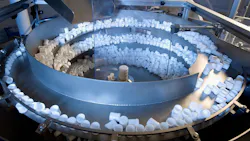
German pharmaceutical packaging manufacturer Gerresheimer is selling two plastic packaging businesses, including Centor US Holding Inc., to private equity group Apax Funds for €1.5 billion (approximately $1.7 billion) including debt.
Apax will acquire Gerresheimer’s 15 production sites for primary plastic packaging in nine countries and Centor’s U.S. production site in Millersburg, Ohio, which manufactures packaging systems for prescription drug dispensing.
The two packaging businesses generated combined revenue of approximately €570 million (approximately $649 million) last year and employ around 2,400 people. The Centor sale is expected to close by the end of financial year 2026, while the sale of the global Primary Packaging Plastics (PPP) unit is expected to close in the first half of financial year 2027.
Headquartered in Düsseldorf, Germany, Gerresheimer’s product portfolio includes primary packaging and systems for the administration of drugs, including insulin pens, inhalers, on-body devices, pre-fillable syringes, vials, ampoules, bottles, and containers for liquid and solid medicines.
In February, Gerresheimer announced it had initiated the sale of its U.S. subsidiary Centor to “optimize” its capital and financing structure. CFO Wolf Lehmann in a Wednesday statement said the Apax deal for Centor and PPP is “an important milestone in optimizing our capital and financing structure, decreasing our leverage significantly.”
The expected cash inflows from the sale of the two packaging businesses will accelerate Gerresheimer’s debt reduction, while the “continued implementation of our transformation program will also have a positive impact on our operating and free cash flow,” Lehmann added.
Internal investigations, challenging financial year
Last month, Gerresheimer released its 2025 annual and consolidated financial statements, which had been postponed due to internal investigations regarding revenues and accounting practices in financial years 2024 and 2025.
“Organic growth was driven primarily by the Plastics & Devices division, and within that division, particularly by strong demand for drug delivery devices,” the company reported. “The Primary Packaging Glass division, on the other hand, was impacted by a decline in demand for primary packaging for cosmetics and pharmaceutical oral liquids.”
The company’s moulded glass plant in Chicago Heights, Illinois will be closed at the end of financial year 2026 as part of its transformation program. The facility manufactures primary packaging made of type I glass for pharmaceutical applications, including serum bottles, infusion bottles, and screw-cap bottles in various designs.
Going forward, Gerresheimer CEO Uwe Röhrhoff said in a Wednesday statement that the company is focusing its business “even more strongly on high-value drug delivery and medical devices, and primary packaging for injectable drugs.”
Global footprint, local presence
Despite the Chicago Heights closure and sale of the two packaging businesses to Apax, Gerresheimer’s strategy continues to be based on a global footprint and producing locally for regional markets, including production sites in Asia, Europe, and the U.S.
Last week, Gerresheimer announced it has begun operations at a new glass manufacturing facility in Zhenjiang Dagang, China, expanding production capacity for primary packaging used in injectable pharmaceuticals. The approximately 40,000-square-meter facility will manufacture borosilicate glass vials and ampoules primarily for the Chinese market.
The new plant doubles its production capacity for injectable pharmaceutical packaging in China and includes an additional 33,000 square meters of land reserved for future expansion, according to Gerresheimer.
The site features automated glass-forming lines, intelligent production and logistics systems, and manufacturing areas designed to meet Good Manufacturing Practice (GMP) requirements for pharmaceutical packaging. The facility includes more than 2,700 square meters of ISO Class 8 cleanroom space, an ISO Class 7 microbiology laboratory, and dedicated ISO Class 8 space for silicone coating of vials and ampoules.
About the Author
Greg Slabodkin
Editor in Chief
As Editor in Chief, Greg oversees all aspects of planning, managing, and producing the content for Pharma Manufacturing’s website and digital products, as well as the daily operations of its editorial team.
For more than 20 years, Greg has covered the healthcare, life sciences, and medical device industries for several trade publications. He is the recipient of a Post-Newsweek Business Information Editorial Excellence Award for his news reporting and a Gold Award for Best Case Study from the American Society of Healthcare Publication Editors. In addition, Greg is a Healthcare Fellow from the Society for Advancing Business Editing and Writing.
When not covering the pharma manufacturing industry, he is an avid Buffalo Bills football and Buffalo Sabres hockey fan, likes to kayak, and plays guitar.