Are we creating stainless-steel bioreactor dinosaurs?
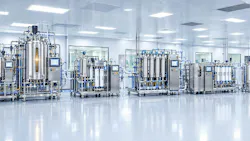
As blockbuster innovative products continue to emerge and biosimilars are finally becoming established across many global markets, volumetric demands for antibodies and related products continue to grow. This expansion is reflected in the return to large-scale, stainless-steel bioreactor installation at the 15,000L to 25,000L scale at innovator companies and global contract development and manufacturing organizations (CDMOs), such as Lonza, Samsung Biologics, Fujifilm, and Lotte Biologics.
In addition, the Boston Institute of Biotechnology reported operating a 50,000L bioreactor with 30,000L working volume in China. However, it remains to be seen if these large-scale bioreactors will offer a feasible long-term solution for biologics manufacturing.
While there have been amazing advances in cell lines, molecular expression systems, media, single-use systems and high density/intensified culture methodologies — and to a lesser extent, parallel advances in filtration and chromatographic methods — these technologies and unit operations still do not, in general, “play well” together. Biomanufacturing processes remain inefficient relative to complex manufacturing in other industries.
While the use of living cells and regulatory complexities certainly contribute to inefficiencies, we must continually ask ourselves: How can we do better? Will we still need large-scale, stainless-steel bioreactors 10 or 20 years from now?
How continuous manufacturing systems work in practice
Continuous manufacturing for monoclonal antibodies relies on intensified high-density perfusion cultures maintained far longer than traditional fed-batch runs. Instead of 10 to 14 days in a standard production bioreactor, cells in continuous systems must remain viable and productive at high density for roughly 25 to 50 days.
Companies have demonstrated that some existing fed-batch cell lines can be adapted successfully, but more data is required before we can be confident that all “traditional fed batch” Chinese Hamster Ovary (CHO) lines can be used successfully in continuous, high intensity processing. Others have developed lines specifically optimized for long-duration intensified culture, high specific productivity, and growth in lean media.
Sustained high-protein output over long runs puts pressure on downstream purification. That challenge has been addressed through multi-column chromatography, which replaces one large column with a sequence of smaller columns containing the same resin. This design allows the lead column to be loaded close to breakthrough, while product passing through is captured by the next column, improving resin utilization.
As some columns load, others are eluted, washed, and regenerated, requiring real-time monitoring and dynamic adjustment of loading times and flow rates. Approaches, such as periodic countercurrent chromatography, simulated moving bed, and continuous countercurrent tangential chromatography, are now being applied successfully in continuous systems. Taking these approaches has led to claims of reduced resin requirements of 20% and productivity increases of up to eight-fold from a small facility footprint.
It is important to note that continuous manufacturing still relies on the same core biomanufacturing operations used in fed-batch processing: CHO cells grown in suspension in stirred-tank bioreactors, and purification using familiar filters and chromatography resins. The difference is that intensified cell culture, extended culture duration, and efficient purification are integrated so the unit operations work in unison within a relatively small, capital-efficient cGMP footprint. Recent advances in process integration have made this increasingly feasible, and some companies have built significant expertise and intellectual property in this area.
Efficient continuous manufacturing depends on real-time analytics and Process Analytical Technologies (PAT). Tools such as Raman and mid-infrared spectroscopy are now widely used to support feedback control of critical parameters, including metabolites and nutrients. Cell viability and productivity can also be tracked in real time, including through in-line capacitance measurement for cell density in intensified processes. Similar monitoring of products and impurities is essential for effective operation of multi-column chromatography.
Implementation challenges for continuous process manufacturing
Continuous manufacturing of biologics, featuring intensified cell culture and advanced chromatographic methodologies supported by real-time analytics, has been an objective for biologic manufacturing for some time now. Until recently, we could, at best, claim “discontinuous” processing with some unit operations starting to work in harmony.
More recent advances, particularly at leading biomanufacturers such as Amgen and Novartis and at some CDMOs, such as Just-Evotec Biologics, Fujifilm, and WuXi Biologics — are starting to deliver something which is starting to look a lot more like true “continuous manufacturing” for biologics, even if hold/surge tanks may be needed to ensure that things flow smoothly. Unsurprisingly, equipment and consumables vendors, such as Sartorius, are also engaged in progressing the continuous manufacturing approach and are collaborating to develop continuous platform approaches.
So, what has changed and what are the challenges to getting these technologies and approaches adopted? Are we now close to being able to claim “continuous manufacturing” for biologics? Is the approach disruptive enough that 20,000L stainless-steel tanks will go the way of the dinosaurs?
First, continuous processing generates large volumes of data that must be managed and analyzed within a cGMP-compliant Quality Management System. A potential advantage of this data-rich environment is that it moves the industry closer to real-time, or at least faster, release testing. While some complex analytical methods still require off-line testing, building quality into the process through PAT can reduce Quality Control (QC) release burden and timelines. The data generated may also support machine learning and predictive modeling to further improve efficiency and reduce costs. These methodologies and supporting systems will still need to be validated and, for continuous processes, that effort can be somewhat more complex.
A further concern that has often been voiced about continuous processing for biologics is that the duration of processes increases the risk of loss of sterility and contamination. At this point, approaches have essentially made this risk no greater than in a standard fed-batch process, with PAT increasingly enabling detection of potential issues very early in the processing cycle.
As previously mentioned, concerns regarding long-term biological stability and genetic drift in CHO cells have been largely overcome. Perhaps the bigger issues that have caused some to take a “watching brief” on continuous manufacturing in our hugely risk-averse industry are related to quality and regulatory.
Continuous manufacturing processes for biologics generate relatively large volumes of aqueous process material that must be collected, concentrated, and managed over extended periods. There was once debate over whether output should be split into multiple batches for quality release, but advances in closed processing have largely resolved that issue.
Products made over 25- to 50-day campaigns are now routinely released as a single batch. Although in-process testing requirements increase, overall QC release burden, and cost can decline. There is also growing evidence that product and impurity profiles are highly consistent in these systems, further reducing quality concerns; residence time distribution models and real-world data have helped demonstrate that homogeneity.
Intensified, long-duration processes do place added demands on validation, but current experience, ongoing Process Performance Qualification (PPQ) campaigns, and regulatory submissions suggest those concerns are becoming manageable. Regulatory authorities are also actively supporting advanced biomanufacturing approaches; the U.S. FDA issued its Q13 Continuous Manufacturing of Drug Substances and Drug Products guidance for industry in March 2023. Some uncertainty remains around global harmonization, but that should continue to improve as more products and processes are submitted worldwide.
Modeling and scale-down studies and sophisticated dynamic modeling now support both development and validation of continuous processes, and the underlying behavior of long-duration cell culture and multi-column chromatography is increasingly well understood. Key remaining tasks include validating microbial control across extended runs, qualifying in-line Near-Infrared (NIR) and Raman probes, and managing the large data volumes generated through automated multivariate process control. Software integration across hardware and analytical platforms is still complex, but leading companies have invested heavily to build compliant, proprietary control architectures aligned with 21 CFR Part 11.
Monitoring Critical Quality Attributes, such as glycosylation, aggregation, and charge variants, remains essential across long production campaigns, although continuous flows often produce product profiles that are more consistent than those seen in fed-batch processing. Validation of column cycles and re-use, membrane performance, and, of course, viral clearance remains critical for downstream processes.
Operational and commercial considerations
There are other operational and commercial considerations to be made before adopting continuous processing:
• Facility needs must be favorable. The required cleanroom environment is similar to that used for fed-batch processing, but the cGMP footprint per gram released is usually much smaller than that of a 15,000L or 20,000L bioreactor, creating meaningful cost savings. Running perhaps eight or nine continuous batches per year rather than 18 fed-batch runs can also reduce turnaround requirements and lower costs.
• Continuous manufacturing platforms can be deployed within existing cleanroom infrastructure or, in many cases, in modular facilities such as Just-Evotec’s J-Train platform. This can provide capital advantages over facilities running fed-batch processes at similar output, further improving cost of goods sold (COGS).
• Many analyses show that raw material costs can decrease in intensive or continuous biomanufacturing, especially through more efficient use of expensive chromatography resins, reduced consumption of single-use components, and the use of lean cell culture media.
• On the drawback side, continuous processing still requires substantial buffer and media preparation capacity, including adequate WFI generation and the ability to mix, hold, and deliver liquid process components efficiently.
• Workforce training is another consideration, because the technical knowledge required exceeds that needed for traditional fed-batch processing, where the industry already has much deeper experience. As continuous bioprocessing becomes increasingly deployed, it will be necessary to ensure a supply of appropriately trained operators, quality staff, engineers and so on.
Looking ahead
Although innovators are reluctant to share details of their in-house capabilities and processes, CDMOs are more open to discussion of performance. Fujifilm’s MaruX platform is claimed to deliver >30 kgs of mAb from a 500L intensified perfusion culture over 40 days at a cell density of 120 x 106 and an average titer of 1.9 g/L/day. Meanwhile, Just-Evotec Biologics claims that its J-Train concept has recently delivered > 50 kgs of mAb from a 1,000L single-use bioreactor culture run for 25 days.
These data compare favorably with a hypothetical yield of approximately 49 kgs from a 15,000L process using a 5 g/L cell line and 65% purification yield, while relying on a much smaller facility footprint and more attractive capital structure, with correspondingly favorable COGS. Both Just-Evotec and Fujifilm claim high-quality products and the potential to manufacture many otherwise difficult-to-produce product classes, such as some multi-specific antibodies, based on reduced product residence time in the production bioreactor.
With continuous manufacturing processes now moving through PPQ campaigns in support of Biologics License Applications (BLA) submissions and being adopted by major biopharmaceutical companies, it is increasingly clear that the main technical barriers that once slowed uptake have been largely mitigated.
In summary, recent advances in continuous manufacturing for antibodies and other recombinant biologics have mitigated many of the concerns that once limited adoption. These platforms will not suit every product or market, but they are becoming a viable and increasingly attractive route to capital- and cost-efficient manufacturing. They may also prove especially useful for more fragile molecules that challenge fed-batch processing in terms of stability, integrity, or productivity.
So, will 20,000L stainless-steel bioreactors become dinosaurs? Likely, not soon. Fed-batch processing will continue to improve and remain important for high-volume supply, but continuous biomanufacturing is now a credible alternative that is expected, in my opinion, to become increasingly prevalent over the next decade.
About the Author
Roger Lias
Roger Lias is Executive Advisor at Kymanox, a professional services and consulting company that provides engineering, scientific, regulatory, project management, and technical operations support to the biologics, pharmaceutical, medical device, and combination product industries.