Automation modernizes whole blood processing, enhances cell therapy ecosystem
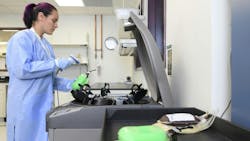
Faced with platelet shortages in the U.S., an FDA-cleared automation technology has the potential to boost supply and reduce waste. Terumo Blood and Cell Technologies (BCT) has integrated its automated whole blood processing system into the operations of a Louisiana-based blood center, providing a potential solution to address nationwide platelet shortages and for creating a more efficient and streamlined ecosystem.
The Blood Center in New Orleans is the second U.S. blood center to implement Terumo BCT’s Reveos Automated Blood Processing System following its FDA clearance in 2023.
Compared to manual methods of centrifugation, the Reveos system is designed to help meet demand for platelets by enabling faster processing along with greater efficiency and quality in blood component production, according to the company. The system separates whole blood into platelets, plasma, and red blood cells in a single fully automated centrifugation cycle.
“We’ve essentially taken many of the manual steps in a blood processing workflow and reduced more than half of them through automation,” says Chetan Makam, senior vice president and general manager for global blood solutions at Terumo BCT. “Normally, it would take up to 26 steps to manually separate whole blood into its components, but we can accomplish this with the Reveos system in six to eight steps.”
The automated technology has been critical for addressing operational challenges for blood centers by helping optimize workflows and reducing the likelihood for errors, according to Makam. Specific to wider industry pain points, it has the potential to alleviate ongoing platelet shortages due to its ability to efficiently collect platelets through its whole blood processing capabilities.
Platelet shortages are an ongoing industry challenge due to an aging donor base in tandem with fewer new platelet donors offering to donate, notes Makam. This has made obtaining whole blood-derived platelets from whole blood processing critical when compared to apheresis donations, a process through which platelets are collected directly from a single donor using specialized equipment over a longer session, he added.
“As blood centers adapt to changing donor demographics, platelets from whole blood collections can play a critical role in supplementing apheresis platelet donations,” Makam says. “Platelet demand keeps growing for oncology, cardiac, and trauma care. With Reveos, blood centers can take whole blood donations and quickly separate the components — including platelets — so that blood products are ready faster, which helps maintain a resilient blood supply.”
The importance of digital integration
Another key element of the Reveos system is the integration of BCT’s cloud-based Lumia software platform, which documents data from the automated system’s whole blood processing procedure. The data is then connected with Reveos to help blood centers and processing labs achieve operational targets.
This integration enables operational efficiency and the kind of traceability and digital documentation increasingly demanded in the blood cell therapy space.
“With workflow automation, solutions like our Lumia software platform give blood centers real-time visibility into their operations,” says Makam. “These insights are increasingly critical for optimizing workflows and maintaining quality.”
Building a better blood cell therapy ecosystem
The integration of the Reveos system — along with its Lumia cloud software — into the operations of The Blood Center in New Orleans also reflects opportunities for a grander cell therapy ecosystem, according to Makam. He contends it is an ecosystem in which automated technologies can help enhance the existing capabilities of blood centers — i.e., whole blood collecting and processing expertise, a wide network of hospitals and donors, etc — and ultimately help expand patient access for innovative cell therapies.
Blood centers play a fundamental role in this ecosystem and serve as essential enablers for the cell therapy ecosystem by providing consistent, scalable access to cellular starting materials and clinical support infrastructure.
“The infrastructure and operational experience position blood centers to serve as reliable sources of high-quality starting materials (such as apheresis collections) needed for cell therapies like CAR-T,” Makam contends. “Automated solutions like Reveos can help bridge the gap between traditional blood collection and the rigorous standards required for cell and gene therapy manufacturing.”
Makam adds that this ecosystem would evolve toward a more integrated and collaborative network that will ultimately be characterized by “greater coordination among blood centers, biopharmaceutical developers, clinical care providers, and regulatory bodies to streamline cell sourcing, manufacturing, and therapy delivery.”
As automation and digital connectivity continue to evolve, collaborations like this may help bridge the gap between blood processing and biomanufacturing — shaping a more resilient, data-driven foundation for the therapies of tomorrow.
Last month, Terumo BCT announced that University of Chicago researchers successfully completed all three critical steps in T cell receptor (TCR) T cell therapy (TCR-T) manufacturing — activation, transduction and expansion — with a single Quantum Flex Cell Expansion System small bioreactor.
The end-to-end automated process offers a comprehensive alternative to fragmented, manual workflows with a closed, GMP-friendly workflow. Terumo’s Quantum Flex 3-in-1 workflow integrates activation, transduction, and expansion in a single closed system which could accelerate development of next-generation T cell therapies.
About the Author
Andy Lundin
Senior Editor
Andy Lundin has more than 10 years of experience in business-to-business publishing producing digital content for audiences in the medical and automotive industries, among others. He currently works as Senior Editor for Pharma Manufacturing and is responsible for feature writing and production of the podcast.
His prior publications include MEDQOR, a real-time healthcare business intelligence platform, and Bobit Business Media. Andy graduated from California State University-Fullerton in 2014 with a B.A. in journalism. He lives in Long Beach, California.