WuXi XDC’s site in Singapore achieves GMP release
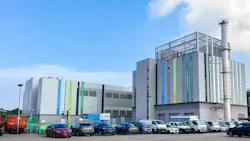
WuXi XDC, headquartered in Shanghai, China, has received Good Manufacturing Practice (GMP) release for its DP4 drug product manufacturing facility at the company’s Singapore site.
The site is WuXi XDC’s first overseas drug product manufacturing operation and is equipped with one 10-square-meter and two 30-square-meter lyophilizers. The company said the facility can produce up to eight million vials annually of liquid or lyophilized bioconjugates.
DP4 provides sterile drug product manufacturing and packaging capabilities spanning compounding, vial washing and depyrogenation, filling, lyophilization, capping, visual inspection, labeling, as well as packaging. The filling line uses a sterile isolator and automated inline fill-weight checks, with a maximum filling speed of 300 vials per minute, according to the announcement.
The facility also includes automated visual inspection, pre-use post-sterilization integrity testing (PUPSIT), automated material transfer, and disinfection systems. Its packaging line can accommodate single- and multiple-vial formats for clinical and commercial production.
WuXi XDC said DP4 supports both liquid and lyophilized sterile bioconjugates and can provide drug product manufacturing from clinical development through commercial production. The company completed construction, commissioning and qualification, aseptic processing simulation, and GMP release within 29 months.
The GMP release follows the August GMP release of the CRDMO’s BCM3 production line at the same Singapore site. BCM3 provides commercial manufacturing capacity for antibody intermediates and conjugated drug substances, with batch sizes of 200 to 2,000 liters for antibody intermediates and up to 2,000 liters for conjugated drug substances.
WuXi XDC reported 37% year-over-year revenue growth in the first half of 2026, which the company attributed primarily to increases in customers and projects driven by demand for antibody-drug conjugates and other bioconjugates. The company also completed the acquisition of a roughly 60% stake in BioDlink in March, expanding its biologics and bioconjugate manufacturing capabilities in China.