Codis expands UK spray drying capacity with large-scale unit
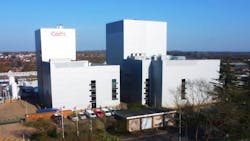
Codis, a United Kingdom-headquartered contract development and manufacturing organization (CDMO) specializing in spray drying, amorphous solid dispersions (ASDs), and particle engineering, announced plans to expand manufacturing capacity with the purchase of a solvent-capable PSD-4 pharmaceutical spray dryer for its Haverhill, UK facility.
The system will be installed at the company’s 400,000-square-foot site and is expected to be operational in 2027. The PSD-4 is a cGMP pharmaceutical spray dryer designed to produce commercial batches of up to 500 kg with total annual capacity of about 30,000 kg. It is intended to support solvent-based spray drying processes used to produce amorphous solid dispersions, which are used to improve the bioavailability of poorly soluble drug candidates.
The company said the new unit will complement its existing PSD-2 spray dryer, which supports pilot-scale and smaller commercial-scale production, providing a pathway from development through commercial manufacturing.
“This milestone marks the next phase in Codis’ evolution as a global leader in spray drying and ASD,” CEO Nicolas Fortin said in a statement. “The PSD4 significantly expands our ASD capacity and gives customers dedicated commercial-scale throughput to bring more life-changing medicines to market.”
Codis isn’t the only CDMO to recently invest in spray drying capabilities in the UK.
Last year, Almac also expanded bioavailability enhancement capabilities at its Charnwood, UK facility. The investment included new closed-loop spray drying equipment and expanded analytical laboratories.
In 2025, Aenova expanded its manufacturing site in Killorglin, Ireland to include new laboratory- and pilot-scale spray drying capabilities for ASD and inhalation powders. The upgrade was meant to support formulation development for early-stage drug candidates with poor solubility and permeability.