Bristol Myers Squibb to build $2.3B manufacturing campus in Houston
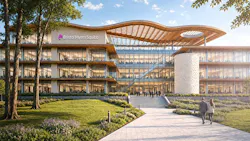
Designed for adaptability and flexibility, Bristol Myers Squibb plans to invest $2.3 billion in a new multi-modal manufacturing campus at Generation Park in Houston, Texas, with the intention of adding and reconfiguring production capacity as needed by the drugmaker.
The modular 600,000-square-foot site is meant to anticipate future advances in automation and digital integration, allowing BMS to manufacture multiple types of medicines — including antibody-drug conjugates, biologics, and small molecules — across a range of diseases while “supporting drug product and finished goods manufacturing from late development through launch,” according to the announcement.
BMS said the Houston facility will grow in scale and capability beyond its initial configuration, as the drugmaker’s pipeline and commercial needs evolve. The company credited the facility’s modular architecture for enabling future production capabilities to be brought online quickly to accommodate growth, including advanced biopharmaceutical development and manufacturing technologies.
“As part of our $40 billion commitment to the United States, we’re building the domestic manufacturing capabilities needed to deliver the next generation of medicines and support future scientific breakthroughs,” BMS CEO Christopher Boerner said in a statement. “Houston and the state of Texas offer the talent, infrastructure, and partnership needed to help bring that vision to life.”
BMS said it picked the Houston site after conducting an evaluation of several markets in the Central and Eastern U.S. However, ultimately the strength of the local workforce in life sciences, available incentives, proximity to utilities and transportation, as well as the overall business climate tipped the scales in favor of the Texas location.
The new Houston facility will create nearly 500 skilled jobs initially, including operations technicians, production specialists, maintenance and engineering professionals, as well as quality control and assurance experts, according to BMS. Houston's 4,300-acre Generation Park, the future home of the new campus, is described by BMS as a “curated hub for life sciences and advanced manufacturing.”
In September 2025, Eli Lilly announced it will build a $6.5 billion active pharmaceutical ingredient (API) facility at Generation Park. The site in the Lake Houston area northeast of the city will focus on domestic production of small molecule synthetic medicines as part of its $27 billion investment to build four new U.S. pharmaceutical manufacturing sites.
In May 2025, BMS announced plans to invest $40 billion in U.S. infrastructure over the next five years, focusing on expanding its domestic research and development (R&D) and manufacturing capabilities. The company invested approximately $10 billion in R&D last year.
BMS noted in Monday’s announcement that it currently works with a contract manufacturer in Texas for both commercial and clinical trial manufacturing and last year had 250 clinical trial sites in the state to advance clinical research across its portfolio.
Last month, BMS expanded its collaboration with NVIDIA to support artificial intelligence-driven drug discovery and development, allowing researchers to run larger AI workloads while supporting proprietary foundation models trained on BMS’ scientific data. The AI-assisted research workflows are meant to accelerate target identification, molecule design, and clinical development.
BMS has also continued expanding manufacturing partnerships tied to advanced therapies. In February, Oxford Biomedica Solutions announced a multi-year commercial supply agreement with BMS to manufacture lentiviral vectors for the company’s CAR-T programs at facilities in Oxford, UK, and Durham, North Carolina.
About the Author
Greg Slabodkin
Editor in Chief
As Editor in Chief, Greg oversees all aspects of planning, managing, and producing the content for Pharma Manufacturing’s website and digital products, as well as the daily operations of its editorial team.
For more than 20 years, Greg has covered the healthcare, life sciences, and medical device industries for several trade publications. He is the recipient of a Post-Newsweek Business Information Editorial Excellence Award for his news reporting and a Gold Award for Best Case Study from the American Society of Healthcare Publication Editors. In addition, Greg is a Healthcare Fellow from the Society for Advancing Business Editing and Writing.
When not covering the pharma manufacturing industry, he is an avid Buffalo Bills football and Buffalo Sabres hockey fan, likes to kayak, and plays guitar.