Cellares sees FDA’s PreCheck pilot as catalyst for cell therapy manufacturing
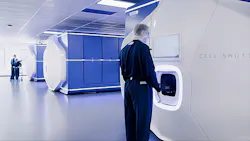
When the FDA announced the initial cohort of participants for its PreCheck pilot program on June 29, only seven companies were selected out of more than 80 applicants. Among them was Cellares, an automated cell therapy manufacturer, whose flagship commercial-scale “smart factory” in Bridgewater, New Jersey will participate in the pilot.
Cellares, a self-described integrated development and manufacturing organization, is building automated manufacturing technologies designed to expand patient access to cell therapies. The company views participation in PreCheck as an opportunity to improve manufacturing readiness and regulatory predictability ahead of the planned commercial launch of Cellares’ first CAR T-cell therapy at the Bridgewater facility.
“We’ve got our first commercial launch coming up next year, and from that perspective, our participation in PreCheck is very timely,” says Fabian Gerlinghaus, co-founder and CEO of Cellares. “It allows us to have the FDA inspect that facility long before our customers filed their regulatory filings, and that ultimately de-risks the commercial launches with our first commercial clients.”
The FDA launched the PreCheck program to encourage earlier engagement between regulators and companies developing new domestic pharmaceutical manufacturing facilities. Through early and continuous interactions during facility development, the agency says it aims to improve facility readiness before product applications are submitted, reducing regulatory uncertainty and helping accelerate access to critical medicines.
Why PreCheck matters to Cellares
For Gerlinghaus, the appeal of the PreCheck program extends beyond earlier inspections and reflects a broader recognition that the regulatory framework must evolve alongside advances in manufacturing technology, which supports critical medicines like cell therapies.
“Regulatory innovation has to evolve alongside automation and manufacturing innovation,” said Gerlinghaus. “What made the PreCheck program so compelling for us at Cellares is that it fundamentally changes when the FDA and manufacturers engage.”
Participant selection for the pilot program by the FDA was made based on a myriad of factors, including the products to be manufactured, each facility’s stage of development, anticipated timelines for bringing products to market, as well as innovation in facility development and manufacturing operations. Those criteria aligned closely with Cellares’ commercial-scale smart factory strategy and its Cell Shuttle automated manufacturing platform.
Last year, the company’s Cell Shuttle platform, which automates end-to-end cell therapy manufacturing, received the FDA’s Advanced Manufacturing Technology (AMT) designation from the Center for Biologics Evaluation and Research.
While Gerlinghaus said he could not speak to the FDA's participant selection process, he viewed Cellares’ inclusion in the pilot as validation of the company’s manufacturing model.
“We’re actually the only company that has received the AMT designation for a fully automated, high-throughput cell therapy manufacturing platform that automates the entire process from end to end,” he said. “Now with the PreCheck program, we’re deepening our collaboration with the FDA.”

Reducing manufacturing risk
Gerlinghaus said one of the PreCheck program’s greatest advantages is the ability to identify and resolve manufacturing issues before the commercial approval phase.
Traditionally, manufacturing and facility readiness become major topics late in the regulatory review process, when facility deficiencies can delay product approvals. By shifting those discussions earlier, he said, the program reduces uncertainty for both manufacturers and drug developers.
“PreCheck moves those conversations up by several years to a time before the facility is even in operation, which is taking it off the critical path,” Gerlinghaus said. “That’s most valuable for new facilities; facilities that are newly coming online. For the sponsors building and commercializing on the Cellares platform, it means manufacturing is the one thing that won’t stand between their therapy being manufactured at commercial scale and regulatory approval.”
Gerlinghaus added that manufacturing and facility risks often receive little attention until pre-approval inspections or complete response letters, long after sponsors have submitted their applications.
According to Gerlinghaus, participation in the program has also strengthened the company’s relationship with the FDA, which he said has become increasingly collaborative as automated manufacturing technologies gain traction.
“We’ve been cultivating a very close and good relationship with the FDA,” he said. “I’m very grateful and I feel very honored that the FDA is reciprocating in such a meaningful way, ultimately validating the important work that the teams at Cellares have been doing.”
Global network of smart factories
While the FDA’s PreCheck program is intended to strengthen domestic pharmaceutical manufacturing, Gerlinghaus said Cellares’ broader strategy also requires building manufacturing capacity closer to patients around the world.
“Biopharmaceutical manufacturing is one of the most important industries any country can have,” he contends. “And to that end, we actually recently joined the new American Industrial Alliance whose mission is to help establish a resilient, sovereign U.S. biomanufacturing ecosystem capable of producing next generation medicines at scale while reducing dependence on foreign manufacturing infrastructure. And that is exactly what we’re up to at Cellares.”
Gerlinghaus made the case that the U.S. currently lacks a dominant domestic contract manufacturer comparable to those operating in Europe and China.
“Europe has Lonza, China has WuXi, but in the United States there’s a little bit of a vacuum where we actually don’t have a strong domestic American contract manufacturing organization anymore,” he said.
Gerlinghaus also emphasized how cell therapy manufacturing presents unique logistical challenges that require a global manufacturing footprint, due to autologous cell therapies beginning with fresh apheresis material collected directly from patients. Those starting materials must reach manufacturing facilities within a limited timeframe, making long-distance shipping across continents impractical.
“For cell therapy specifically, local manufacturing is effectively an operational and a pragmatic necessity,” he said. “That’s a blood product that’s collected from the patient at the hospital and needs to get shipped to the manufacturing facilities that Cellares operates within a very limited window of time. That’s pretty much impossible to get done in time when you’re shipping starting material and the final drug product across the Atlantic or across the Pacific.”
To support that strategy, Cellares is building a network of smart factories beyond its flagship facility in Bridgewater, including planned sites in Leiden, Netherlands, and Kashiwa, Japan. Rather than operating as independent manufacturing sites, each facility is designed around the same automation platform, IT infrastructure, quality systems, and standard operating procedures.
“All our facilities follow the same blueprint, the same infrastructure, same IT infrastructure, same automation, Cell Shuttles for manufacturing, Cell Qs for automated quality control being deployed across the world, same [standard operating procedures],” said Gerlinghaus.
That standardized approach enables manufacturing processes to be transferred between facilities at what he describes as “digital speeds” allowing customers to expand into new geographic markets more quickly.
Financing the path to commercialization
The announcement of Cellares’ participation in the PreCheck program comes on the heels of Cellares securing $327 million in Series D financing.
The financing round was backed by investors that included ARK Invest, BlackRock-managed funds, Eclipse, T. Rowe Price Investment Management, Duquesne Family Office, Baillie Gifford, Intuitive Ventures, EDBI, Gates Frontier, DC Global Ventures, DFJ Growth, Willett Advisors, and Prime Radiant.
“The purpose of this financing is to bankroll the company all the way through the first commercial launch of the first commercial CAR T-cell therapy, and ultimately all the way through to an IPO, which we're planning for towards the end of 2027,” he said.
Gerlinghaus said the commercial launch of the first CAR T-cell therapy manufactured at scale on Cellares’ automated platform will represent a major milestone on the company’s path toward an initial public offering (IPO). Successfully demonstrating commercial manufacturing would further validate the platform and support broader industry adoption, he contends.
Beyond manufacturing milestones, Gerlinghaus said Cellares is also focused on building the commercial foundation necessary to support an IPO. That includes growing the business beyond a $100 million annual revenue run rate, establishing more predictable long-term revenue, and expanding its portfolio of commercial manufacturing agreements.
“We certainly need a few more [commercial supply agreements] before we go into public markets and take the company public through an IPO,” he said.
You might also like
In the below episode of Off Script, we spoke with Thomas Roper, PhD, co-director of pharmaceutical engineering at Virginia Commonwealth University’s Center for Pharmaceutical Engineering and Sciences and graduate program director for chemical and life science engineering, about how pharma manufacturing has evolved over the last several decades and where it's headed.
About the Author
Andy Lundin
Senior Editor
Andy Lundin has more than 10 years of experience in business-to-business publishing producing digital content for audiences in the medical and automotive industries, among others. He currently works as Senior Editor for Pharma Manufacturing and is responsible for feature writing and production of the podcast.
His prior publications include MEDQOR, a real-time healthcare business intelligence platform, and Bobit Business Media. Andy graduated from California State University-Fullerton in 2014 with a B.A. in journalism. He lives in Long Beach, California.