Bora Pharmaceuticals, Insilico ink $2.5B AI drug discovery and development deal
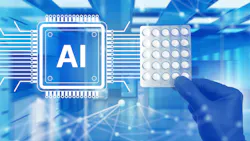
Artificial intelligence (AI) may not yet have achieved the fully integrated end-to-end efficiencies that advocates have been predicting for the biopharmaceutical industry. However, Bora Pharmaceuticals and Insilico Medicine are joining forces in a potential $2.5 billion collaboration that they contend could apply AI and automation-driven approaches across development planning, process optimization, development, and manufacturing.
Under the agreement, the companies will combine Insilico’s Pharma.AI proprietary end-to-end platform with Bora’s global development, manufacturing, quality, and commercialization capabilities to explore a next-generation drug innovation model.
“This strategic alliance marks an important step in Bora’s evolution from a leading pharmaceutical development and manufacturing partner into a broader drug innovation ecosystem,” Bora CEO Bobby Sheng said in a statement. “By combining Insilico’s AI-native capabilities with Bora’s global expertise in formulation, CMC, regulatory development, scale-up, quality, commercial manufacturing, supply chain, and commercialization, we have an opportunity to create a truly integrated pathway from discovery to commercialization.”
Bringing a new drug to market in the U.S. has traditionally taken more than 12 years and $2.2 billion on average. However, by eliminating routine and repeatable workflows with AI, biopharma companies such as Bora are looking to compress timelines.
“As part of the alliance, Insilico aims to accelerate Bora’s transition toward more AI-driven and automation-driven drug discovery and development capabilities by providing comprehensive research and development strategies and end-to-end AI solutions across global discovery and development workflows,” according to Insilico’s announcement.
Insilico claims its nominated candidate drugs from 2021 to 2024 took only 12 to 18 months on average to progress from project initiation to nomination of preclinical candidates (PCCs), compared to the typical 2.5 to 4 years required in traditional early-stage drug discovery.
“Since 2021, the company has nominated 31 PCCs, 13 of which have received IND approval or clearance — a track record of speed and productivity that this alliance aims to pair with Bora’s development and manufacturing scale,” according to Insilico.
Insilico’s partnership with Bora comes on the heels of a potential $2.75 billion drug discovery deal with Eli Lilly, as well as a collaboration with Takeda to use its Pharma.AI platform to advance drug candidates across Takeda’s therapeutic areas, as biopharma companies are moving beyond AI pilot programs into industrial-scale applications.
AI-driven manufacturing makes strides
With AI well-established in drug discovery, the technology is increasingly being utilized in pharmaceutical manufacturing as drug manufacturers look to make production faster, more reliable, and easier to manage, according to data and analytics firm GlobalData.
“Rather than replacing established manufacturing practices, AI is being harnessed to strengthen them,” Edita Hamzic, analyst at GlobalData, said in a statement. “Companies that see AI as part of their operational model, not as a standalone technology project, are most likely to benefit.”
At Eli Lilly, digital twins have moved from pilots to production-scale tools. Lilly is leveraging AI to scale manufacturing and optimize operational efficiency to meet the high demand for its medications, including GLP-1s.
While companies are investing in AI, implementation remains the biggest challenge, according to GlobalData, as drugmakers face hurdles with outdated systems, uneven data quality, and problems moving from pilot projects to routine use in highly regulated environments.
“Success will therefore depend on execution and the ability to combine manufacturing expertise with digital infrastructure in day-to-day manufacturing operations,” Hamzic said.
Ultimately, the Bora-Insilico partnership aims to explore opportunities to apply AI and automation-driven approaches to planning, process optimization, pharmaceutical development, manufacturing readiness, as well as quality systems.
“AI is already transforming drug discovery, but its full potential will only be realized when that transformation extends across the entire development and manufacturing value chain,” Sheng said. “This is not simply about adding AI to existing processes; it is about reimagining how pharmaceutical products are developed, manufactured, and brought to patients.”
About the Author
Greg Slabodkin
Editor in Chief
As Editor in Chief, Greg oversees all aspects of planning, managing, and producing the content for Pharma Manufacturing’s website and digital products, as well as the daily operations of its editorial team.
For more than 20 years, Greg has covered the healthcare, life sciences, and medical device industries for several trade publications. He is the recipient of a Post-Newsweek Business Information Editorial Excellence Award for his news reporting and a Gold Award for Best Case Study from the American Society of Healthcare Publication Editors. In addition, Greg is a Healthcare Fellow from the Society for Advancing Business Editing and Writing.
When not covering the pharma manufacturing industry, he is an avid Buffalo Bills football and Buffalo Sabres hockey fan, likes to kayak, and plays guitar.