Can Rose BioSolutions succeed in cell and gene therapy space where Charles River failed?
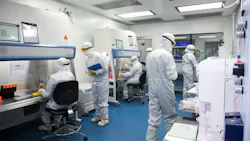
Contract research organization Charles River Laboratories learned over several years how difficult it is to run a contract development and manufacturing organization (CDMO) business in the cell and gene therapy space. The company finally threw in the towel in early 2026 when it sold its CDMO sites in Maryland, Tennessee, and the United Kingdom — as well as a Cell Solutions site in California — to private investment firm GI Partners.
The acquisition for an undisclosed amount was completed in May when GI Partners formed Rose BioSolutions, an independent company positioned as a full-service CDMO — with facilities in Northridge, California (donor-supplied blood product), Rockville, Maryland (gene therapy), Memphis, Tennessee (cell therapy), and Keele, United Kingdom (plasmid DNA). Together, the CDMO and Cell Solutions units generated $143 million in revenue for Charles River in 2025.
CEO David Enloe contends the new standalone Rose BioSolutions fills a gap in the cell and gene therapy market for a truly end-to-end CDMO, providing a full suite of cell therapies, plasmid DNA, and viral vectors as well as cell supply operations. He argues the company is far from being a startup with decades of proven experience and dedicated investment to modernize and optimize cell and gene therapy manufacturing.
“Rose is an acronym: Reliable, Outcome-driven, Scalable, and Excellent — that’s what we’re building the company based on,” Enloe said. “We’ve got a couple of critical clients that are at the altar with respect to FDA. We’re maturing our systems and preparing for those inspections.”
Rose BioSolutions manufactures autologous and allogeneic cell therapies, as well as gene therapies including viral vectors and plasmid DNA, and provides human immune and stem cells for basic research and Good Manufacturing Practice (GMP) cellular starting materials.
According to Enloe, Charles River spent $1.6 billion combined on the four assets in the 2020-2021 timeframe, ultimately selling them to GI Partners at a much lower price. Each of the four Rose BioSolutions sites has about 100 to 150 employees, with a combined staff of over 500 people.
“A lot of the work that we’ve been doing since GI Partners bought these assets is to integrate them,” Enloe said. “The level of integration [of the four assets] that had happened while at Charles River was very low … They were still going through what their strategic options were and what the best thing was to do with these businesses.”
Dashed hopes, future dreams
Charles River had hoped to establish its reputation as a CDMO in the cell and gene therapy sector when it bought the business in 2021. However, the company struggled like other CDMOs including Catalent and Rentschler Biopharma, who scaled back cell and gene therapy facilities or completely exited the market due to overcapacity and weak demand. In February, Charles River closed a cell therapy CDMO site in Hanover, Maryland.
Early-phase, late-phase, and end-to-end CDMOs are all feeling price pressure most strongly, according to consultancy Simon-Kucher’s CDMO Growth Report 2026, which noted that CDMOs have experienced several years of site closures, asset rationalization, and underutilized capacity leading to a more cautious outlook for cell-based therapies.
“There has been tumult in the entire industry,” Enloe said. “It’s very important to appreciate the pressure to get the cost of cell therapies down to a more palatable level.”
Asked why he believes Rose BioSolutions will succeed in the cell and gene therapy space where Charles River failed, Enloe said the standalone company is focused exclusively on developing and producing cell and gene therapies with a commitment to the market.
Enloe brings decades of experience to Rose BioSolutions. In recent years, he served as CEO of Ajinomoto Bio-Pharma Services and Societal CDMO. Enloe was also founder and CEO of Vivante GMP Solutions, a biologics contract manufacturing startup that was purchased by Lonza which became the global CDMO’s viral manufacturing business unit.
“That is the genesis of what is now Lonza’s cell and gene therapy business,” said Enloe, who served for more than three years as head of viral-based therapeutics at the Houston site under Lonza ownership.
In the mid-1990s, Enloe was COO — and later CEO — of Introgen Therapeutics, a Texas‑based biopharmaceutical company focused on targeted molecular cancer therapies including gene therapies. He described now-defunct Introgen as “probably the second gene therapy company” with technologies licensed from the University of Texas MD Anderson Cancer Center.
Enloe became CEO of Rose BioSolutions in September 2026.
“We can build the exact type of enterprise that we want to build — at the right scale and size — using the systems that make the most sense to build a modern CDMO supporting these emerging therapies,” he concluded. “There’s significant investment coming from GI Partners towards building Rose Bio into a meaningful CDMO for our clients.”
About the Author
Greg Slabodkin
Editor in Chief
As Editor in Chief, Greg oversees all aspects of planning, managing, and producing the content for Pharma Manufacturing’s website and digital products, as well as the daily operations of its editorial team.
For more than 20 years, Greg has covered the healthcare, life sciences, and medical device industries for several trade publications. He is the recipient of a Post-Newsweek Business Information Editorial Excellence Award for his news reporting and a Gold Award for Best Case Study from the American Society of Healthcare Publication Editors. In addition, Greg is a Healthcare Fellow from the Society for Advancing Business Editing and Writing.
When not covering the pharma manufacturing industry, he is an avid Buffalo Bills football and Buffalo Sabres hockey fan, likes to kayak, and plays guitar.