WuXi AppTec plans capital expenditure increase of at least 17% in 2026
To meet growing customer demand globally, Shanghai, China-headquartered WuXi AppTec is increasing its capital expenditure at least 17% in 2026 to between RMB 6.5 billion and RMB 7.5 billion, as the company looks to add new drug substance and drug product manufacturing capacity over the next two years in Asia, Europe, and the United States.
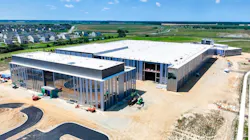
Among its infrastructure investments, the contract research, development, and manufacturing organization (CRDMO) will begin operations later this year at a new 1.74 million-square-foot plant in Middletown, Delaware, which will be WuXi AppTec’s largest U.S. facility.
The Delaware drug product site, which will serve the CRDMO’s North American market, is scheduled to start operations in the fourth quarter of 2026 for oral solid dosage manufacturing — with plans to expand into sterile/injectable production in the fourth quarter of 2027.
In Europe, WuXi AppTec is boosting its drug product manufacturing and packaging capacity in Couvet, Switzerland — which the company contends is designed to support growing commercial demand, with a new PSD-4 spray dryer slated to become operational in the fourth quarter of 2026.
In China, two new small molecule active pharmaceutical ingredient (API) plants at WuXi AppTec’s Taixing site are planned to become operational this year, and two additional plants focused on oligonucleotides, peptides, and phosphorodiamidate morpholino oligomer (PMO) production are currently under construction and expected to be operational in 2027. WuXi AppTec also plans to build a new API production site in Changzhou ahead of schedule, according to the company.
A Singapore site, which is currently under construction, will be operational next year augmenting the CRDMO’s global API manufacturing network for both small molecules and oligonucleotides, peptides and related synthetic conjugates (TIDES drugs). Three new TIDES plants are under accelerated construction in Taixing and in Singapore.
In a Q&A with Pharma Manufacturing Editor-in-Chief Greg Slabodkin, WuXi AppTec Co-CEO Dr. Minzhang Chen discusses the company’s business strategy and planned investments.
How have tariffs and trade policy considerations influenced WuXi AppTec’s decision to expand global manufacturing capacity?
Chen: Our global manufacturing growth is driven by one dynamic: our customers need more capacity, and we are building it. Demand for our services — particularly in peptides and advanced small molecule modalities — has grown significantly, and our customers are asking us to scale with them. That’s what is driving our investment decisions. We monitor trade policy and tariffs closely, but they are not the engine of our growth strategy. Our customers choose WuXi AppTec because of the competitive advantages of our integrated CRDMO model — our quality, speed, and efficiency — and we are growing to ensure we can continue meeting their needs wherever they operate.
Is it fair to say WuXi AppTec is designing supply chains for local-for-local execution by building parallel infrastructure across the globe to mitigate geopolitical risk?
Chen: Our customer-driven approach is exactly what shapes how we think about our global network. We are not building parallel infrastructure as a hedge against geopolitical risk — we are building it because our customers want options, and we want to be wherever they need us to be. Some customers prefer to keep work in the U.S. or Europe. Others place projects in China. We do not mandate a location — we provide the flexibility to choose.
What does not change, regardless of where the work is done, is the quality. Every site in our network operates under a single quality system, the same regulatory track record, and the same integrated CRDMO model. Customers get optionality without sacrificing consistency. Data is a good example of how this works in practice: it stays within the region where it is generated, meeting customer and regulatory requirements, while results are shared seamlessly across the network.
WuXi AppTec is expanding its manufacturing capacity in the U.S., Europe, and Asia. What is the goal of the company’s regionalization of manufacturing strategy?
Chen: The goal is to deliver a secure and robust drug product supply chain under a single quality system meeting global standards. Our customers are asking for more and broader capabilities in Europe and the U.S., so we have been making investments in those regions aim to meet this demand. Our Middletown, Delaware facility will bring our drug product manufacturing to the U.S. for the first time at this scale.
At the same time, we’re expanding the capabilities of our Couvet site in Switzerland, adding spray drying in 2026, followed by parenteral manufacturing and LNP capabilities. We’re growing in Asia, too: our Singapore site will add API manufacturing for small molecules, oligonucleotides, peptides and conjugates, with Phase I operations expected in 2027.
When it comes to adding new drug substance and drug product manufacturing capacity, are there certain areas of customer demand that are growing for WuXi AppTec? Is WuXi TIDES one of your fastest-growing businesses?
Chen: The demand is coming from a broad range of therapeutic areas including oncology, cardiovascular and metabolic diseases, infectious diseases, central nervous system disorders, and rare diseases. WuXi TIDES is one of our fastest-growing businesses globally, with full-year growth expected to be about 40% year-over-year as we continue to increase manufacturing capacity.
We can meet customers’ demands by offering a full range of CRDMO capabilities at any scale — from discovery synthesis and process development to the manufacturing of complex synthetic conjugates, novel monomers, linkers, and ligands. This is what WuXi TIDES offers, from milligram-scale synthesis all the way through to commercial supply.
Are the increasing size and complexity of drug molecules, especially new modalities like oligonucleotides, peptides, targeted protein degraders (TPDs), and antibody-drug conjugates (ADCs), driving WuXi AppTec’s global manufacturing expansion? What capabilities are needed to support these new modalities?
Chen: The science is moving toward molecules that are structurally more complex and therapeutically more targeted. For this reason, a key focus of WuXi AppTec’s investments is on increasing capabilities related to new modalities like oligonucleotides, peptides, TPDs and ADCs. For example, for peptides, we have developed integrated process approaches such as combining solid-phase and liquid-phase synthesis (SPPS–LPPS hybrid), enabling greater efficiency and scalability for longer and more complex sequences.
Downstream, we apply advanced purification and API isolation technologies such as tangential flow filtration, continuous flow chromatography and spray drying to help improve yield, process robustness, and scalability.
In oligonucleotides, we bring a similarly flexible and integrated approach. Innovations such as thin film evaporation (TFE), continuous flow chromatography help streamline downstream handling and reduce processing steps, while biocatalytic fragment ligation expands the toolkit for constructing more complex sequences. Meanwhile, we continue to expand manufacturing capacity and capabilities across the globe.
At our Taixing site in China, two additional plants dedicated to oligonucleotide, peptide and PMO production are currently under construction and scheduled to be operational in 2027, and the first TIDES plant in Singapore will be operational in 2028.
TPDs and ADCs are advancing rapidly as well, but translatability remains one of the key challenges. Compounds that perform well in vitro often fail in cellular or in vivo systems, especially with complex modalities like degraders or ADC payloads. At the same time, increasing assay complexity generates large datasets that are difficult to interpret efficiently. We address this by integrating chemistry, biology, and testing early in the discovery process. This includes designing higher-quality libraries, applying multi-parameter optimization beyond potency, and enabling rapid triage of chemical series.
By combining real-time data integration with iterative workflows, we can enable our customers to make earlier, more informed go or no-go decisions, thereby reducing downstream risk and improving overall efficiency. We have invested in all of these. For example, at the end of 2025, our total solid phase peptide synthesis (SPPS) reactor volume exceeded 100,000 liters, completed ahead of schedule. We are now expanding that to 130,000 liters, with three new production units under construction.
The total solid phase oligo synthesis (SPOS) reactor scale also exceeded 8 mol. Our total small molecule API reactor volume exceeded 4,000 kL at the end of 2025. This targeted expansion of our capacities and capabilities reflects a deliberate decision to build manufacturing infrastructure ahead of demand, so that customers do not face constraints as their programs advance.
Why is WuXi AppTec growing both total reactor volume of small molecule APIs and total reactor volume of solid phase peptide synthesizers?
Chen: Because there is proven demand for both segments. According to Frost & Sullivan, the global R&D pipeline has expanded significantly, both in the diversity of new modalities and the number of active programs. Synthetic molecules — specifically small molecules, peptides, and oligonucleotides — continue to dominate, representing 54.3% of the pipeline in 2024.
Our small molecule pipeline reached 3,550 molecules at the end of March this year. We added 328 new molecules in Q1 2026 alone. The growth is driven by both small molecule oral GLP-1 drugs, and other robust project pipelines. Notably, due to their economic affordability, logistical convenience, and high patient compliance, small molecules remain the cornerstone of modern medicines, accounting for over 50% drugs approved by FDA each year.
Recent scientific breakthroughs in technologies like PROTACs and molecular glues are further driving this demand by successfully targeting previously “undruggable” pathways inside the cell. WuXi AppTec’s CRDMO model is well positioned to capitalize on this expanding demand and deliver continued value to customers. As these programs in our CRDMO funnel advance through clinical stages into commercial manufacturing, the volume requirements increase substantially — which is why we have been expanding API reactor capacity in Changzhou and Taixing, both of which passed FDA on-site inspections in March 2025 with no observations. Q1 2026 small molecule D&M revenue rose 80.1% year over year to RMB 6.93 billion, reflecting that pipeline progression.
For peptides, the next few years will be very exciting for innovation. We are seeing peptide-based medicines are transforming treatment approaches in metabolic diseases, while increasingly sophisticated peptide conjugates and other targeted delivery technologies are expanding the possibilities for precision medicine.
In Q1 2026, the number of WuXi TIDES D&M customers increased 28% year-over-year, while that of molecules rose 59% year-over-year — reflecting both the increasing customer demand and the effectiveness of our CRDMO model. By the end of 2026, we expect TIDES revenue to grow by approximately 40% year-over-year. This capacity expansion and the revenue trajectory are directly connected.
About the Author
Greg Slabodkin
Editor in Chief
As Editor in Chief, Greg oversees all aspects of planning, managing, and producing the content for Pharma Manufacturing’s website and digital products, as well as the daily operations of its editorial team.
For more than 20 years, Greg has covered the healthcare, life sciences, and medical device industries for several trade publications. He is the recipient of a Post-Newsweek Business Information Editorial Excellence Award for his news reporting and a Gold Award for Best Case Study from the American Society of Healthcare Publication Editors. In addition, Greg is a Healthcare Fellow from the Society for Advancing Business Editing and Writing.
When not covering the pharma manufacturing industry, he is an avid Buffalo Bills football and Buffalo Sabres hockey fan, likes to kayak, and plays guitar.