PCI Pharma Services makes $1B investment to scale injectable manufacturing, device assembly
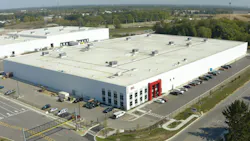
Philadelphia-based PCI Pharma Services, a global contract development and manufacturing organization (CDMO), has announced a series of infrastructure investments aimed at expanding its sterile fill-finish and advanced drug delivery capabilities, as demand for injectable therapies and supply chain resilience continues to reshape the pharmaceutical industry.
The investments are part of a broader commitment exceeding $1 billion across PCI’s U.S. and European operations, meant to reinforce the CDMO’s ability to support drug product development and manufacturing, clinical trial supply, and drug-device combination assembly from clinical stages through commercial launch.
Central to the announcement is a $100 million investment at PCI’s San Diego campus, where the company will install a high-speed isolator filling line for ready-to-use (RTU) prefilled syringes and cartridges. The new line, expected to be operational in the first half of 2028, will more than double the site’s existing syringe and cartridge capacity, which already supports more than 45 FDA-approved products.
The San Diego campus also hosts large-scale aseptic filling for prefilled syringes and cartridges, alongside specialized capabilities in oligonucleotides, peptides, complex formulations, and lyophilization for injectables such as nanoparticles, mRNA, monoclonal antibodies, proteins, and highly potent products.
Chief Commercial Officer Tim Roberts told Pharma Manufacturing these investments reflect a broader shift toward injectable drug formats, driven in part by the rapid rise of GLP-1 therapies and other biologics that are increasingly administered outside traditional healthcare settings. This trend is also extending into more complex therapeutic areas, including oncology and central nervous system (CNS) disorders, making drug-device combinations more central to how therapies are developed and delivered, according to Roberts.
“Now those next-generation medicines for oncology, CNS, and rare diseases no longer need to be delivered strictly by healthcare professionals,” says Roberts. “That accepted technology of pens, autoinjectors, and on-body devices is now being recognized by pharma companies and payers as the forward modality of how these lifesaving medicines can be delivered in a much more patient-centric way.”
In parallel, PCI’s Bedford, New Hampshire site is commissioning a GMP-ready isolator vial and lyophilization line capable of producing batches of up to 300,000 vials at 400 units per minute — equating to approximately 33 million units annually — following the start of full-scale production in April. The campus will also bring online a customer-dedicated high-potent sterile fill-finish line, according to the company.
Both sites are also being outfitted with advanced automated visual inspection (AVI) systems for sterile fill-finish applications. According to Roberts, these systems enhance defect detection — including particulates and cosmetic issues — while enabling rapid, highly accurate inspection of both containers and drug products, helping expand capacity without compromising quality. PCI’s U.S.-based AVI infrastructure includes annual accommodation for 40 million blister units, 70 million bottles, and 75 million vials.
“It can do these things very quickly and very accurately,” Roberts said of the AVI systems. “In investing in AVI systems to this degree, PCI is furthering its ability to have ample room without sacrificing mission-critical quality control.”
Building for the injectable era
The company has also committed to multiple buildouts of autoinjector and drug-device combination assembly infrastructure, in partnership with leading device manufacturers, at its campuses in Philadelphia and Rockford, Illinois. These upgrades are being introduced in phases over the next six months and are designed to expand both capacity and operational scale of its clinical-through-commercial capabilities.
PCI plans to add a third autoinjector assembly line in 2027, which will bring its total U.S. capacity for autoinjector and device assembly to more than 250 million units annually. The lines are designed for high-speed, flexible manufacturing, with the ability to support multiple device formats, while dedicated prefilled syringe safety device capabilities add labeling and secondary packaging options.
That growth aligns with what Roberts describes as a clear shift across the development pipeline, with more clinical programs — and ultimately commercial products — moving toward delivery formats such as prefilled syringes, pens, and autoinjectors. These systems support self-administration and are also enabling more decentralized clinical trial models, reducing the need for frequent site visits and potentially improving patient participation and retention.
PCI’s integrated model, spanning prefilled syringe manufacturing through final device assembly and packaging, is designed to support that continuity. The company’s Packaging Centers of Excellence in Philadelphia and Rockford provide capacity for both oral solid dose and injectable products, along with cold chain storage and the ability to rapidly support programs at clinical or commercial scale. Across the two sites, available capacity includes approximately 40 million blister units, 70 million bottles, and 75 million vials annually.
In conjunction with expanding its manufacturing platform, PCI is also investing in dedicated Development Centers of Excellence (CoE) in Bedford, New Hampshire, and León, Spain. These centers will support a range of development activities, including lyophilization, formulation, analytical services, drug-device combination development, long-acting injectables, and ophthalmic products, according to the company.
The CoEs are designed to handle both highly potent and non-potent, small-molecule and biologic modalities across vials, prefilled syringes, and cartridges. The Bedford Development CoE is expected to be operational this May, with the León site slated for June.
About the Author
Andy Lundin
Senior Editor
Andy Lundin has more than 10 years of experience in business-to-business publishing producing digital content for audiences in the medical and automotive industries, among others. He currently works as Senior Editor for Pharma Manufacturing and is responsible for feature writing and production of the podcast.
His prior publications include MEDQOR, a real-time healthcare business intelligence platform, and Bobit Business Media. Andy graduated from California State University-Fullerton in 2014 with a B.A. in journalism. He lives in Long Beach, California.