Protecting sterile integrity on pharmaceutical packaging lines
In the world of pharmaceutical and medical packaging, contamination control is much more than an abstract quality objective; it is an absolute regulatory requirement. Underpinning patient safety, day-to-day practical measures to ensure sterility are the backbone of production, requiring careful consideration from engineers and production teams.
Sterility uncertainty can be fatal to operational confidence. Controlling loose contamination before it becomes embedded in the pack is an essential part of line design and risk management. Packaging engineers know that failure means costly line stoppages and rejected batches, plus the resulting headache from the regulatory fallout.
While this pressure is constant, packaging formats and materials continue to evolve and pose new challenges. Commercial demands mean that lines are expected to run faster and longer, meanwhile sustainability compliance can necessitate the transition to new substrates with different handling characteristics.
Complex packaging and heightened exposure
Ultimately, medical and pharmaceutical packaging combines high sensitivity with low tolerance for error.
Primary packaging such as blister packs must protect the product while remaining compatible with downstream processes, including sealing, inspection and secondary packing. Meanwhile, secondary packaging plays an equally critical role, often carrying barcodes, lot numbers and expiry dates that are fundamental to traceability and compliance.
The materials used across these applications, including medical grade paper, aluminum foil laminates and specialist plastic films, are often lightweight and sensitive. These characteristics make them more vulnerable to loose dust, fibers and fines; even small amounts of contamination can compromise print quality, interfere with sealing or undermine confidence in pack integrity.
Further complicating matters, contamination is rarely introduced at a single point in the production process. Instead, it accumulates progressively. Dust and fibers can be released as substrates are unwound, guided over rollers and processed through printing, coating or lamination stages.
Meanwhile, static charges generated along the line can exacerbate the issue by attracting and reattracting loose particles to the packaging materials.
Operators likely recognize the symptoms of uncontrolled static. Buildup on rollers, inconsistent print quality, unexplained defects appearing downstream or the need for frequent manual cleaning interventions.
Unlike other sectors, these issues are much more than an inconvenience. They represent a potential compliance risk and a source of avoidable disruption.
From a good manufacturing practice (GMP) perspective, early-stage contamination control supports a risk-based approach to packaging line design, helping teams address potential quality concerns before they can affect patient safety or regulatory confidence.
What is a web cleaner?
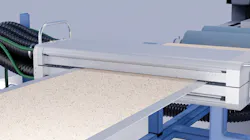
A web cleaner is a compact inline system designed to remove unwanted particles from the surface of a moving web before it reaches critical process stages such as printing, laminating, sealing or winding.
Web cleaning systems are typically integrated at defined points on the line where contamination risk is highest or where surface cleanliness is most critical. This helps support consistent quality, reducing the need for manual intervention and maintaining confidence in downstream processes.
The cleaning method is dependent on material characteristics, speed of the web, nature of likely contaminants and environmental considerations. Broadly speaking, web cleaners fall into two categories: contact and non-contact.
Contact cleaners remove debris by physically touching the web, often using rollers, brushes or similar mechanisms. Meanwhile, non-contact cleaners rely on controlled airflow to dislodge and extract loose contamination without touching the substrate.
Either approach will normally incorporate static control ionization technology to ensure that contaminants don’t immediately reattach themselves to the web.
In regulated medical and pharmaceutical packaging environments, non-contact cleaning is often preferred to reduce potential for cross contamination. Additionally, by eliminating physical contact, non-contact systems reduce the risk of damaging delicate substrates and are well suited to low-tension applications, where maintaining web stability is critical.
Cleaning applications in primary, secondary packaging
In primary packaging, non-contact cleaning is particularly valuable for blister packaging. Cleaning blister packs before sealing helps remove loose contamination from aluminum foils and plastic films. Some lines even use the technology when the blister already contains the product; controlled airflow can gently mobilize the contents, releasing contaminants for removal without physical contact.
Meanwhile, in secondary packaging, removal of loose fibers and dust before printing helps protect the clarity and legibility of critical information such as barcodes and expiry dates. This supports traceability requirements and reduces the likelihood of rejects caused by print defects.
Non-contact web cleaning systems designed for use in regulated environments include solutions that also feature integrated static control. They can be applied across both primary and secondary medical and pharmaceutical packaging lines, where low web tension, material sensitivity and the risk of recontamination all need to be carefully considered as part of the broader contamination control strategy.
Supporting compliance, quality and patient safety
For pharmaceutical and medical manufacturers, contamination control is ultimately about risk management and alignment with a GMP mindset. Effective removal of loose contamination supports quality systems, reduces uncertainty and helps protect patient safety. By addressing contamination at source, rather than reacting to defects downstream, packaging teams can build greater resilience into their lines.
As packaging lines become more complex and performance expectations increase, contamination control needs to be considered early in the overall line design. Integrating appropriate web cleaning solutions from the outset allows manufacturers to proactively address potential risk, rather than risking even more costly corrective action later.
For pharmaceutical and medical packaging lines, a preventative approach to contamination control is often the best medicine, supporting consistent performance and protecting product integrity.
About the Author
Eleni Fotopoulou
Eleni Fotopoulou is Head of Product Management at Meech International