Capra extends HHS domestic API manufacturing program
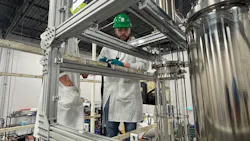
Capra Biosciences, a Virginia-based biomanufacturing company, has received additional funding from the U.S. Department of Health and Human Services’ (HHS) Administration for Strategic Preparedness and Response (ASPR) to expand domestic production of essential active pharmaceutical ingredients (APIs).
The follow-on investment brings the company’s total ASPR funding to approximately $17 million and supports development of seven API targets that are currently sourced primarily from overseas, according to the company.
The expanded program builds on Capra’s 2024 CoMPASS (Continuous BioManufacturing Process Analysis for Scaling API Synthesis) project, which combined the company’s modular continuous bioreactor platform with AI-enabled strain engineering developed in collaboration with Google X’s A-Life team. According to the announcement, the initial project demonstrated production of aspirin and acetaminophen and established a platform for scaling additional biologically derived APIs.
Under the new phase of the program, Capra will collaborate with the United States Pharmacopeia (USP) to advance five of the seven APIs toward commercial-scale manufacturing. USP and its Pharmatech subsidiary will provide analytical development, chemistry, manufacturing, and controls (CMC), control strategy development, as well as regulatory support intended to support commercial readiness.
The funding is provided through ASPR’s Biomedical Advanced Research and Development Authority (BARDA) Biopharmaceutical Manufacturing Preparedness (BioMaP) program, which supports efforts to strengthen domestic biopharmaceutical manufacturing capacity and reduce reliance on overseas pharmaceutical supply chains.
“Biotechnology offers tremendous power over traditional chemistry for making APIs because it is not limited by supply chains for key starting materials,” Capra Biosciences co-founder and CTO Andrew Magyar said in a statement. “With our initial ASPR funding, we successfully demonstrated that our modular reactors can produce high-quality APIs. This continued support enables us to take the next step toward cGMP production and regulatory filings that put these molecules on a path to market.”