Made Scientific, Streamline Bio team on automated CAR T manufacturing
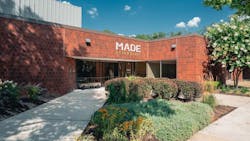
Made Scientific, a cell therapy contract development and manufacturing organization (CDMO) headquartered in Princeton, New Jersey, and Streamline Bio, an AI-driven robotics company, announced a program to co-develop and validate an automated manufacturing platform in a GMP-ready environment.
Under the agreement, Made Scientific will serve as Streamline Bio’s exclusive early adopter, design partner, and preferred CDMO partner for integration of the company’s AI-driven robotic manufacturing platform. The collaboration will focus on developing automated workflows, enhanced analytics and data capture, and AI-based improvements intended to support repeatable, scalable GMP operations.
Studies will also evaluate end-to-end automation of CAR T manufacturing steps to improve cycle times, process robustness, and scalability, the companies said.
“Integrating and validating Streamline Bio’s technology within our GMP manufacturing operations in Princeton, New Jersey, allows us to advance this technology in a real-world GMP setting,” Made Scientific CEO Syed Husain said in a statement.
“Streamline Bio’s technology is purpose-built to deliver low-cost, versatile, and scalable automation for life science manufacturing,” added Streamline Bio CEO Rodney Rietze. “By partnering with Made Scientific as our exclusive early adopter CDMO, we are accelerating our cell and gene therapy product development roadmap and building toward a safe, compliant, and cost-effective manufacturing solution that supports the entire life science community.”
In August 2025, Made Scientific opened a 60,000-sq-ft GMP manufacturing facility and headquarters in Princeton, featuring ISO 7 cleanrooms, quality control labs, and digital manufacturing systems to support clinical-to-commercial cell therapy programs. The site is designed to support autologous and allogeneic programs, with a second-phase expansion expected to add 12,000 square feet of GMP cleanroom space and increase capacity by up to 2,000 batches per year.