Cellares, City of Hope collaborate to automate CAR-T manufacturing
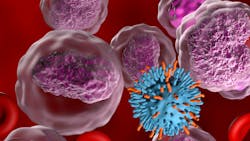
Cellares and cancer research institute City of Hope said they are collaborating to evaluate automated manufacturing for an investigational CAR-T cell therapy targeting glioblastoma multiforme, a fast-growing and aggressive form of brain cancer with limited treatment options.
Under the collaboration, City of Hope will assess Cellares’ automated manufacturing and quality control platforms to support production of its IL13RA2-EGFR–targeting CAR-T program, known as CARpool. According to the announcement, the work aims to address manufacturing and quality bottlenecks that have limited the scalability of CAR-T therapies for solid tumors and to accelerate the program’s progression toward clinical trials.
City of Hope has been active in developing gene-modified cell therapies for solid tumors and was the first to administer CAR-T therapy directly into the brain for glioblastoma, the organization said. The CARpool program targets IL13RA2 and EGFR and is being developed for glioblastoma, which the collaborators note accounts for an estimated 300,000 new diagnoses globally each year.
The collaboration will begin at the preclinical stage, with the goal of establishing standardized, automated processes, and analytics tailored to solid tumor CAR-T therapies. According to the companies, early adoption of automation is expected to support more consistent manufacturing outcomes while enabling higher throughput as programs advance toward clinical development.
“Advancing CAR-T therapies in this setting requires not only rigorous translational science but also highly controlled and reproducible manufacturing,” Christine Brown, deputy director of the T Cell Therapeutics Research Laboratories at City of Hope, said in a statement. She added that incorporating automation early is expected to help standardize processes and analytics needed for effective clinical translation.
“Manual, fragmented manufacturing and quality control cannot meet the scale required for large solid tumor patient populations,” Cellares CEO Fabian Gerlinghaus said in a statement. “By collaborating with City of Hope, we will remove these bottlenecks through automation, enabling reproducible manufacturing, lowering failure rates, and expanding patient access at commercial scale.”
The City of Hope collaboration follows other recent activity around Cellares’ automated manufacturing platform. Earlier this week, Autolus Therapeutics said it is assessing the Cellares Cell Shuttle system as a potential option to support future capacity expansion for its approved CD19 CAR-T therapy.