Plant-based drugs gain momentum amid manufacturing challenges
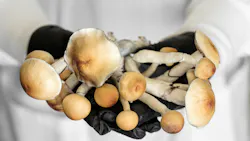
President Donald Trump in April signed an executive order aimed at accelerating research into psychedelic therapies, directing federal agencies to ease restrictions on these therapies with the goal of reducing barriers to treatment for Americans with serious mental illnesses. The order follows longstanding efforts to position psychedelics as legitimate therapeutic options.
However, perceived challenges around developing these therapies have historically limited progress, particularly when it comes to chemistry, manufacturing, and controls (CMC), and the characterization of complex, plant-derived compounds — a category that also includes cannabinoids, according to Joel Stanley, CEO and founder of AJNA Biosciences, a company focused on plant and fungi species with established therapeutic potential.
“I would say it’s only been within the last 15 years that we even have the level of mass spectrometry and nuclear magnetic resonance spectroscopy technology to accomplish it,” Stanley said. “That’s part of the reason we haven’t had many botanical drugs. Previously, the FDA, academia, and Western medicine said it was bad science. They would say, ‘We can’t understand what all these molecules are doing together.’”
Efforts to develop plant-based medicines began to shift in 2004, when the FDA issued its first botanical drug guidance, which provides a framework for managing the complex nature of plant-based drugs throughout clinical trials and the approval process. Still, progress has been limited, with only four drugs having been approved through this pathway.
The latest federal action reflects a broader shift toward the destigmatization of plant-based therapies, not only in how they are viewed clinically, but in how they are developed and regulated. As that stigma begins to fade, a new challenge is coming into focus: how to reliably develop and manufacture these complex drugs at pharmaceutical standards.
The manufacturing challenge
The upstream nature of botanical drug development has been a primary hurdle limiting broader adoption, as these therapies depend on the standardization and control of agricultural systems, according to Stanley. This introduces a fundamentally different development process than traditional pharmaceutical manufacturing, which is built around controlled systems like chemical synthesis and bioreactors, he said.
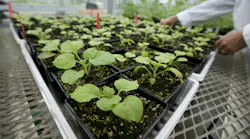
Where botanical drug manufacturing becomes complicated is in the variability of the raw material itself. Unlike traditional pharmaceuticals, where the active ingredient is produced under tightly controlled conditions from the start, plant-based drugs rely on living systems that introduce variability at the agricultural level. Factors such as genetics, growing conditions, harvest timing, and post-harvest processing all influence the final chemical profile of the material.
Before founding AJNA Biosciences, Stanley was the CEO and co-founder of Charlotte’s Web, a company best known for developing a high-CBD, low-THC cannabis extract that was used to treat pediatric epilepsy. The treatment gained national attention after it was used by Charlotte Figi, a young patient experiencing hundreds of severe seizures per week, which were reduced to roughly one per month.
That experience helped Stanley and his team understand the foundational principle for botanical drug development: the need to standardize raw plant material before advancing a complex botanical through a pharmaceutical pathway.
“What we’ve learned over the process of Charlotte’s Web is that to keep the phytochemical fingerprint of those genetics true — batch over batch — region is important. What you feed it is important,” Stanley said. “You’ve got to test the soil also for any contaminants, because this crop is phytoremediative; if there are metals or other harmful elements in the soil, the plant can pull them into itself.”
That upstream variability makes standardization a central challenge. To meet pharmaceutical requirements, developers must demonstrate that they can reproduce a consistent chemical profile over time — something that requires tight control over both genetics and environment, often built on years of research and data.
The level of control required can vary depending on the botanical. For hemp-based therapies, cultivation introduces variables tied to region, soil conditions, and agricultural inputs that must be tightly controlled. By contrast, mushroom-based drugs can be grown in controlled indoor environments, reducing some of that variability and improving scalability, though they come with their own technical challenges.
Still, once raw materials are standardized, the downstream manufacturing process begins to look much more familiar.
“You have a GMP extraction suite, a compounding or dilution suite, and then a drug product production suite,” Stanley said. “And of course, supporting QA/QC labs for specification testing, contamination testing, all the GMP requirements — some of that on-site, some through third parties.”
 2171_plantform_104_high_res
Scaling the model
Meanwhile, scaling botanical drug production presents its own set of operational challenges.
Unlike traditional pharmaceutical manufacturing, which can often be outsourced to contract development and manufacturing organizations (CDMOs), botanical drug production is inherently vertically integrated given how the infrastructure is currently set up, according to Stanley.
“A traditional CDMO can’t just take one of these drugs in-house,” Stanley said. “It’s not as simple as ordering chemicals and running a reaction. The agricultural component is fundamental — and that’s not something most CDMOs are set up to do.”
As a result, these drugs often require tightly integrated systems that span cultivation, extraction, and final drug production. While CDMOs can support downstream activities such as extraction and formulation, the lack of infrastructure for large-scale, pharmaceutical-grade cultivation remains a key gap, Stanley said.
That need for integration also has implications for how these drugs scale commercially. For botanical systems, it can mean scaling acreage, controlled grow environments, or other resource-intensive inputs tied directly to biology.
Cost, efficiency, and tradeoffs
Despite these complexities, botanical production can offer significant advantages in certain cases, particularly when compared to synthetic approaches.
For example, Stanley pointed to psilocybin, where he said synthetic pharmaceutical-grade API can run anywhere from $40,000 to $80,000 per gram to produce. By contrast, biosynthesizing the compound through mushrooms requires minimal space and relatively low material input.
“To biosynthesize that same gram using mushrooms, you’re talking less than four square feet of space and under $20 in materials,” he said. “In that case, there’s just no comparison — both in cost and in waste. Synthetic routes generate a substantial amount of chemical waste, whereas with mushrooms, the byproduct is essentially compost.”
However, for some compounds — such as aspirin — synthetic production remains far more efficient than extracting the molecule from plant sources, he added. As a result, the viability of botanical manufacturing is highly dependent on the specific compound and production method.
Still, as companies continue to refine cultivation, standardization, and extraction techniques, proponents of botanical drug development argue that the model could become increasingly competitive — not only from a cost perspective, but also in terms of sustainability and scalability.
Looking ahead
Stanley said Trump’s recent executive order is an encouraging signal. And not just for companies developing these therapies, but for patients who currently lack safe, regulated access.
“We’ve already seen the FDA move in this direction with things like Breakthrough Therapy designation, but expedited review is important,” he said. “Yes, it benefits companies like ours but that’s not the main point. There are a lot of people already out there self-medicating, traveling abroad, or using unregulated sources. They’re doing that without dosing data, without oversight, without the rigor of clinical trials.”
For Stanley, the broader implication is that regulatory momentum could help shift both access and investment toward botanical drug development.
“I believe that the botanical drug category is going to grow market share for people that really want natural options, the market share of all pharma is going to go up substantially,” he said. ”The barrier for the industry is proof of concept, which we’re right on the edge of, and investments after that proof of concept into botanical drug programs. That’s been the hard part.”
You might also like
In this episode of Off Script: A Pharma Manufacturing Podcast, we spoke with Gil Roth, founder and president of the Pharma & Biopharma Outsourcing Association (PBOA), about how recent policy developments are impacting CDMOs and their customers.
About the Author
Andy Lundin
Senior Editor
Andy Lundin has more than 10 years of experience in business-to-business publishing producing digital content for audiences in the medical and automotive industries, among others. He currently works as Senior Editor for Pharma Manufacturing and is responsible for feature writing and production of the podcast.
His prior publications include MEDQOR, a real-time healthcare business intelligence platform, and Bobit Business Media. Andy graduated from California State University-Fullerton in 2014 with a B.A. in journalism. He lives in Long Beach, California.